
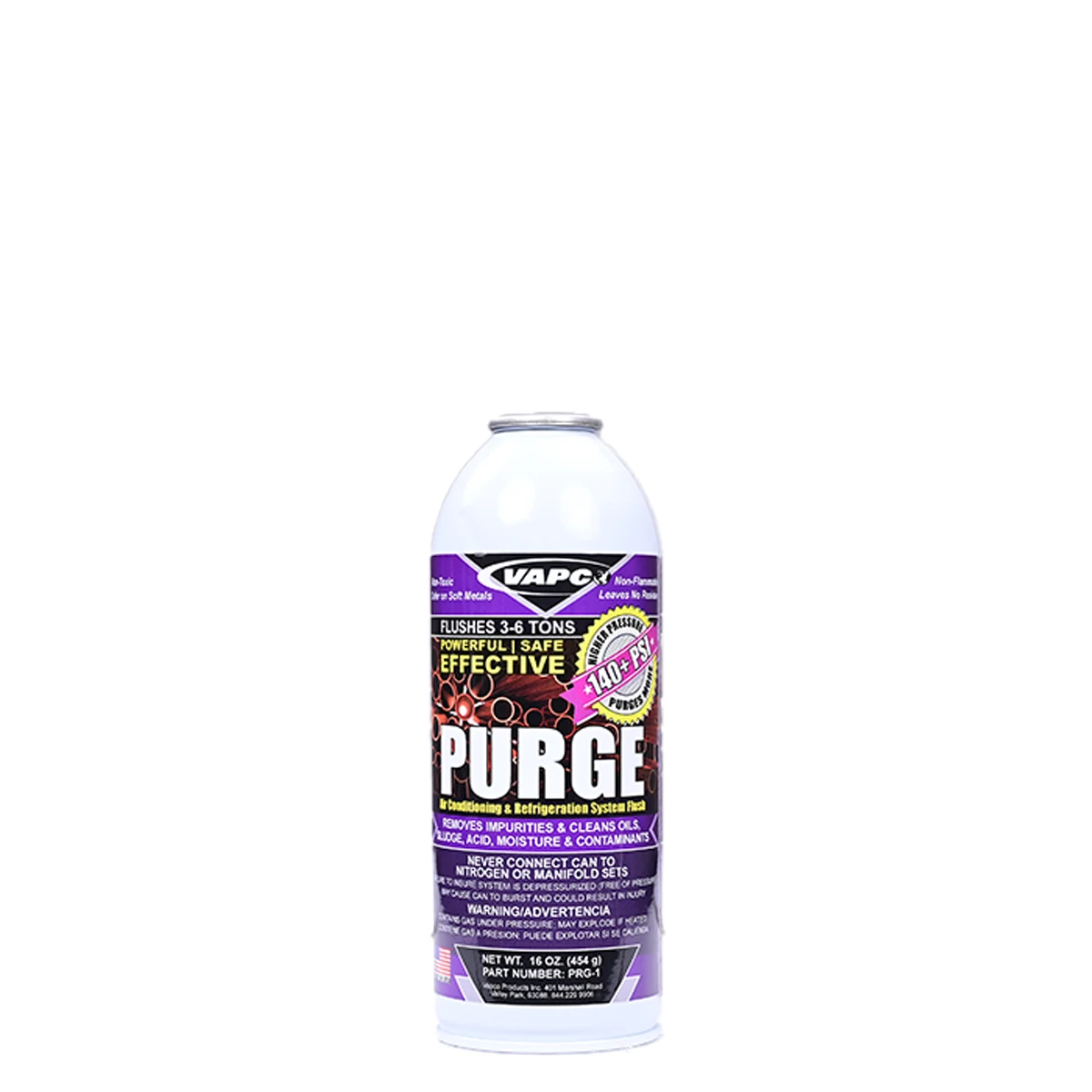
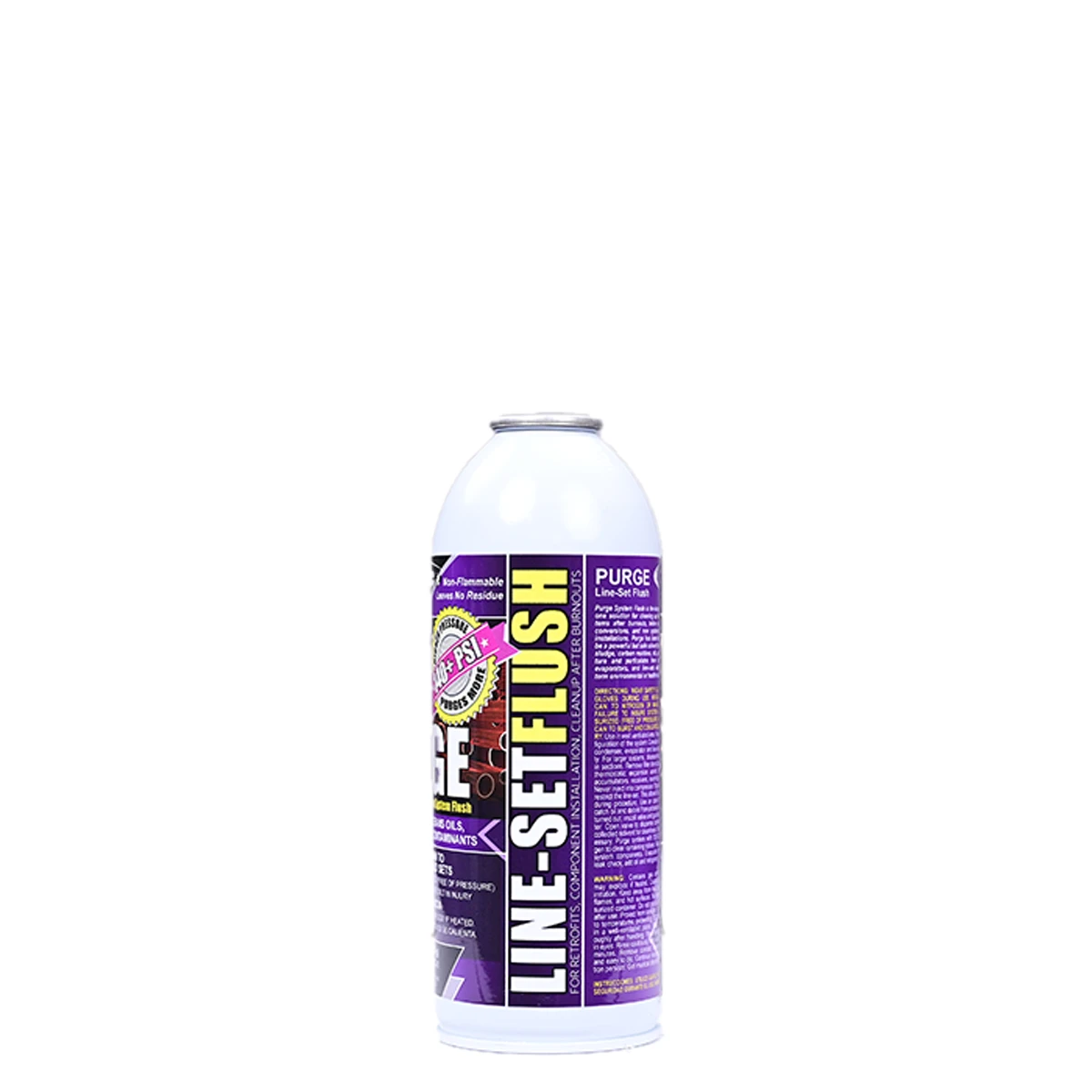
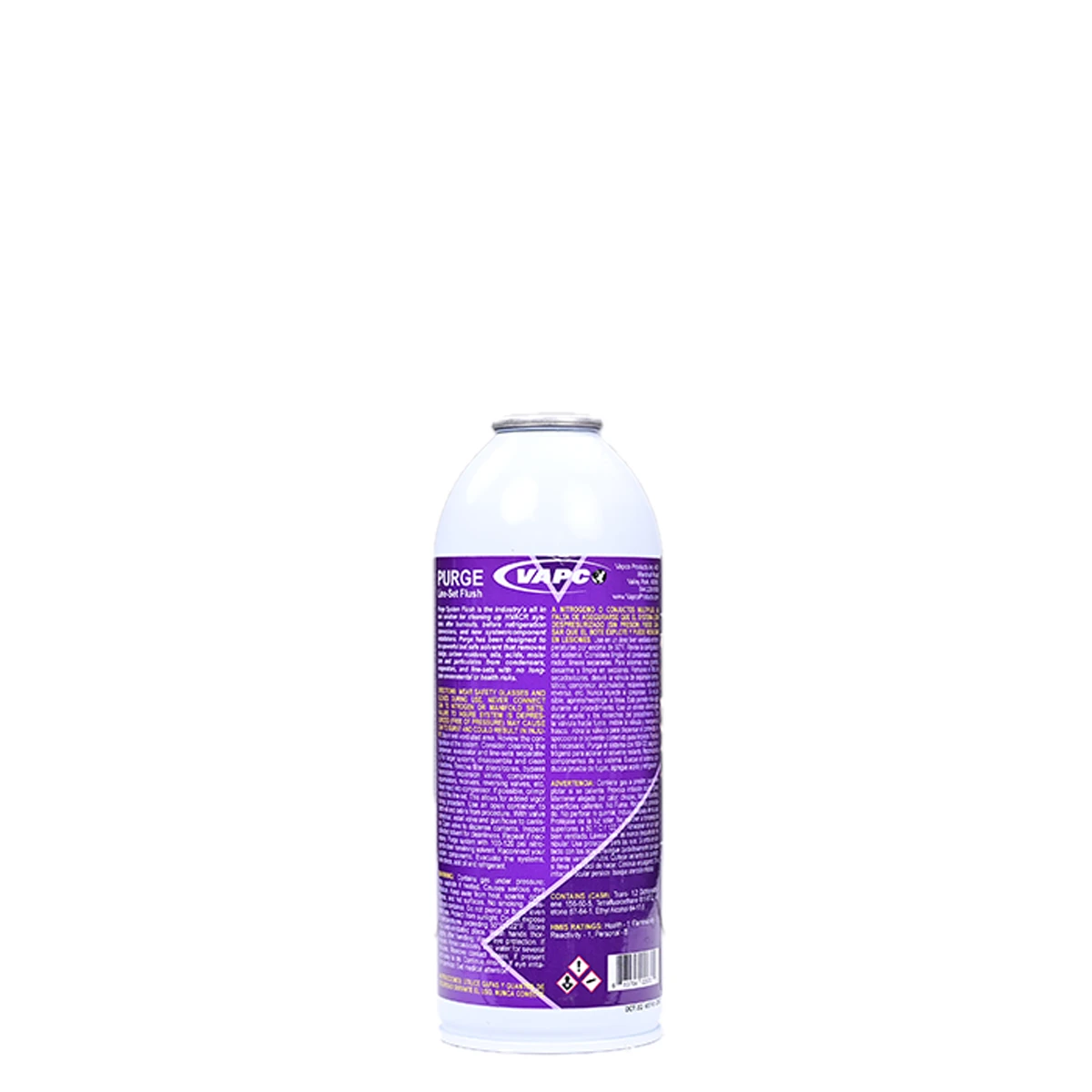
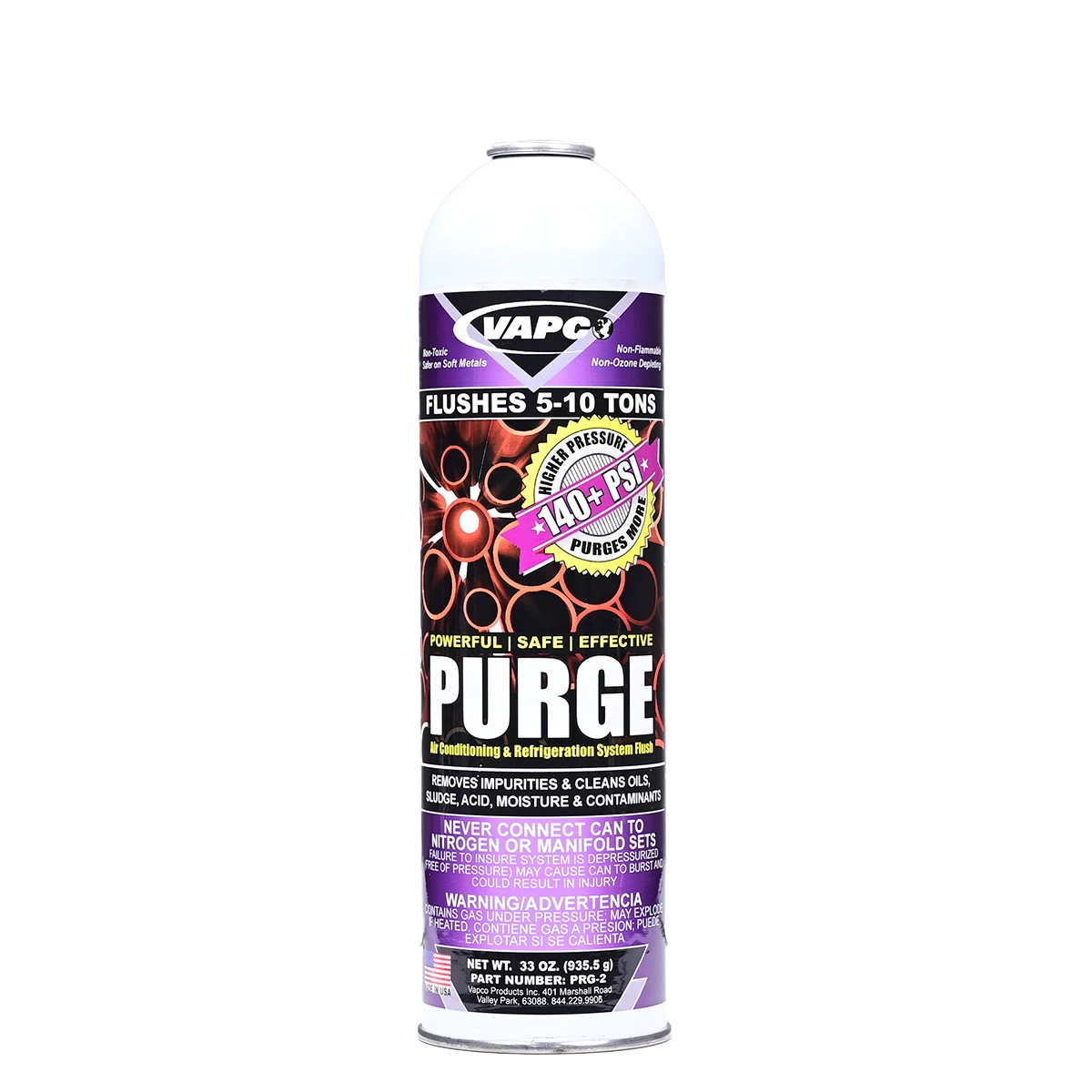
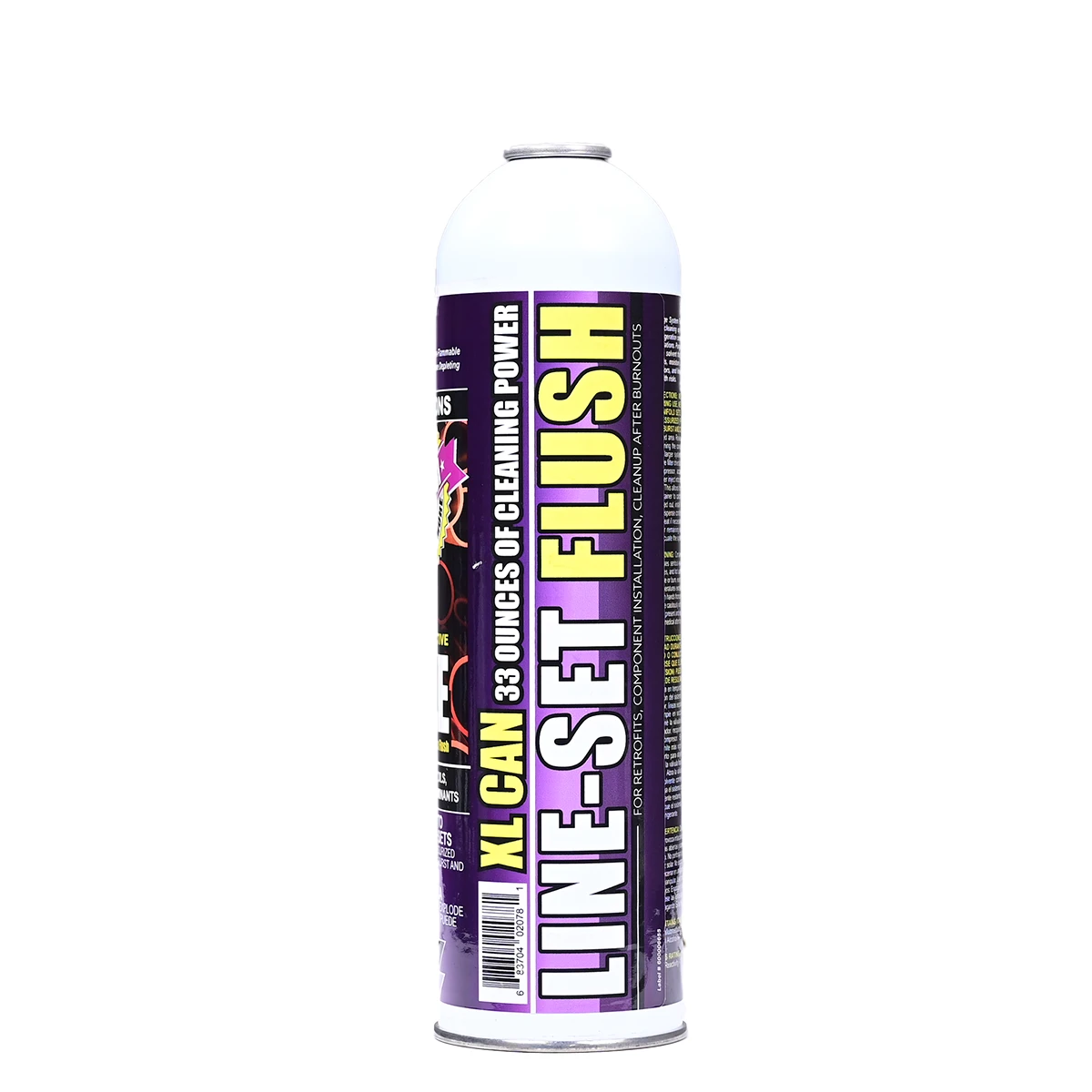

Purge High-Pressure HVAC Line Set Flush | Aerosols PRG- 1, 2
Why flush when you can PURGE?
Standard “flushes” are often just low-pressure solvents that rinse the bottom of the pipe. Purge is different. By combining a proprietary high-concentration solvent with a 140+ PSI delivery system, Purge doesn’t just rinse—it obliterates obstruction.
The industry is full of “convenience” cans that lose pressure in cold trucks or fail to push solvent up vertical line sets. Purge is engineered for the reality of the job site. The elevated pressure ensures consistent velocity in low-temperature environments and long commercial runs, while the active formula chemically emulsifies the sludge, carbon, and acids that cause compressor burnout, turning those line sets into a like-new state.
Manufacturer’s Tech Note: We intentionally pressurize these cans to 140+ PSI because we know technicians leave them in freezing vans overnight or have to work inside walk-in coolers. Standard 55 PSI cans lose pressure in the cold and can’t push sludge up a vertical riser. Purge maintains velocity even in tough conditions.
The Efficiency Math: Do More with Less
Because Purge relies on powerful active ingredients rather than propellant fillers, you get superior coverage per canister.
- 1 lb Canister: Services 3–6 Tons (vs. the industry standard of 3–4 tons).
- 2 lb Canister: Services 5–10 Tons (Best value for large systems).
Professional Application: Designed for the modern technician, Purge is the essential tool for R-410A retrofits, A2L system conversions, new component installation, and heavy-duty burnout maintenance.
| KEY FEATURE / SPECIFICATION | TRADE BENEFIT / RESULT |
|---|---|
| 140+ PSI Delivery Pressure | Mechanical Scrubbing Force: Delivers nearly 3x the pressure of generic brands. Maintains high velocity to blast through long vertical runs and restrictive line sets without losing pressure in cold weather environments. |
| High-Yield Economy (3–10 Tons) | Cost Reduction: High-concentration formula means less propellant and more active solvent. One can often replaces two competitor cans.
• 1 lb Can: Cleans 3–6 Tons. |
| High-Solvency Emulsification | Rapid Contaminant Removal: Chemically dissolves and suspends stubborn carbon residues, tars, oils, and acids from compressor burnouts, preventing redeposition in the line. |
| Non-Flammable & A2L Ready | Future-Proof Safety: Fully compatible with modern A2L (R-32, R-454B) conversions and R-410A retrofits. Non-toxic, non-flammable formula ensures job-site safety. |
| Zero-Residue Evaporation | System Protection: Low-boiling point formula evaporates completely under standard vacuum, leaving no oily film or residue to contaminate the new refrigerant charge. |
| Material Compatibility | Safe for Metals: Engineered to be safe on copper, aluminum, steel, and elastomers. Intended for line sets and coils only. Always bypass/remove metering devices and filter driers. |
| Application Requirement | Best Practice: For optimal results, always purge with clean, dry nitrogen after injection to push remaining solvent out, then evacuate the system prior to recharging. |
Vapco Field Guide: Performance Matrix
How Purge stacks up against real-world contaminants.
| CONTAMINANT | WHY IT WINS |
|---|---|
| Compressor Burnout (Sludge/Acid) | Emulsifies & Ejects: High solvency breaks down hardened carbon while 140+ PSI prevents redeposition. |
| Mineral Oil (R-22 Retrofits) | Miscible Displacement: Lifts old mineral oil from copper surfaces for a clean R-410A conversion. |
| Moisture & Standing Water | Physical Displacement: High-density fluid pushes water out; low boiling point ensures rapid vacuum dehydration. |
| A2L / POE Oil Conversion | Solubilization: Completely removes incompatible oil residues, ensuring safety for A2L retrofits. |
| Component Warning | Line Sets & Coils ONLY. Do not flush compressors, filter driers, capillary tubes, or metering devices (TXV/Piston). |
Part Number Reference:
Select the right capacity for your job. Choose between standard aerosols for maintenance or complete kits to get started.
1. Select Your Aerosol or Kit
| PART # | SIZE / PACK | APPLICATION FIT |
|---|---|---|
| PRG-1 | 1 lb Aerosol (Case of 6) |
Residential / Service: Cleans 3–6 Tons. The industry standard size for residential repairs, burnouts, and retrofits. |
| PRG-2 | 2 lb Aerosol (Case of 4) |
Commercial / High-Yield: Cleans 5–10 Tons. Best value for commercial systems, long vertical runs, or multiple residential jobs. |
| PRG-1K / PRG-1K-X3 | 1 lb Kit (Available 1ea or 3/cs) |
Starter Kit: Includes 1 lb canister + Actuator Valve/Gun. Everything needed to start Purging immediately. |
| PRG-2K | 2 lb Kit (Sold Individually) |
Master Kit: Includes (2) 2 lb canisters + 1 Actuator Valve. Heavy-duty capacity for large scale contamination removal. |
2. More Configurations & Accessories
| Cylinders | Large Cylinders (5 lb & 10 lb) Need to flush a VRF or Chiller? Switch to our bulk cylinders for massive volume and high pressure. |
| Tools | Purge Accessories Find replacement injection valves, hoses, and adapters. |
| More Kits | Purge Kits View all available Purge kit configurations. Everything you need to get Purging. |
Contractors: Please contact your local Vapco distributor for pricing and availability.
Why Low-Pressure Flush Fails Your Line Set
| THE PAIN POINT (Standard Flush) | THE PURGE ADVANTAGE |
|---|---|
| “The Pressure Drop” Standard 55-65 PSI cans lose velocity in vertical risers, leaving heavy sludge trapped at the bottom of the loop or solvent all over the floor. |
“140+ PSI Velocity” Maintains high mechanical scrubbing force to blast through complex piping and lift heavy debris out of vertical runs. Solvent goes exactly where you want it..all the way through the run. |
| “The Cold Weather Fail” Propellants lose power in cold trucks or walk-ins. A cold can often just “trickles” out, failing to scour the pipe. |
“All-Weather Reliability” Engineered with high initial pressure to ensure consistent flow even in winter conditions or walk-in freezers. |
| “Rinsing vs. Cleaning” Weak solvent blends flow over carbon deposits or flash off before they can dissolve them, leading to repeat burnouts. |
“Chemical Emulsification” High-concentration formula chemically breaks down and suspends hardened carbon and tar so it can be ejected. |
Directions for Purge High-Pressure Flush
1. Preparation & Yield Planning
Step 1: Isolate & Protect. Remove or bypass TXVs, pistons, and filter driers. Never inject into a compressor.
Step 2: Establish Flow. Place a waste container at the exit point. Flush from the inside-out.
Step 3: Secure Connections. Gently wrench-tighten all connections. Hand-tightening is insufficient for 140+ PSI.
| CONTAINER SIZE | YIELD | APPLICATION SCOPE |
|---|---|---|
| 1 lb Canister (PRG-1) | 3 – 6 Tons | Residential / Standard: Sufficient for most residential line sets up to 50ft. |
| 2 lb Canister (PRG-2) | 5 – 10 Tons | Commercial / High-Yield: Best for long vertical runs, large diameters, or heavy burnout contamination. |
| Required Chase | Nitrogen | Mandatory: Always chase with compressed dry nitrogen immediately after injection. |
2. Application & Cleaning
- Inject: Hold canister upright. Inject in short, controlled bursts (10-20 sec for small lines, 30-40 sec for large lines).
- The Nitrogen Chase: Immediately disconnect Purge and blast Nitrogen through the line to act as a squeegee.
3. Rinse & Completion
- Inspect Discharge: Look at the waste container. If fluid is dark/black, repeat the flush until it runs clear.
- Evacuate: Pull a deep vacuum. Purge will flash off rapidly, leaving zero residue.
- Dispose: Dispose of waste solvent in accordance with local regulations.
1. Identification & Supplier Details
| Product Name | Purge Aerosol (Line Set Flush) |
| Product Numbers | PRG-1, PRG-2, PRG-1K |
| Recommended Use | A/C & Refrigerator System Flush |
| Emergency Phone | (800) 255-3924 |
2. Hazards Identification
| GHS Classification | Acute Tox 4 (Inhalation); Eye Irrit. 2A; Gas Under Pressure |
| Signal Word | WARNING |
| Hazard Statements | H280: Contains gas under pressure; may explode if heated. H319: Causes serious eye irritation. H332: Harmful if inhaled. H336: May cause drowsiness or dizziness. |
| Precautionary Statements | P261: Avoid breathing gas/spray. P280: Wear protective gloves/eye protection. P305+P351+P338: IF IN EYES: Rinse cautiously with water. P410+P403: Protect from sunlight. Store in a well-ventilated place. |
3. Composition / Information on Ingredients
| Component Name | CAS Number | Concentration |
|---|---|---|
| Trans-1,2-dichloroethylene | 156-60-5 | 30 – 60% |
| 1,1,1,2-Tetrafluoroethane | 811-97-2 | 15 – 40% |
| Acetone | 67-64-1 | 1 – 10% |
| Ethanol | 64-17-5 | 1 – 10% |
4. First-Aid Measures
| Inhalation | Remove to fresh air. If breathing is difficult, give oxygen. Get medical attention. |
| Skin Contact | Flush with water for 15 minutes. Treat for frostbite if necessary. |
| Eye Contact | Rinse immediately with plenty of water for 15 minutes. Remove contact lenses. Get medical attention. |
5. Fire-Fighting Measures
| Extinguishing Media | CO2, alcohol-resistant foam, dry chemical, or water spray. |
| Specific Hazards | Explosion Hazard: Container may burst if heated. Vapors are heavier than air. |
| Protective Equipment | Wear self-contained breathing apparatus (SCBA). Fight fire remotely. |
6. Accidental Release Measures
| Precautions | Ventilate area. Avoid breathing vapors. Eliminate ignition sources. |
| Cleanup | Absorb liquid spills with inert material. Allow gas to disperse. |
7. Handling & Storage
| Handling | Do not pierce or burn, even after use. Use only in well-ventilated areas. |
| Storage | Protect from sunlight. Do not expose to temps exceeding 50°C/122°F. Store locked up. |
| Incompatible Materials | Strong oxidizers, strong acids, alkaline earth metals, powdered metals. |
8. Exposure Controls / PPE
| Exposure Limits | Trans-1,2-dichloroethylene: ACGIH TWA 200 ppm. Acetone: OSHA TWA 1000 ppm. |
| PPE | Eyes: Chemical safety goggles. Skin: Chemical resistant gloves. Respiratory: SCBA if ventilation is insufficient. |
9. Physical & Chemical Properties
| State / Appearance | Aerosol / Colorless Liquid |
| Boiling Point | 41°C (106°F) |
| Vapor Pressure | 261 mmHg @ 25°C |
| Relative Density | 1.17 (Water=1) |
| Water Solubility | Insoluble |
10. Stability & Reactivity
| Reactivity | Reacts violently with strong oxidizers. |
| Stability | Stable under recommended storage conditions. |
| Decomposition | Hydrogen chloride, Hydrogen fluoride, Carbonyl fluoride. |
11. Toxicological Information
| Inhalation Toxicity | Harmful if inhaled. May cause drowsiness or dizziness. |
| Eye/Skin | Causes serious eye irritation. Causes skin irritation. Risk of frostbite. |
| Carcinogenicity | Not classified. |
12. Ecological Information
| Ecotoxicity | Harmful to aquatic life. (Daphnia magna EC50: 220 mg/l). |
| Persistence | Components are not biodegradable. |
13. Disposal Considerations
| Disposal Method | Dispose of in accordance with local/regional regulations. |
| Environment | Avoid release to sewers or waterways. |
14. Transport Information
| Regulation | UN Number | Class | Proper Shipping Name |
|---|---|---|---|
| DOT (US) | UN1950 | 2.2 | Aerosols, non-flammable |
15. Regulatory Information
| US Federal / State | TSCA: Listed. Right To Know (MA, NJ, PA): Trans-1,2-dichloroethylene, Acetone, Ethanol, Nitrogen. |
16. Other Information
| Preparation | Prepared by: Jessica Wilson Date: 2/12/2025 |
| Disclaimer | Information is accurate to the best of our knowledge. No warranty is expressed or implied. |
___________________________________
⚠️ PRG-1, PRG-2 TECHNICAL DATA REPORT – DOWNLOAD
1. Physical & Chemical Properties
| Internal Pressure | 140+ PSI @ 70°F (Maintains velocity in cold) |
| Flammability Status | Non-Flammable (Safe for A2L environments) |
| Specific Gravity | 1.26 (Heavier than water/oil for displacement) |
| Boiling Point | 106°F (41°C) (Rapid Flash-Off) |
| Active Solvents | Trans-1,2-dichloroethylene, Ethanol Blend |
| VOC Content | Low VOC / Compliant (0.06) |
| Appearance | Clear / Colorless Liquid (Aerosol Spray) |
| Odor | Characteristic Solvent Odor |
| Shelf Life | 5 Years (from date of manufacture) |
2. UN & DOT Shipping Classification
| Proper Shipping Name: | Aerosols, Non-Flammable |
| UN Number: | UN1950 |
| Hazard Class: | 2.2 (Non-Flammable Gas) |
| Packing Group: | N/A |
| Label Required: | Non-Flammable Gas (Green) |
3. Master Shipping & Dimensions Guide
| ITEM | INDIVIDUAL UNIT | QTY / CASE | CASE SPECS | PALLET CONFIGURATION | CODE | |||||||||||
|---|---|---|---|---|---|---|---|---|---|---|---|---|---|---|---|---|
| Part # | Wt (lbs) | H (in) | W (in) | L (in) | Units | Wt (lbs) | H (in) | W (in) | L (in) | Cases/Pallet | Total Units | Wt (lbs) | H (in) | W (in) | L (in) | UPC |
| PRG-1 (1 lb Can) |
[ ] | [ ] | [ ] | [ ] | 6 | [ ] | [ ] | [ ] | [ ] | [ ] | [ ] | [ ] | [ ] | 40 | 48 | [ ] |
| PRG-2 (2 lb Can) |
[ ] | [ ] | [ ] | [ ] | 4 | [ ] | [ ] | [ ] | [ ] | [ ] | [ ] | [ ] | [ ] | 40 | 48 | [ ] |
| PRG-1K (1 lb Kit) |
[ ] | [ ] | [ ] | [ ] | 1 | [ ] | [ ] | [ ] | [ ] | [ ] | [ ] | [ ] | [ ] | 40 | 48 | [ ] |
| PRG-1K-X3 (1 lb 3-Pk) |
[ ] | [ ] | [ ] | [ ] | 3 | [ ] | [ ] | [ ] | [ ] | [ ] | [ ] | [ ] | [ ] | 40 | 48 | [ ] |
| PRG-2K (2 lb Kit) |
[ ] | [ ] | [ ] | [ ] | 1 | [ ] | [ ] | [ ] | [ ] | [ ] | [ ] | [ ] | [ ] | 40 | 48 | [ ] |
Harmonized Tariff Code (HTS): 3402.90.5030 (Cleaning Preparations – Aerosol)
NMFC Code: 48580-03 (Cleaning Compound, NOI) – Class 70
______________________________________________________