Vapco Products, Inc.
Safety Data Sheet
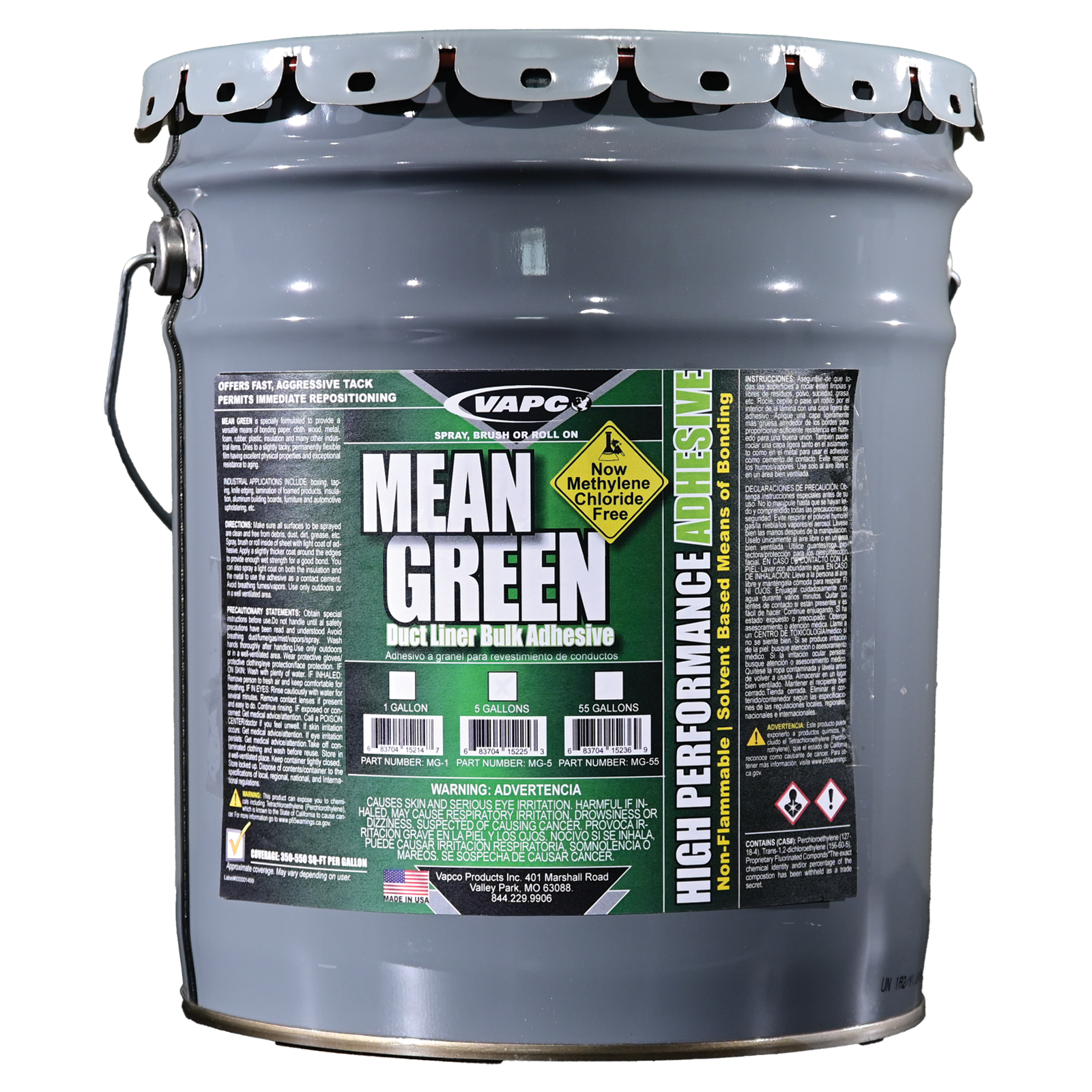
Mean Green Adhesive Liquid
SECTION 1: Identification
1.1 GHS Product identifier
Product name: Mean Green Adhesive Liquid
Product number: MG-1; MG-5, MG-55
Brand: Vapco
1.3 Recommended use of the chemical and restrictions on use
Recommended use: Contact adhesive
Restrictions on use: After December 8, 2026 this chemical substance (as defined in TSCA section 3(2))/product cannot be distributed in commerce to retailers for any use.After March 8, 2027, this chemical substance (as defined in TSCA section 3(2))/product is and cant only be distributed in commerce or processed with a concentration of PCE equal to or greater than 0.1% by weight for the following purposes: (1) Processing as a reactant/intermediate;(2) Processing into formulation, mixture, or reaction product; (3) Processing by repackaging; (4) Recycling;(5) Industrial and commercial use a solvent in open-top batch vapor degreasing;(6) Industrial and commercial use as a solvent in closed-loop batch vapor degreasing;(7) Industrial and commercial use in maskant for chemical milling;(8) Industrial and commercial use as a processing aid in catalyst regeneration in petrochemical manufacturing;(9) Industrial and commercial use as a processing aid in sectors other than petrochemical manufacturing;(10) Industrial and commercial use as a solvent for cold cleaning of tanker vessels;(11) Industrial and commercial use as energized electrical cleaner; (12) Industrial and commercial use as laboratory chemicals;(13) Industrial and commercial use in solvent-based adhesives and sealants;(14) Industrial and commercial use in dry cleaning in 3rd generation machines until December 20, 2027;(15) Industrial and commercial use in all dry cleaning and related spot cleaning until December 19, 2034; (16) Export;and (17) Disposal.
1.4 Supplier’s details
Name: Vapco Products, Inc.
Address: 401 Marshall Road, Valley Park, Missouri 63088, United States
Telephone: (636) 923-2121
Fax: (636) 923-3002
email: info@VapcoProducts.com
1.5 Emergency phone number
(800) 255-3924
SECTION 2: Hazard identification
General hazard statement
Caution: Non-flammable Adhesive Mixture: Contains a component that is flammable in its pure state according to GHS definitions, however when combined in the overall adhesive mixture the adhesive is not flammable in either its liquid or dry states.
2.1 Classification of the substance or mixture
GHS classification in accordance with: OSHA (29 CFR 1910.1200)
– Acute toxicity, inhalation, Cat. 4
– Carcinogenicity, Cat. 2
– Eye damage/irritation, Cat. 2A
– Skin corrosion/irritation, Cat. 2
– Specific target organ toxicity (single exposure), Cat. 3
2.2 GHS label elements, including precautionary statements
Signal word: Warning
Hazard statement(s)
H315 Causes skin irritation
H319 Causes serious eye irritation
H332 Harmful if inhaled
H335 May cause respiratory irritation
H336 May cause drowsiness or dizziness
H351 Suspected of causing cancer
Precautionary statement(s)
P201 Obtain special instructions before use.
P202 Do not handle until all safety precautions have been read and understood.
P261 Avoid breathing dust/fume/gas/mist/vapors/spray.
P264 Wash hands thoroughly after handling.
P271 Use only outdoors or in a well-ventilated area.
P280 Wear protective gloves/protective clothing/eye protection/face protection.
P302+P352 IF ON SKIN: Wash with plenty of water.
P304+P340 IF INHALED: Remove person to fresh air and keep comfortable for breathing.
P305+P351+P338 IF IN EYES: Rinse cautiously with water for several minutes. Remove contact lenses if present and easy to do. Continue rinsing.
P308+P313 IF exposed or concerned: Get medical advice/attention.
P312 Call a POISON CENTER/doctor if you feel unwell.
P321 Specific treatment (see First Aid on this label).
P332+P313 If skin irritation occurs: Get medical advice/attention.
P337+P313 If eye irritation persists: Get medical advice/attention.
P362+P364 Take off contaminated clothing and wash it before reuse.
P403+P233 Store in a well-ventilated place. Keep container tightly closed.
P405 Store locked up.
P501 Dispose of contents/container to the specifications of local, regional, national, and international regulations.
2.3 Other hazards which do not result in classification
Exposure may aggravate pre-existing eye, skin, or respiratory conditions.
Statement regarding ingredients of unknown toxicity
This product contains the following percentage of chemicals of unknown toxicity: 30%.
SECTION 3: Composition/information on ingredients
3.2 Mixtures
| Hazardous components |
CAS no. |
Concentration |
| 1. Perchloroethylene (EC no. 204-825-9; Index no. 602-028-00-4) |
127-18-4 |
30 – 40 % (weight) |
| 2. Trans-1,2-dichloroethylene (EC no. 205-860-2; Index no. 602-026-00-3) |
156-60-5 |
10 – 20 % (weight) |
| 3. Proprietary Fluorinated Compound Name |
* |
1 – 10 % (weight), Proprietary* |
Trade secret statement (OSHA 1910.1200(i))
*The exact chemical identity and/or percentage of the composition has been withheld as a trade secret.
SECTION 4: First-aid measures
4.1 Description of necessary first-aid measures
General advice: Never give anything by mouth to an unconscious person.If you feel unwell, seek medical advice (show the label where possible).
If inhaled: First, take proper precautions to ensure your own safety before attempting rescue (e.g. wear appropriate respiratory protective equipment, use the buddy system), then remove the exposed person to fresh air.Keep at rest in a position comfortable for breathing. Get medical advice/attention.
In case of skin contact: Immediately drench affected area with water for at least 15 minutes. Remove contaminated clothing immediately.Obtain medical attention if irritation develops or persists.
In case of eye contact: Immediately rinse with water for at least 15 minutes.Remove contact lenses, if present and easy to do. Continue rinsing. Obtain medical attention if irritation develops or persists.
If swallowed: Rinse mouth. Do NOT induce vomiting. Obtain medical attention.
4.2 Most important symptoms/effects, acute and delayed
Symptoms/Injuries: Harmful if inhaled.Causes serious eye irritation. May cause drowsiness and dizziness. Asphyxia by lack of oxygen: risk of death.Symptoms/Injuries After Inhalation: High concentrations may cause central nervous system depression such as dizziness, vomiting, numbness, drowsiness, headache, and similar narcotic symptoms.Inhalation is likely to cause adverse health effects including, but not limited to: irritation, difficulty breathing, and unconsciousness.In elevated concentrations, may cause asphyxiation, central nervous system effects, and increased pulse, mood changes, tremors, cyanosis, muscular weakness, narcosis, numbness of the extremities, unconsciousness and death.This product contains chlorinated solvent material, which is associated with cardiac sensitization following very high exposures or with concurrent exposure to high stress levels or heart-stimulating or epinephrine or similar heart-stimulating substances.Careful consideration should be applied preceding administration or epinephrine or similar heart-stimulating substances.Symptoms/Injuries After Skin Contact: Contact with gas/liquid escaping the container can cause dermatitis and defatting.Symptoms/Injuries After Eye Contact: Contact causes mild irritation with redness, tearing, and blurred vision.Chronic Health Hazards: Possible cancer causing agent and overexposure may also include damage to skin, kidneys, liver, dizziness, headache, nausea, mental confusion, visual disturbances, lungs, blood, or central nervous system.
4.3 Indication of immediate medical attention and special treatment needed, if necessary
If exposed or concerned, get medical advice and attention.If medical advice is needed, have product container or label at hand.
SECTION 5: Fire-fighting measures
5.1 Suitable extinguishing media
Dry chemical, foam, or carbon dioxide (CO2).
5.2 Specific hazards arising from the chemical
Explosion Hazard: Container may explode in heat of fire.Heat may build pressure, rupturing closed containers, spreading fire and increasing risk of burns and injuries.Vapors are heavier than air and may travel considerable distance to an ignition source and flash back to source of vapors.Incompatibility: Reacts with some plastics, strong oxidizing agents, acids, caustics, alkalis, and chemically active metals (e.g. aluminum, magnesium, sodium, potassium, and lithium).Increased risk of fire or explosion. Certain mixtures of chlorinated solvents may be flammable or reactive under certain conditions.Keep away from sparks, open flames, and hot surfaces. No smoking.Do not spray on open flame or other ignition source.
5.3 Special protective actions for fire-fighters
Precautionary Fire Measures: Exercise caution when fighting any chemical fire.
Firefighting Instructions: Use dry chemical, foam, or carbon dioxide (CO2). Do not breathe fumes from fire or vapors from decomposition.Do NOT fight fire when fire reaches containers. Evacuate area. Fight fire remotely due to the risk of explosion.Shut off all sources of ignition. Use water spray or fog for cooling exposed containers.
Protection During Firefighting: Do not enter fire area without proper protective equipment, including respiratory protection.Wear NIOSH-approved Self-Contained Breathing Apparatus with a full face piece operated in a positive pressure demand mode with full body protective clothing when fighting fires.
Hazardous Combustion Products: Carbon oxide(s) (CO, CO2), various hydrocarbons.
Further information
Do not allow run-off from fire fighting to enter drains or water courses.
SECTION 6: Accidental release measures
6.1 Personal precautions, protective equipment and emergency procedures
General Measures: Do not get in eyes, on skin, or on clothing.Do not breathe vapors, spray, mist, gas. Keep away from heat, hot surfaces, sparks, open flames, and other ignition sources.No smoking.
For Non-Emergency Personnel Protective Equipment: Use appropriate personal protective equipment (PPE).Emergency Procedures: Evacuate unnecessary personnel. Stop leak if safe to do so.
For Emergency Personnel Protective Equipment: Equip cleanup crew with proper protection.Emergency Procedure: Eliminate ignition sources first, then ventilate the area. Evacuate unnecessary personnel, isolate, and ventilate area.Upon arrival at the scene, a first responder is expected to recognize the presence of dangerous goods, protect oneself and the public, secure the area, and call for the assistance of trained personnel as soon as conditions permit.
6.2 Environmental precautions
Prevent entry to sewers and public waters. Avoid release to the environment.
6.3 Methods and materials for containment and cleaning up
For Containment: Ventilate the area.Contain any spills with dikes or absorbents to prevent further migration and entry into sewers or streams.As an immediate precautionary measure, isolate spill or leak area in all directions.
Methods for Cleaning Up: Clean up spills immediately and dispose of waste safely. Eliminate all ignition sources. Ventilate area.Stop the ignition source of the release, if safe to do so.Consider the use of water spray to disperse vapors. Isolate the area until gas has dispersed.Ventilate and gas test area before entering. Take up liquid spill into absorbent material.Transfer spilled material to a suitable container for disposal. Contact competent authorities after a spill.
Waste Disposal: Dispose of in accordance with local, regional, national, and international regulations. Containers may be hazardous when empty.Do not flame cut, braze, or weld. Product should be fully characterized prior to disposal (40 CFR 261).
Reference to other sections
See Section 8 for exposure controls and personal protection and Section 13 for disposal considerations.
SECTION 7: Handling and storage
7.1 Precautions for safe handling
Additional Hazards When Processed: Do not pressurize, cut, or weld containers.Ruptured cylinders may rocket. Pressurized container: May burst if heated. Do not pierce or burn, even after use.
Precautions for Safe Handling: Do not handle until all safety precautions have been read and understood.Avoid contact with skin, eyes and clothing. Do not breathe gas, mist, spray, vapors.Wash hands and other exposed areas with mild soap and water before eating, drinking or smoking and when leaving work.Do not spray on open flame or other ignition source.
Hygiene Measures: Handle in accordance with good industrial hygiene and safety procedures.
Other Precautions: Keep out of reach of children.Follow label instructions. Vapors may collect in low lying areas.
7.2 Conditions for safe storage, including any incompatibilities
Technical Measures: Comply with applicable regulations.Proper grounding procedures to avoid static electricity should be followed.
Storage Conditions: Store in a dry, cool place.Keep only in the original container in a cool, well-ventilated place away from ignition sources. Protect from sunlight.Keep/Store away from direct sunlight, extremely high or low temperatures and incompatible materials. Store locked up/in a secure area.
Incompatible Materials: Reacts with some plastics, strong oxidizing agents, acids, caustics, alkalis, and chemically active metals (e.g. aluminum, magnesium, sodium, potassium, and lithium).Increased risk of fire or explosion. Certain mixtures of chlorinated solvents may be flammable or reactive under certain conditions.Keep away from sparks, open flames, and hot surfaces. No smoking.Do not spray on open flame or other ignition source.
Specific end use(s)
Solvent-based contact adhesive
SECTION 8: Exposure controls/personal protection
8.1 Control parameters
1. Perchloroethylene (CAS: 127-18-4)
TWA (Inhalation): 50 ppm; 340 mg/m3; AU (AU/SWA)
STEL (Inhalation): 150 ppm; 1020 mg/m3; AU (AU/SWA)
IOELV-LTEL [Tetrachloroethylene] (Inhalation): 138 mg/m3; EU (EU/OSHA) Skin designation: Yes. List no. 4 under Council Directive 98/24/EC as amended. List last updated on 8/25/2023.
IOELV-LTEL [Tetrachloroethylene] (Inhalation): 20 ppm; EU (EU/OSHA) Skin designation: Yes. List no. 4 under Council Directive 98/24/EC as amended. List last updated on 8/25/2023.
IOELV-STEL [Tetrachloroethylene] (Inhalation): 275 mg/m3; EU (EU/OSHA) Skin designation: Yes. List no. 4 under Council Directive 98/24/EC as amended. List last updated on 8/25/2023.
IOELV-STEL [Tetrachloroethylene] (Inhalation): 40 ppm; EU (EU/OSHA) Skin designation: Yes. List no. 4 under Council Directive 98/24/EC as amended. List last updated on 8/25/2023.
8.2 Appropriate engineering controls
Emergency eye wash fountains and safety showers should be available in the immediate vicinity of any potential exposure.Ensure adequate ventilation, especially in confined areas. Use explosion-proof equipment. Proper grounding procedures to avoid static electricity should be followed.Use only outdoors or in well-ventilated area. Ensure all local, regional, national, and international regulations are being observed.Obtain special instructions before use. Do not handle until all safety precautions have been read and understood.
8.3 Individual protection measures, such as personal protective equipment (PPE)
Eye/face protection: Chemical safety goggles. Insufficient ventilation: wear respiratory protection.Respiratory protection of the dependent type.
Skin protection: Wear protective gloves and clothing.
Body protection: Wear suitable protective clothing. Wear protective gloves.Chemical resistant materials and fabrics. Wear fire/flame resistant/retardant clothing.
Respiratory protection: Use a NIOSH-approved Self-Containing Breathing Apparatus whenever exposure may exceed established Occupational Exposure Limits.
SECTION 9: Physical and chemical properties
| Physical state |
Liquid |
| Appearance |
Liquid |
| Color |
Green |
| Odor |
Solvent |
| Odor threshold |
N/D |
| Melting point/freezing point |
N/D |
| Boiling point or initial boiling point and boiling range |
-44 °F (-42 °C) propellant estimated |
| Flammability |
Non-flammable |
| Lower and upper explosion limit/flammability limit |
N/D |
| Flash point |
N/D |
| Auto-ignition temperature |
N/D |
| Decomposition temperature |
N/D |
| pH |
N/A |
| Kinematic viscosity |
N/D |
| Solubility |
Insoluble in water |
| Partition coefficient n-octanol/water (log value) |
N/D |
| Vapor pressure |
N/D |
| Evaporation rate |
>3 Fast |
| Density and/or relative density |
1.08 – 1.18 |
| Relative vapor density |
3.0 (Air=1) |
| Particle characteristics |
N/A |
Supplemental information regarding physical hazard classes: Solids (%): 32%
Further safety characteristics (supplemental): N/A
SECTION 10: Stability and reactivity
10.1 Reactivity: Certain mixtures of chlorinated solvents may be flammable or reactive under certain conditions.May be reactive to chemically active metals and bases.
10.2 Chemical stability: Contains gas under pressure; may explode if heated. Pressurized container; may burst if heated.
10.3 Possibility of hazardous reactions: None known.
10.4 Conditions to avoid: Chlorine liberating material.Do not mix with acids, ammonia or other cleaning compounds.
10.5 Incompatible materials: Reacts with some plastics, strong oxidizing agents, acids, caustics, alkalis, and chemically active metals (e.g. aluminum, magnesium, sodium, potassium, and lithium).
10.6 Hazardous decomposition products: Carbon oxide(s) (CO, CO2). Various hydrocarbons.
SECTION 11: Toxicological information
Acute toxicity:
Perchloroethylene: LD50 Dermal – Rabbit – 3,228 mg/kg; LD50 Oral – Rat – 2,629 mg/kg; LC50 Inhalation – Rat – 34,200 mg/m3 – 8 hr
Trans-1,2-dichloroethylene: LD50 Oral – Mouse – 2,122 mg/kg; LC50 Inhalation – Rat – 96 mg/l – 4 hr
Proprietary Fluorinated Compound: LD50 Oral – Rat – 24.8 mg/l (3,010 ppm); LC50 Inhalation – Rat – >2,000 mg/kg
Petroleum gases, liquified, sweetened, if they contain > 0.1% w/w Butadiene: LC50 Inhalation – Rat – 658 mg/l – 4 hr
Skin corrosion/irritation: Slight irritation to eye and mucous membranes. Irritating to skin.Will remove the natural skin oils resulting in dryness, cracking and dermatitis.Repeated and/or prolonged skin contact may cause reddening, burning and blisters. Permanent damage is unlikely.Can be absorbed through skin but not in sufficient amounts to cause adverse effects.
Serious eye damage/irritation: Causes serious eye irritation.Liquid splashes and high concentrations of vapor may cause irritation with tearing, redness, or a stinging or burning feeling.Effects may become more serious with repeated or prolonged contact.
Respiratory or skin sensitization: Harmful by inhalation.High exposures by inhalation will cause anesthetic effects. This may result in loss of consciousness and could prove fatal if exposure has been severe.In susceptible individuals, cardiac sensitization to circulating epinephrine-like compounds can result in sudden, fatal cardiac arrhythmias.In confined or poorly ventilated areas vapors can readily accumulate and can cause unconsciousness and death.Dizziness may occur at 200 ppm perchloroethylene; progressively higher levels may also cause nasal irritation, nausea, incoordination, drunkenness;and over 1000 ppm, unconsciousness and death. A single brief (minutes) inhalation exposure to levels above 6000 ppm perchloroethylene may be immediately fatal.Based on structural analogy and/or equivocal data in animals, excessive exposure may potentially increase sensitivity to epinephrine and increase myocardial irritability (irregular heartbeats).
Germ cell mutagenicity: None known.
Carcinogenicity: Perchloroethylene has been shown to increase the incidence of tumors in certain strains of mice and rats.Other long-term inhalation studies in rats failed to show tumorigenic response.While perchloroethylene is not believed to pose a measurable carcinogenic risk to man when handled as recommended, and while human data are limited and inconclusive and have not established an association between exposure and cancer, perchloroethylene should be considered to pose a cancer risk pending the availability of further scientific evidence.An increased incidence of some forms of cancers have been observed in various epidemiology studies of workers in the dry cleaning industry and other workers potentially exposed to chemicals including perchloroethylene.Smoking, alcohol consumption, diet and other factors are known to increase the risk of cancer and may have been confounding factors in these studies.These studies were also limited by the lack of exposure measurements or other valid indicators of potential exposure to perchloroethylene, and potential exposure to other chemicals.The current epidemiological evidence does not support a conclusion that occupational exposure to perchloroethylene is a risk factor for cancer of any specific site.Animal studies have shown increases in liver cancer in mice, and renal cancer and mononuclear cell leukemia in rats.The relevance of these observations to humans is not clear at this time.The International Agency for Research on Cancer (IARC) has concluded there is sufficient evidence of carcinogenicity to experimental animals and limited evidence of carcinogenicity to humans (Group 2A a substance probably carcinogenic to humans).NTP has classified perchloroethylene as reasonable anticipated to be a human carcinogen.
Reproductive toxicity: One study reported a slight increase in miscarriages for operators of dry cleaning equipment but study authors concluded the increased miscarriages could not be specifically attributed to perchloroethylene exposure.Occupational exposure to perchloroethylene has been associated with taking slightly longer for women to become pregnant and with menstrual disorders.These studies were limited by other potential risk factors and small sample size.Other studies have not found an association between miscarriages and exposure to perchloroethylene.One study suggested that it may take slightly longer for wives of laundry and dry cleaning workers to become pregnant.Sample size for this study was very small and most of the workers were not exposed to perchloroethylene.Animal studies have not shown evidence of adverse effect on reproductive parameters following repeated exposure to perchloroethylene levels up to 300 ppm.Has been toxic to the fetus in laboratory animals at doses toxic to the mother.Did not cause birth defects in laboratory animals. Increased resorptions, minor skeletal anomalies and subcutaneous edema have been reported in rodent studies.Hyperactivity was observed in adult mice exposed to perchloroethylene in utero. Findings from animal studies indicate perchloroethylene is not teratogenic.
Specific target organ toxicity (STOT) – single exposure: Exposure to 100-200 ppm has been reported to cause irritation to the eyes, throat and nose, headache, light-headedness, and dizziness after several hours exposure.Exposure to concentrations of the order of 500 ppm for short periods of time (e.g. 5 minutes) may lead to lightheadedness or dizziness.Exposure to levels of 1000 ppm or higher may cause intense respiratory irritation and anesthetic effects.Exposure to high concentrations or prolonged overexposure (500 ppm or greater) has caused unconsciousness and death.Deaths are generally attributed to ventricular fibrillation and central nervous system depression.Liver and kidney damage have been reported in cases of accidental excessive overexposure to perchloroethylene.Acute and short-term over-exposure to perchloroethylene has been associated with changes in electroencephalographic scores.
Specific target organ toxicity (STOT) – repeated exposure: Repeated exposure to levels well above the occupational exposure limit may produce adverse effects on the lungs, liver, kidneys and skin.Observations in animal studies include: endocrine system effects, immune system effects, and blood disorders.The relevance of these observations to humans is not clear at this time.Perchloroethylene has been associated with cancer in rodents. Extensive evaluations of possible mechanisms have led to the conclusion that they are of little, if any, relevance to man even at high exposure levels.Immunological effects related specifically to perchloroethylene exposure have not been reported in humans.One study, severely limited by technical deficiencies, suggests an association between long-term exposure to solvent-contaminated well water, and changes in immune parameters, and increased infections.The well water was also contaminated with other chemicals in addition to perchloroethylene.Enhanced susceptibility to infection was reported in one animal study but this study was compromised by high mortality among control animals.Other studies have not shown adverse effects on the immune system in animals exposed to perchloroethylene.A study of human volunteers associated repeated exposure to 100 ppm perchloroethylene with changes in electroencephalographic scores.Some studies have associated repeated exposure with changes in visual-evoked potential and changes in color vision.Overall, studies in dry cleaning workers have not shown evidence of adverse effects on the nervous system.Several studies suggestive of adverse neurological effects in dry cleaning workers were limited by small group size, as well as biased and subjective measurement methods.In view of these shortcomings the significance of these observations is questionable.One animal study associated perchloroethylene exposure with increased latency in visual-evoked potential.Findings from animal studies have shown alterations in the biochemistry of some neurological tissues following repeated exposure but no evidence of pathology (brain lesions).The relevance of these observations to humans is not clear at this time.Repeated exposure to levels well above the occupational exposure limit may produce adverse effects on the liver and kidneys.Exposure to perchloroethylene has been associated with changes in urinary and serum indicators of renal function and liver function.Findings from animal studies indicate the liver and kidney are target organs.Elevated prolactin levels were reported in some female workers exposed to perchloroethylene but these levels were within the normal clinical range.It is unlikely that these observations are biologically relevant. Changes in some blood parameters and evidence of reduced erythropoiesis have been observed in subchronic animal studies.Forestomach ulcers were observed in one animal study following prolonged exposure to perchloroethylene.Adrenal gland hyperplasia was observed in one animal study following prolonged exposure to perchloroethylene.Other animal studies indicated no evidence of adverse effects on the blood, stomach or adrenal glands.
Aspiration hazard: The ATE (gas inhalation) of the mixture is: 22500 ppmV.
Additional information:
Synergistic Materials: Consumption of alcoholic beverages may increase potential for development of toxic effects resulting from exposure to this product.
SECTION 12: Ecological information
Toxicity:
Perchloroethylene: LD50 Dermal – Rabbit – 3,228 mg/kg; LD50 Oral – Rat – 2,629 mg/kg; LC50 Inhalation – Rat – 34,200 mg/m3 – 8 hr
Trans-1,2-dichloroethylene: LD50 Oral – Mouse – 2,122 mg/kg; LC50 Inhalation – Rat – 96 mg/l – 4 hr; EC50 – Daphnia magna (Water flea) – 220 mg/l – 48 hr; EC50 – Selenastrum capricornutum (green algae) – 798 mg/l – 96 hr; EC50 – Skeletonema costatum (marine diatom) – 712 mg/l – 96 hr
Proprietary Fluorinated Compound: LD50 Oral – Rat – 24.8 mg/l (3,010 ppm); LC50 Inhalation – Rat – >2,000 mg/kg
Petroleum gases, liquified, sweetened, if they contain > 0.1% w/w Butadiene: LC50 Inhalation – Rat – 658 mg/l – 4 hr
Persistence and degradability: Not classified.
Bioaccumulative potential: Bioconcentration factor (BCF) is 38.9 in trout.Perchloroethylene does not significantly bioconcentrate in aquatic organisms or adsorb to sediment.
Mobility in soil: Perchloroethylene can leach rapidly through soil to reach groundwater. Soil adsorption potential is low.Potential for mobility in soil is medium (Koc between 150 and 500).Log soil organic carbon partition coefficient (log Koc) is estimated to be 2.1-3.2.
Other adverse effects: Perchloroethylene released into the environment through spills or through improper handling, storage or disposal of drycleaning process wastes containing perchloroethylene can cause contamination.Such contamination may require expensive remediation under Federal, state or local laws.
SECTION 13: Disposal considerations
Disposal methods
Product disposal: Dispose of contents/container in accordance with local, regional, national, and international regulations.Do not pierce or burn, even after use. Transfer solvent residues to a labeled, sealed container for disposal or recovery.Solvent residues must not be allowed to enter drains, sewers, or watercourses or to contaminate the ground.Recovered liquids may be sent to an EPA permitted reclaimer or incineration facility.Contaminated material must be disposed of in a permitted waste management facility.
Waste treatment: Contains material(s) listed by RCRA as a hazardous waste.All disposals of these wastes must be done in accordance with Federal, state and local regulations.Regulations may vary in different locations. Waste characterization and compliance with disposal regulations are the responsibilities of the waste generator.However, in no event should these hazardous wastes be placed onto land or into drains, sewers or septic tank systems.
Sewage disposal: Avoid release into the environment. This material is hazardous to the aquatic environment. Keep out of sewers and waterways.
Other disposal recommendations: Container may remain hazardous when empty. Continue to observe all precautions. Do not puncture or incinerate container.Product should be fully characterized prior to disposal. Empty containers may contain flammable or combustible vapors.Do not reuse without adequate precautions.
SECTION 14: Transport information
DOT (US): UN Number: UN1897; Class: 6.1; Packing Group: III; Proper Shipping Name: Tetrachloroethylene mixture; Marine pollutant: Yes
IMDG: UN Number: UN1897; Class: 6.1; Packing Group: III; EMS Number: N/A; Proper Shipping Name: Tetrachloroethylene mixture
IATA: UN Number: UN1897; Class: 6.1; Packing Group: III; Proper Shipping Name: Tetrachloroethylene mixture
SECTION 15: Regulatory information
15.1 Safety, health and environmental regulations specific for the product in question
California Proposition 65 Chemicals List: WARNING: This product can expose you to chemicals including Tetrachloroethylene (Perchloroethylene), which is known to the State of California to cause cancer.For more information go to www.P65Warnings.ca.gov.
Massachusetts Right To Know Components (105 CMR 670): Chemical name: PERCHLOROETHYLENE; CAS number: 127-18-4; Chemical name: DICHLOROETHYLENE TRANS; CAS number: 156-60-5
Massachusetts Toxic Use Reduction Act (TURA) list: Chemical name: Perchloroethylene; CAS number: 127-18-4; Chemical name: 1,2-Dichloroethylene (trans); CAS number: 156-60-5
New Jersey Right To Know Components: Common name: TETRACHLOROETHYLENE; CAS number: 127-18-4
Pennsylvania Right To Know Components: Chemical name: ETHENE, TETRACHLORO-; CAS number: 127-18-4; Chemical name: ETHENE, 1,2-DICHLORO-, (E)-; CAS number: 156-60-5
US EPA TSCA public inventory: Chemical name: Perchloroethylene; CAS number: 127-18-4; Chemical name: Trans-1,2-dichloroethylene; CAS number: 156-60-5
15.2 Chemical Safety Assessment
After December 8, 2026 this chemical substance (as defined in TSCA section 3(2))/product cannot be distributed in commerce to retailers for any use.After March 8, 2027, this chemical substance (as defined in TSCA section 3(2))/product is and cant only be distributed in commerce or processed with a concentration of PCE equal to or greater than 0.1% by weight for the following purposes: (1) Processing as a reactant/intermediate;(2) Processing into formulation, mixture, or reaction product; (3) Processing by repackaging; (4) Recycling;(5) Industrial and commercial use a solvent in open-top batch vapor degreasing;(6) Industrial and commercial use as a solvent in closed-loop batch vapor degreasing;(7) Industrial and commercial use in maskant for chemical milling;(8) Industrial and commercial use as a processing aid in catalyst regeneration in petrochemical manufacturing;(9) Industrial and commercial use as a processing aid in sectors other than petrochemical manufacturing;(10) Industrial and commercial use as a solvent for cold cleaning of tanker vessels;(11) Industrial and commercial use as energized electrical cleaner; (12) Industrial and commercial use as laboratory chemicals;(13) Industrial and commercial use in solvent-based adhesives and sealants;(14) Industrial and commercial use in dry cleaning in 3rd generation machines until December 20, 2027;(15) Industrial and commercial use in all dry cleaning and related spot cleaning until December 19, 2034; (16) Export;and (17) Disposal.
SECTION 16: Other information
N/A = Not applicable; N/D = Not determined
16.1 Further information/disclaimer: To the best of our knowledge, information contained herein is accurate.However there is no assumption of liability for the accuracy or completeness of the information contained herein.Final determination of suitability of any material is the sole responsibility of the user.All materials may present unknown hazards and should be used with caution.Although certain hazards are described herein, we cannot guarantee that these are the only hazard which exists.The information contained in this SDS was obtained from current and reliable sources;however, the data is provided without warranty, expressed or implied, regarding its correctness or accuracy.Since the conditions of handling, storage and disposal of this product are beyond the control of the manufacturer, the manufacturer will not be responsible for loss, injury, or expense arising out of the products improper use.No warranty, expressed or inferred, regarding the product described in this SDS shall be created or inferred by any statement in this SDS.Various government agencies may have specific regulations regarding the transportation, handling, storage, use, or disposal of this product which may not be covered by this SDS.The user is responsible for full compliance.
16.2 Preparation information: Prepared by: Jessica Wilson; Date prepared: 1-24-2025