
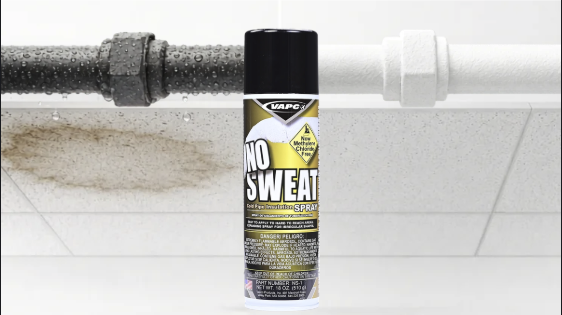
That Stain on Your Ceiling Tile Isn't a Roof Leak — It's Probably a Sweating Pipe
The brown ring on the ceiling tile. The rust-colored drip mark on the basement ceiling. The damp smell that shows up every summer and disappears in winter. A sweating pipe ceiling stain is one of the most misdiagnosed problems in building maintenance — mistaken for roof leaks and plumbing failures — that misdiagnosis leads to repairs that fix the symptom while the actual cause keeps dripping.
If the stain gets worse in summer and better in winter, it's almost certainly not a roof leak. It's condensation from a sweating pipe above the ceiling, and it's been building longer than the stain suggests.
How to Tell It's Condensation, Not a Leak
The diagnostic pattern is consistent:
Condensation staining gets worse in summer when humidity is high and cold lines are running hard. Roof leaks track with rain. Plumbing leaks are constant or follow fixture use. If the stain appears or worsens during hot, humid weather regardless of rainfall, that's condensation.
Staining directly below a cold water supply line, refrigeration pipe, or AC supply line is the signature pattern. The pipe above is sweating; the drip falls onto the tile or ceiling surface below.
A sweating pipe produces moisture across its entire cold surface — not from a joint or fitting failure. If you can access the pipe and there's no dripping from a connection point, but the surface is wet when the air is humid, it's condensation.
Chronic condensation dripping from a pipe rusts the metal components around it — hangers, support straps, adjacent fasteners. That rust pattern, combined with ceiling staining below, is a reliable condensation signature.
What's Happening Above That Ceiling Tile
The tile stain is late-stage evidence. By the time a ceiling tile is visibly stained, the condensation has been dripping long enough to saturate the tile, and the environment above it has been persistently damp for an extended period.
What that persistent dampness does in the ceiling cavity:
Saturates any existing insulation, reducing its effectiveness and creating a reservoir that stays wet between dripping events.
Feeds mold in the ceiling cavity — above drop ceiling tiles, in the space between a basement ceiling and the floor above, in insulation batts, on wood framing. The visible stain is on the tile. The mold is in the structure.
Rusts and corrodes metal components — pipe hangers, wire supports, HVAC components sharing the ceiling cavity. Chronic moisture accelerates corrosion on everything in the splash zone.
Damages structural elements over time — ceiling framing, subfloor, drywall above finished basement ceilings. The water has to go somewhere; over seasons and years, it goes into whatever is below the drip point.
The Cost of Treating the Tile Instead of the Pipe
The instinct is to replace the stained tile. That fixes the visual problem for a season. The following summer, the pipe above it is still sweating, the new tile stains, and the mold that started in the ceiling cavity last year has had another season to spread.
Tile replacement is maintenance on a symptom. The actual repair is insulating the pipe — completely, including all valves, fittings, and irregular geometry that prefabricated foam wrap can't cover. Done correctly, it's a one-time fix. The pipe stops sweating, the dripping stops, and the ceiling cavity dries out.
Why the Pipe Wasn't Properly Insulated in the First Place
In most cases, the pipe was either never insulated at all, or it was partially insulated with foam wrap that left the fittings and valve bodies exposed.
Foam tube insulation handles straight pipe runs. It can't conform to a valve body, a tee fitting, a union, or any irregular geometry. Those surfaces stay cold and exposed, and they keep sweating even when the straight sections of the same pipe are fully wrapped. One exposed valve on an otherwise insulated cold water line is enough to keep a ceiling tile dripping all summer.
The complete fix covers every surface — straight runs with foam wrap, and everything else with a spray-on insulation coating that conforms to complex geometry.
The Repair and What to Expect
A contractor addressing this problem will follow these crucial steps:
-
Identify all sweating surfaces
Locate not just the obvious straight runs but every valve, fitting, tee, and connection on the cold line.
-
Apply foam wrap
Affix standard foam wrap to straight, accessible sections of the plumbing runs.
-
Apply spray-on insulation
Coat all remaining fittings, valves, and irregular geometry the structural foam can't conform to.
-
Build appropriate thickness
Layer the coating application as needed to match the specific humidity and ambient conditions of the space.
The spray-on coating — No Sweat (NS-1) by Vapco is the professional standard for this application — dries to a hard white finish. In any space where the pipe is visible, it can be painted to match surrounding surfaces. Drop ceiling environments, finished basements, and mechanical rooms with visible pipe runs don't have to look like the insulation was an afterthought. A painted coating blends in. Foam wrap doesn't.
Before Next Summer: The Maintenance Case
For facility managers and building owners with drop ceiling environments or exposed basement pipe runs, the highest-leverage maintenance task before summer humidity season is a pipe inspection. Look for:
- Any cold line with no insulation or incomplete insulation
- Valve bodies, tees, and fittings that are uninsulated even where adjacent pipe is wrapped
- Rust on hangers or supports indicating chronic dripping
- Any prior ceiling staining that was addressed by tile replacement without fixing the pipe above
Catching it before the tile tells you costs the price of a service call and a few cans of spray-on coating. Catching it after means tile replacement, mold remediation, and potentially structural repair — and another round of the same cycle the following summer if the pipe still isn't properly insulated.
The spec sheet and SDS for No Sweat are available at NO SWEAT.
Watch the NS-1 Demo Here: NO SWEAT.
FAQ: Ceiling Stains and Sweating Pipes
Why does my ceiling tile have a brown stain that gets worse every summer?
Brown staining on ceiling tiles that worsens in summer and improves in winter is almost always condensation from a sweating cold pipe above the ceiling, not a roof leak. Cold water lines and refrigeration pipes sweat when warm, humid summer air contacts their cold surfaces. The moisture drips onto the ceiling tile below, causing the characteristic brown ring staining. The seasonal pattern — worse in summer, better in winter — is the diagnostic signature.
How do I know if my ceiling stain is from a roof leak or a sweating pipe?
Track the stain against weather and seasons. Roof leaks correlate with rain events. Sweating pipe stains correlate with hot, humid weather regardless of rainfall. Access the ceiling cavity if possible and look for a cold water, refrigeration, or AC supply pipe directly above the stain. If the pipe surface is wet on humid days but no joint or fitting is actively dripping, the pipe is sweating.
Can a sweating pipe cause mold?
Yes. Chronic condensation dripping from a pipe creates a persistently damp environment in the ceiling cavity above the affected tile. Mold grows in insulation, on wood framing, and on ceiling tile backing in those conditions. The visible tile stain is surface evidence — mold growth in the cavity above it is the more serious consequence and typically requires professional remediation once established.
What's the permanent fix for a sweating pipe above a drop ceiling?
Complete insulation of every cold surface on the pipe — including all valves, fittings, tees, and irregular geometry, not just the straight runs. Foam tube wrap handles straight sections. A spray-on insulation coating handles everything else. No Sweat by Vapco is the professional product for this application. Partial insulation that leaves fittings or valves exposed will continue to produce dripping at those points.
Why does replacing the ceiling tile not fix the problem?
Replacing the tile removes the visible staining but doesn't address the sweating pipe above it. The new tile will stain again under the same conditions — typically within one summer season. The pipe needs to be properly insulated to stop the dripping at its source. Tile replacement without pipe insulation is cosmetic maintenance on a recurring problem.
Will insulating the pipe damage my drop ceiling during the repair?
A contractor applying spray-on insulation to pipe above a drop ceiling typically works through the ceiling grid by removing tiles in the affected area for access. The tiles are reinstalled after the work is complete. Spray-on application is precise — no foam bulk that requires cutting or reshaping around fixtures and supports in a tight ceiling cavity.