
A New System Isn't a Clean System
Nobody Rinses it at the Factory
A boiler, a heat exchanger, a coil of soft copper: every one of those came off a production line, and production lines leave things behind. Cutting oil, machining fluid, mill scale, and protective film. Then the install piles on with flux, solder splatter, and chips.
Fire it up dirty and it settles on the hottest surfaces. Flux residue is mildly acidic, so it starts working on your metals the day the pump turns.
1. Utility Bills
Rust and sludge build insulation inside pipes. Equipment runs longer to hit setpoints, spiking energy costs.
2. Glycol Charge
Expensive new inhibitors burn themselves out fighting factory rust and debris instead of protecting your clean metal.
3. Components
Loose debris acts as liquid sandpaper, destroying pump seals, bearings, and impellers while packing strainers.
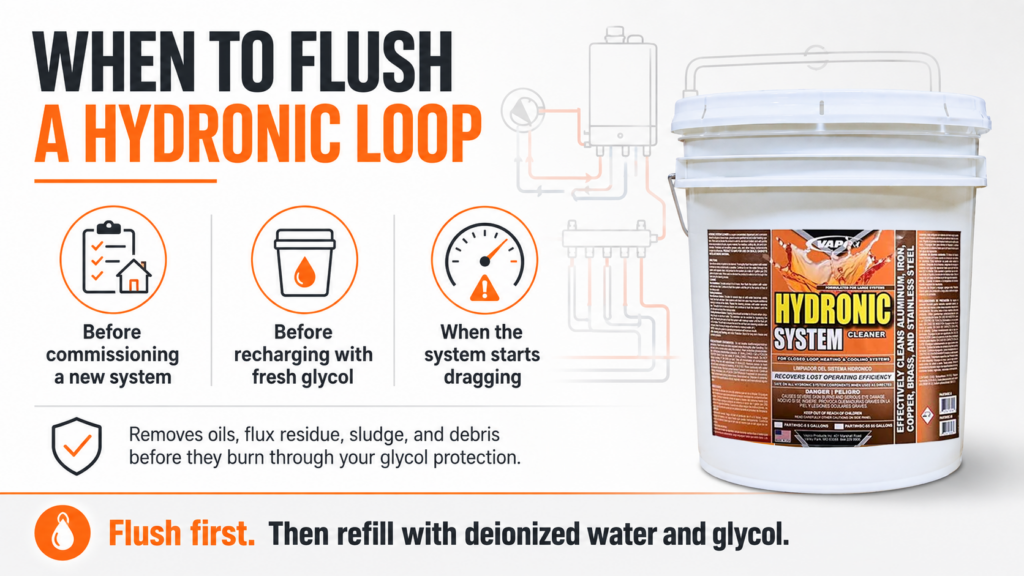
The 3 Times to Flush a Loop
Before Commissioning a New System
Standard practice under BSRIA BG 29 and ASHRAE. Clean out factory and install residue before the glycol goes in, so your fresh charge does the job you bought it for.
Before Recharging an Old System
If the old glycol runs dark, rusty, or thick, the loop looks the same. Flushing it first ensures new fluid protects clean metal instead of fighting 15-year-old sludge.
When a Running System Drags
Cold rooms, loud circulators, constantly packed strainers. A chemical flush clears blockages and restores design flow before you have to quote a new boiler.
What Hydronic System Cleaner Does
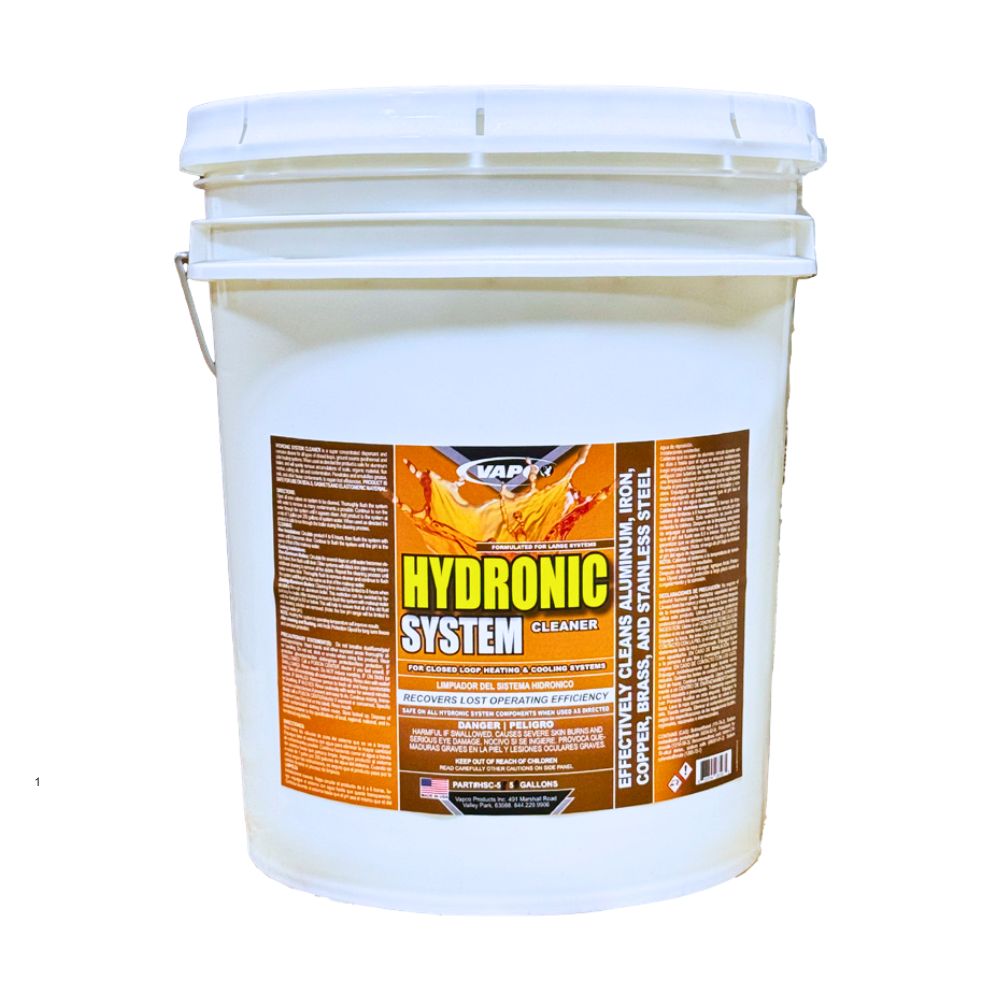
HSC is a concentrated closed-loop cleaner built specifically for this work. It's an alkaline cleaner—not a squirt bottle out of the truck—designed to clear systems without eating your gaskets.
- Emulsifies oils, grease, and cutting fluids.
- Lifts flux residue and loose corrosion.
- Loosens light scale and organic sludge.
- Safe on metals: Aluminum, iron, copper, brass, stainless.
- Safe on parts: Seals, gaskets, elastomers.
- Highly Alkaline: Runs at pH 11.5 to 12.5 (DOT Class 8 corrosive).
Respect the Chemistry
HSC is heavily alkaline by design to saponify oils. You cannot just dump the effluent down the drain, and it demands a thorough rinse cycle afterward until your flush water matches makeup water parameters (or drops to 8.0 or below on aluminum loops).
How to Run It
Bring the system up to operating temperature while it's cleaning. It works better warm.
New Install Protocol
- Open all zone valves and flush the loop with water until it runs clean.
- Dose HSC at 1 gallon per 250 gallons of system water.
- Circulate 4 to 6 hours. Vent from the high point so you don't gas-bind the loop.
- Flush with water until it runs clear and pH matches makeup water.
Existing Fouled System
- Open all zone valves and flush with water until it runs clean.
- Dose HSC at 1 gallon per 250 gallons of system water.
- Circulate several days (until water is loaded). Aluminum boilers: cap at 8 hours unless bypassed.
- Flush with water until it runs clear. Aluminum systems: flush to pH 8.0 or below.
Don't Stop At Clean
Filling a freshly cleaned loop with hard tap water restarts the clock on everything you removed. Refill with Vapco Deionized Water and your glycol charge to keep it running exactly the way it was drawn.