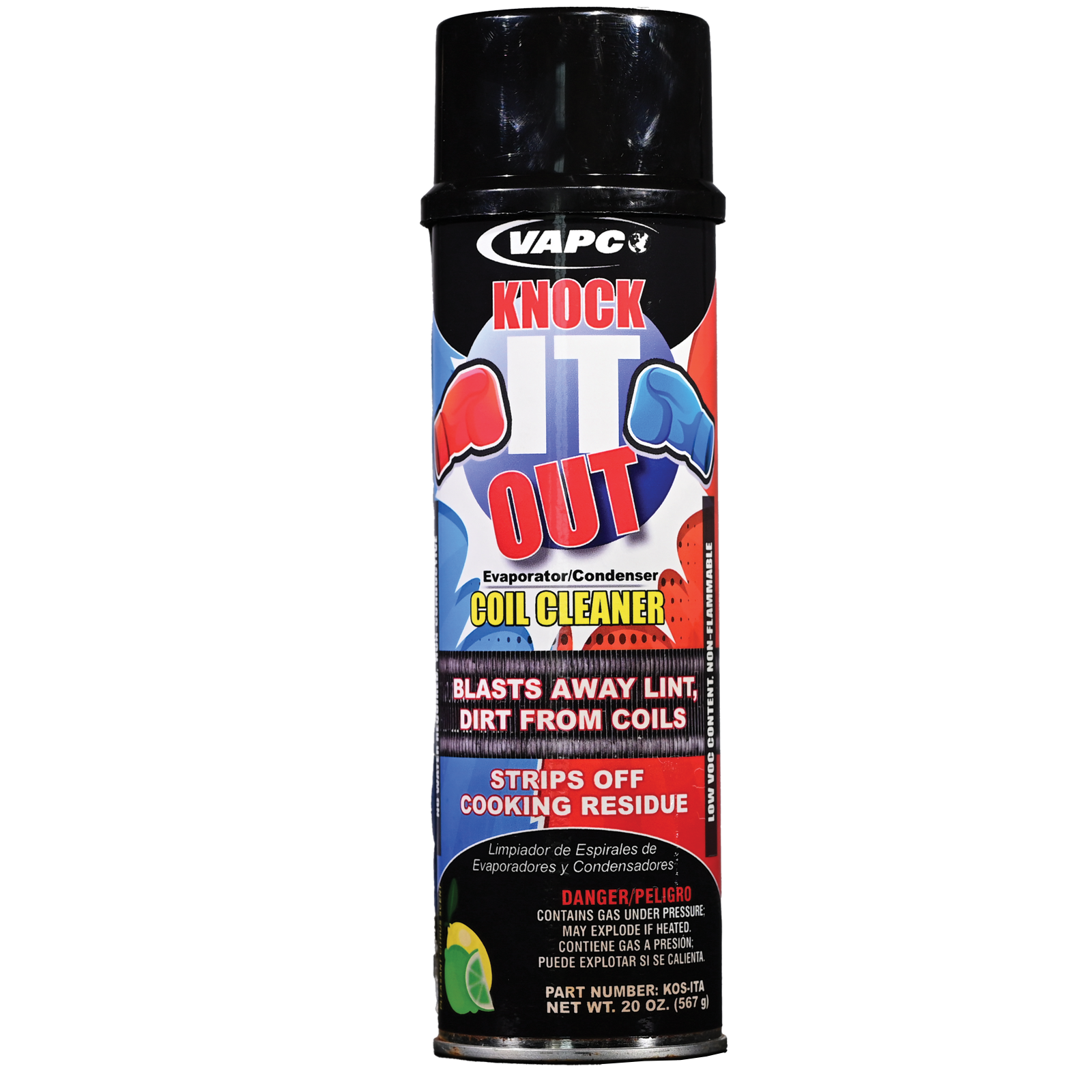
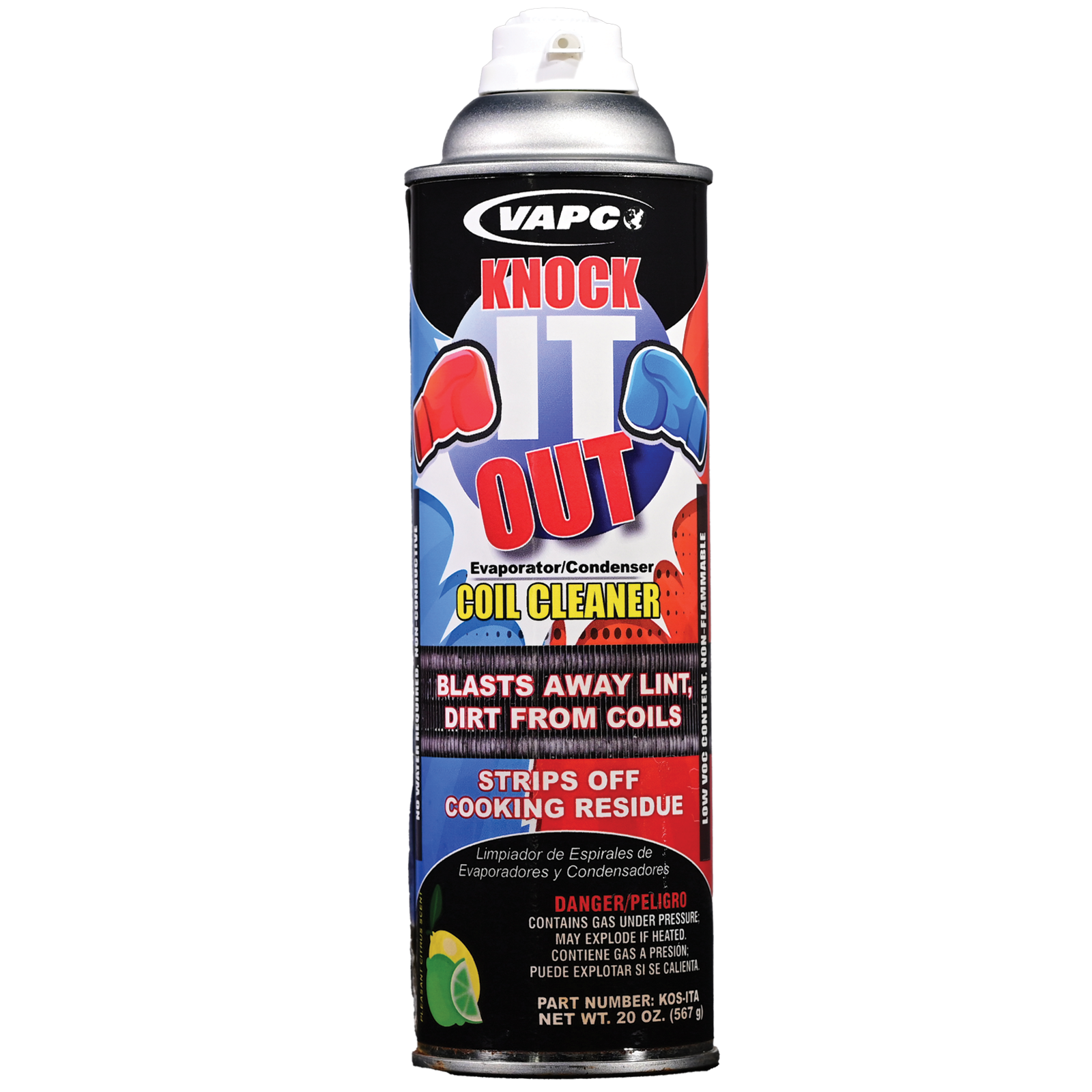
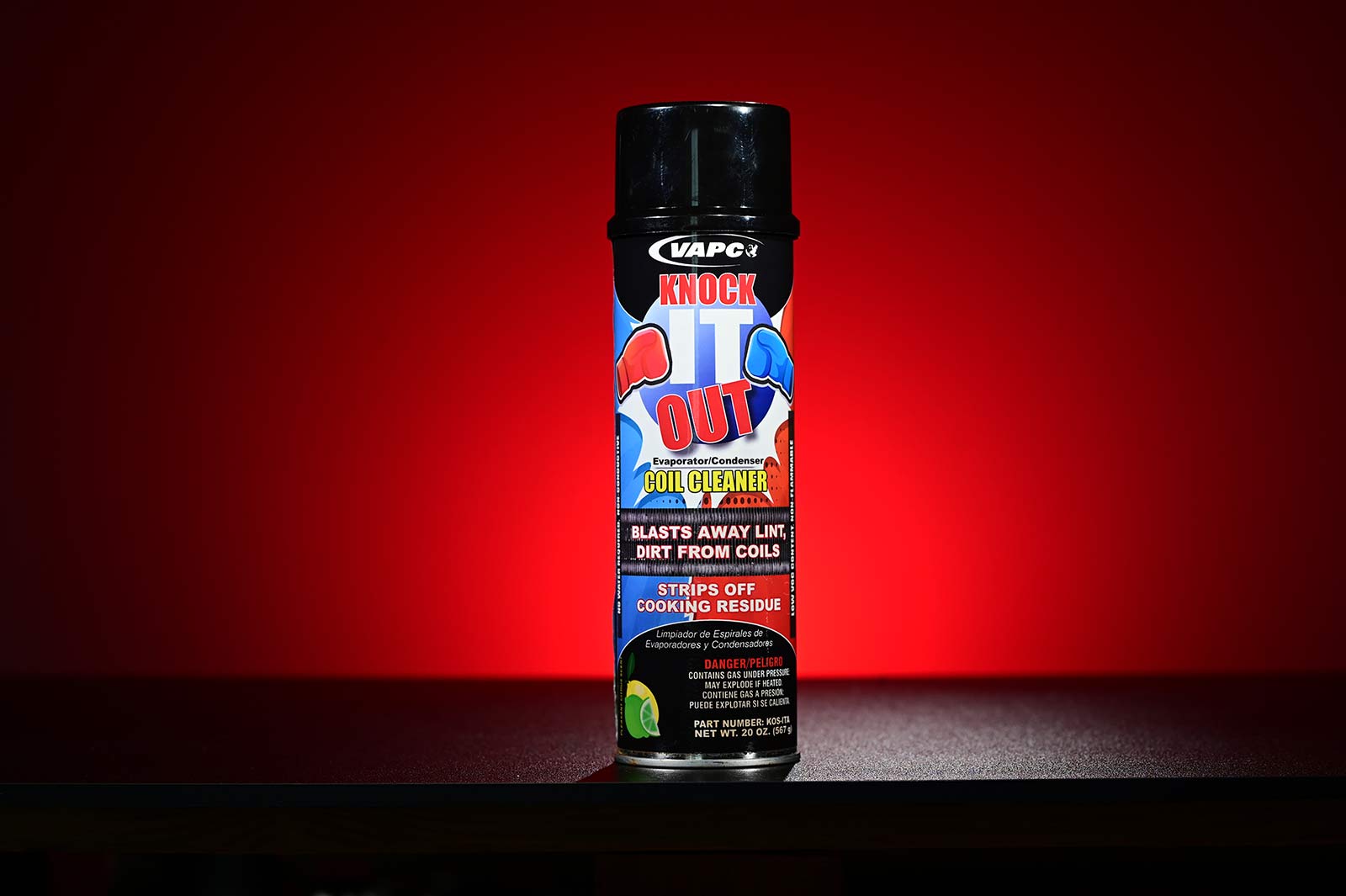
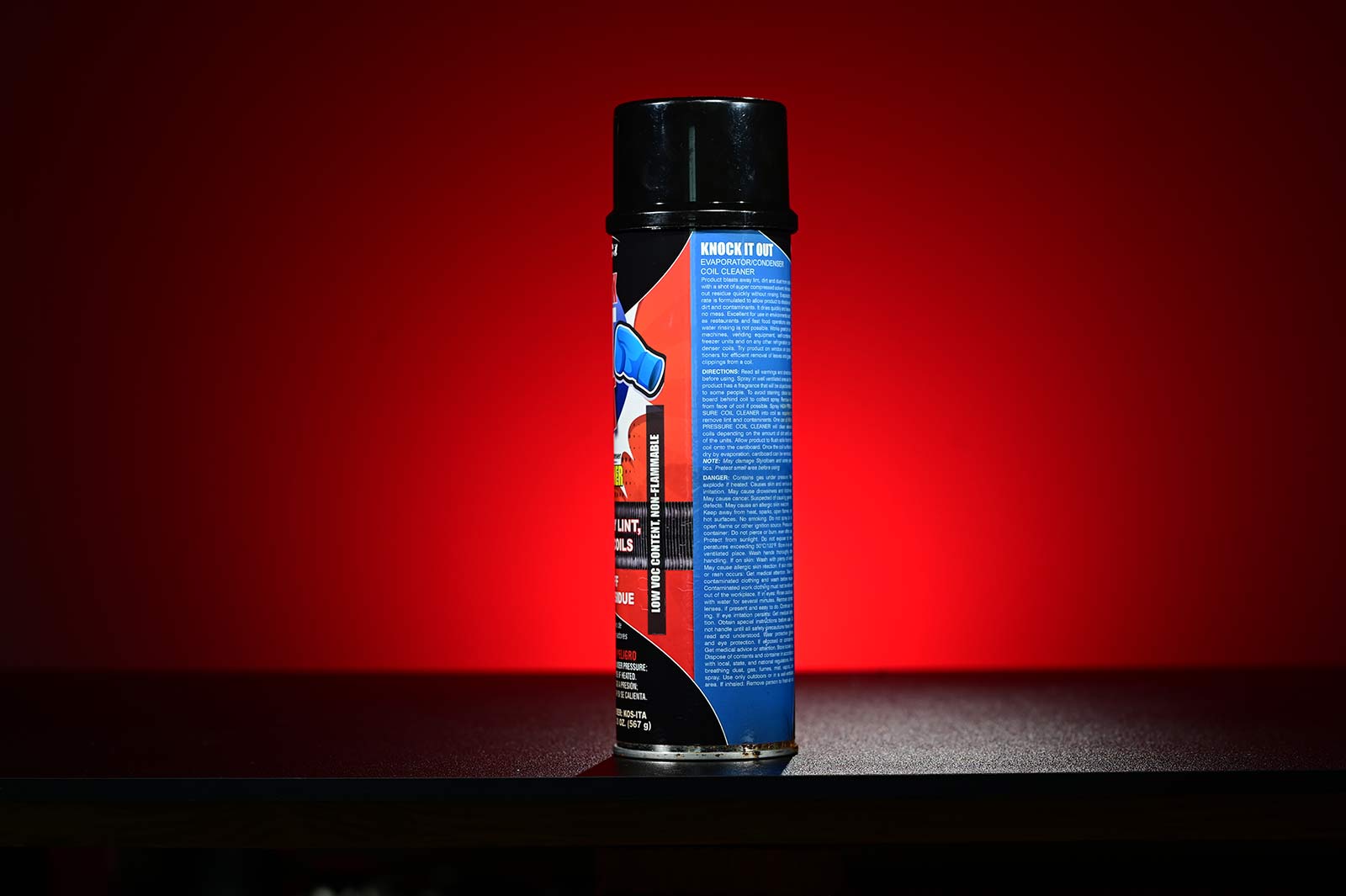
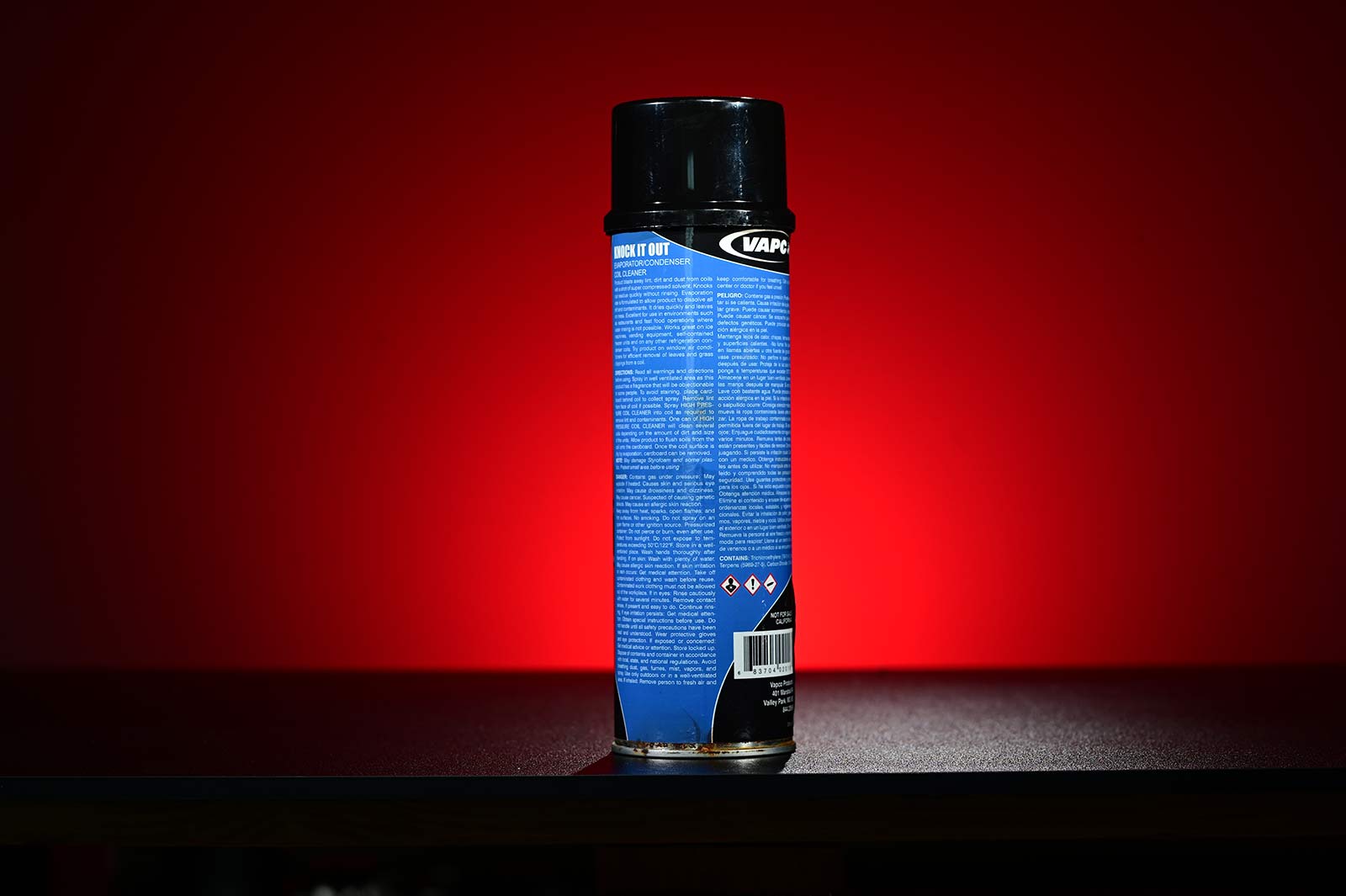
KNOCK IT OUT
Powerful Coil Cleaning Solution
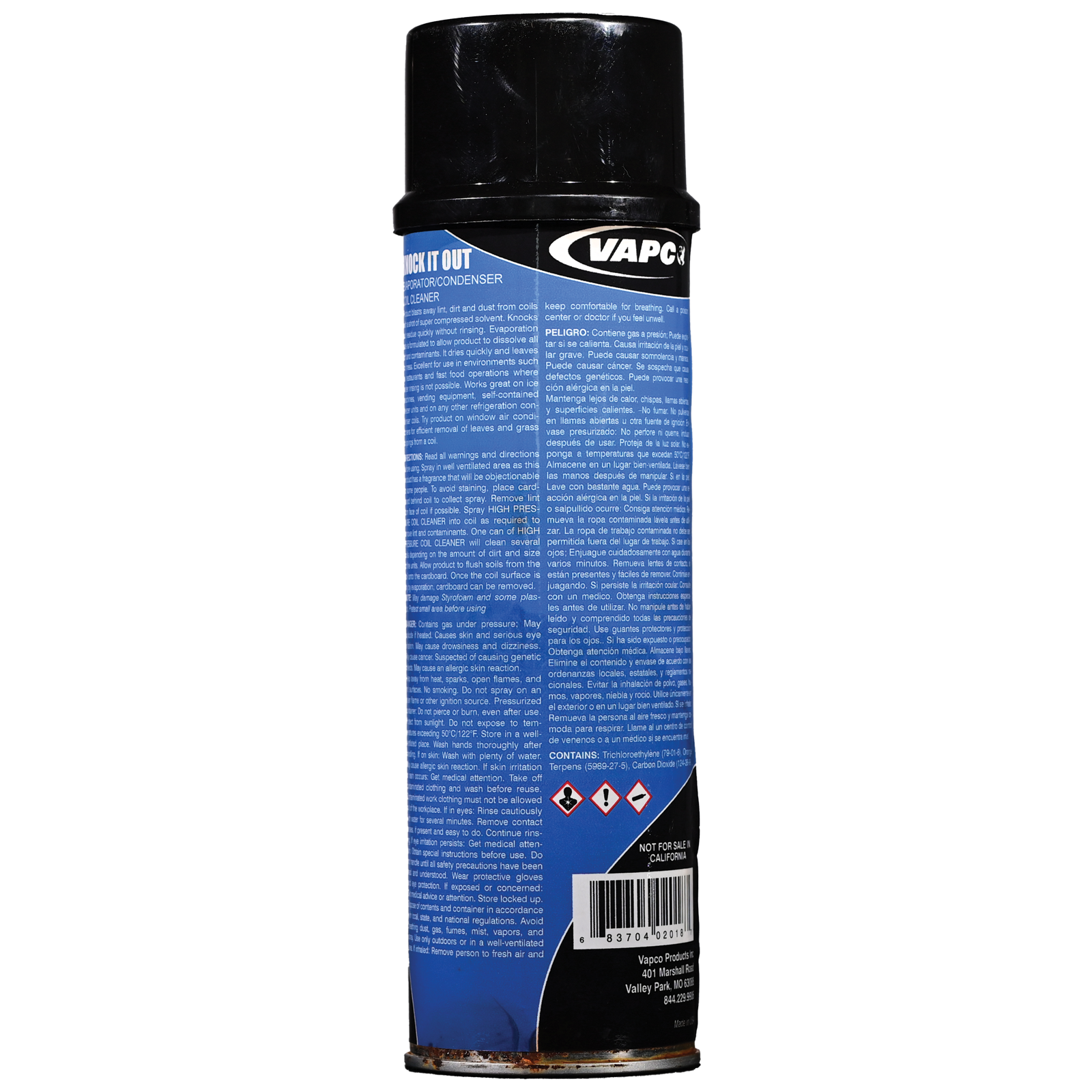
KNOCK IT OUT is a specialized coil cleaner designed to effectively remove lint, dirt, dust, and other contaminants from HVAC systems. Its unique formula blasts away residue without the need for water rinsing, making it ideal for environments where water is limited or impractical.
Key Features and Benefits:
- Powerful Cleaning Action: Removes stubborn contaminants with ease.
- No Water Rinsing Required: Convenient and efficient for various applications.
- Fast-Acting Formula: Quickly dissolves dirt and contaminants.
- Leaves No Mess: Dries quickly and leaves surfaces clean.
- Ideal for Specific Environments: Perfect for restaurants, fast food operations, ice machines, vending equipment,self-contained freezer units, and window air conditioners.
KNOCK IT OUT is a reliable and effective coil cleaning solution that can be used in various settings. Its powerful cleaning action, convenience, and versatility make it an ideal choice for professionals and homeowners alike.
Part Number; Size
- KOS-ITA 20 oz aerosol 12/cs
Directions:
Effective Coil Cleaning in a Few Simple Steps
Before Use:
- Read Warnings and Directions: Carefully review the product label for safety information.
- Protect Surfaces: Place cardboard behind coils to prevent staining.
- Remove Lint: If possible, remove any visible lint from the coil surface.
Application:
- Spray Directly: Spray KNOCK IT OUT directly into the coils.
- Allow to Sit: Let the product sit for a few minutes to allow it to penetrate and dissolve contaminants.
- Enjoy Clean Coils: KNOCK IT OUT effectively removes lint and contaminants, leaving your coils clean.
Note: Avoid Contact with Certain Materials: May damage styrofoam and some plastics. Test a small area before use.
DANGERS & PRECAUTIONS:
Read and understand the product’s label and Safety Data Sheet. It contains gas under pressure and may explode if heated. Do not expose to temperatures exceeding 50°C/120°F. Wear protective gear such as gloves, goggles, protective clothing, vapor respirator. Harmful if swallowed. It causes skin and eye irritation. Suspected of causing cancer.
DO NOT use it in any manner for which it was not designed. Always wear chemical-resistant gloves and safety glasses when applying the product.
Possible cancer-causing agent. Overexposure may cause damage to organs and other potential health concerns. Do NOT handle or use this product until all safety precautions have been read and understood. Use only outdoors or in a well-ventilated area. Keep away from sparks, open flames, and hot surfaces. No smoking. Do not spray on an open flame or other ignition sources.
Contact Us
News and Updates
Subscribe on Youtube
Follow Us on Facebook
SDS
⚠️ KNOCK IT OUT SDS – DOWNLOAD
Identification & Supplier Details
Product Identification
| Product Name |
Knock It Out Aerosol |
| Product Number/Brand |
KOS-ITA (Brand: Vapco) |
| Recommended Use |
Coil cleaner aerosol |
| Restrictions on Use (PCE) |
Restrictions apply after December 8, 2026 (no distribution to retailers) and March 8, 2027 (specific industrial/commercial use only with ≥ 0.1% PCE). Refer to Section 15 for full details. |
Supplier Details
| Name |
Vapco Products, Inc. |
| Address |
401 Marshall Road, Valley Park, Missouri 63088, United States |
| Telephone / Fax / Email |
(636) 923-2121 / (636) 923-3002 / [email protected] |
| Emergency Phone Number |
(800) 255-3924 |
Hazard Identification & Composition
GHS Classification
| OSHA (29 CFR 1910.1200) |
Acute toxicity, inhalation, Cat. 4; Carcinogenicity, Cat. 2; Gases under pressure, compressed gas; Skin corrosion/irritation, Cat. 2; Sensitization, skin, Cat. 1 |
GHS Label Elements
| Signal Word |
Warning |
| Hazard Statement(s) |
H280: Contains gas under pressure; may explode if heated
H315: Causes skin irritation
H317: May cause an allergic skin reaction
H332: Harmful if inhaled
H351: Suspected of causing cancer |
| Precautionary Statement(s) |
P201/P202: Obtain special instructions before use. Do not handle until all safety precautions have been read and understood.
P261: Avoid breathing dust/fume/gas/mist/vapors/spray.
P280: Wear protective gloves/protective clothing/eye protection/face protection.
P308+P313: IF exposed or concerned: Get medical advice/attention.
P410+P403: Protect from sunlight. Store in a well-ventilated place. |
Hazardous Components (Mixtures)
| Component Name |
CAS Number |
Concentration (wt%) |
| Perchloroethylene (Tetrachloroethylene) |
127-18-4 |
70 – 100 % |
| D-Limonene |
5989-27-5 |
3 – 7 % |
| Carbon Dioxide ($text{CO}2$) |
124-38-9 |
2 – 4 % |
Physical & Chemical Properties
| Physical State / Appearance |
Liquid / Aerosol spray |
| Color / Odor |
Colorless / Citrus solvent odor |
| Flammability |
Not considered a flammable aerosol or an extremely flammable aerosol by OSHA (29 CFR 1910.1200) |
| Boiling Point |
250°F (121°C) |
| Solubility in Water |
Insoluble in water |
| Density and/or Relative Density |
1.62 at 77°F (25°C) |
| Relative Vapor Density (Air=1) |
5.8 at 77°F (25°C) (Vapors are heavier than air) |
| Partition Coefficient (log Pow) |
2.88 |
Stability & Reactivity
| Reactivity / Stability |
Reacts with chemically active metals and acids. Contains gas under pressure; may explode if heated. |
| Conditions to Avoid |
Direct sunlight, temperatures exceeding 50°C / 122°F, heat, sparks, open flames, and incompatible materials. |
| Incompatible Materials |
Strong acids and alkalis, strong oxidizing agents, chemically active metals (e.g., aluminum, sodium, potassium), concentrated nitric acid, some plastics/rubbers/coatings. |
| Hazardous Decomposition Products |
Carbon oxide(s), chlorine, hydrogen chloride, and phosgene. |
Toxicological Information
Acute Toxicity Data
| Component |
Test Type |
Result |
| Tetrachloroethylene |
LC50 Inhalation (Rat, 6 hrs) |
4100 ppm |
| Tetrachloroethylene |
LD50 Oral (Rat) |
2629 mg/kg |
| D-Limonene |
LD50 Oral (Rat) |
4400 mg/kg |
Routes & Effects Summary
| Inhalation Effects / Sensitization |
Harmful if inhaled. High concentrations may cause CNS depression (dizziness, narcosis) and cardiac sensitization (due to chlorinated solvent). |
| Skin Corrosion/Irritation |
Causes irritation and may cause an allergic skin reaction. May cause defatting or blistering with prolonged contact. |
| Serious Eye Damage/Irritation |
Contact causes irritation with stinging, burning, and redness. |
| Carcinogenicity (Cat. 2) |
Suspected of causing cancer. Overexposure may also cause damage to kidneys, liver, lungs, blood, or CNS. |
First-Aid Measures
| General Advice |
Never give anything by mouth to an unconscious person. IF exposed or concerned: Get medical advice/attention. |
| If Inhaled |
Remove person to fresh air. Keep comfortable for breathing. Call a POISON CENTER/doctor if you feel unwell. |
| In Case of Skin Contact |
Immediately drench affected area with water for at least 15 minutes. Remove contaminated clothing. If skin irritation or rash occurs: Get medical advice/attention. |
| In Case of Eye Contact |
Immediately rinse with water for at least 15 minutes. Remove contact lenses. Continue rinsing. Obtain medical attention. |
| If Swallowed |
Rinse mouth. Do NOT induce vomiting. Obtain medical attention. |
| Note to Physician |
Do not administer adrenaline or epinephrine to a victim of chlorinated solvent poisoning. |
Fire-Fighting & Accidental Release Measures
Fire-Fighting Measures
| Suitable Extinguishing Media |
Dry chemical, foam, or carbon dioxide ($text{CO}2$). |
| Specific Hazards |
Container may explode if heated. Increased risk of fire or explosion with certain mixtures. Hazardous combustion products include chlorine, hydrogen chloride, and phosgene. |
| Protective Actions |
Use water spray or fog for cooling exposed containers. Do NOT fight fire when fire reaches containers. Evacuate area. Wear NIOSH-approved SCBA. |
Accidental Release Measures
| Personal Precautions |
Eliminate ignition sources. Do not get in eyes, on skin, or on clothing. Do not breathe vapors/spray. |
| Environmental Precautions |
Avoid release to the environment. Prevent entry to sewers and public waters. |
| Containment/Clean-up Methods |
Ventilate the area. Contain spills with dikes or absorbents. Take up liquid spill into absorbent material and transfer to a suitable container for disposal. |
Handling, Storage & PPE
Handling Precautions
| Safe Handling |
Do not handle until all safety precautions have been read. Avoid contact with skin/eyes. Do not spray on open flame or other ignition source. |
| Additional Hazards |
Do not pressurize, cut, or weld containers. Do not pierce or burn, even after use. |
Storage Conditions
| General Conditions |
Store in a dry, cool, well-ventilated place. Store locked up. Keep away from ignition sources and incompatible materials. |
| Storage Temperature |
Protect from sunlight. Do not expose to temperatures > 50°C / 122°F. |
| Incompatible Materials |
Strong acids and alkalis, strong oxidizing agents, chemically active metals. |
Personal Protective Equipment (PPE)
| Eye/Face Protection |
Chemical safety goggles. Emergency eye wash fountains and safety showers must be available. |
| Skin/Body Protection |
Protective gloves and chemical resistant clothing. Wear fire/flame resistant/retardant clothing. |
| Respiratory Protection |
Use a NIOSH-approved Self-Contained Breathing Apparatus whenever exposure may exceed established OELs. |
Transport & Regulatory Information
Transport Information (DOT, IMDG, IATA)
| Regulation |
UN Number |
Class |
Proper Shipping Name |
| DOT (US) / IMDG / IATA |
UN1950 |
2.2 (Non-Flammable Gas) |
Aerosols, non-flammable, (each not exceeding 1 L capacity) |
Regulatory Lists
| California Proposition 65 |
WARNING: This product can expose you to Tetrachloroethylene (Perchloroethylene), which is known to the State of California to cause cancer. (See www.P65Warnings.ca.gov) |
| State Right To Know (MA, NJ, PA) |
Tetrachloroethylene (Perchloroethylene) and Carbon Dioxide ($text{CO}2$) are listed. |
| US EPA TSCA Inventory |
Perchloroethylene, D-Limonene, and Carbon Dioxide are listed. |
| TSCA PCE Use Restrictions (Summary) |
After specific dates (Dec 8, 2026 and Mar 8, 2027), this substance/product is restricted to specific industrial and commercial uses (e.g., as a reactant, solvent in vapor degreasing, maskant, etc.) only, and cannot be distributed in commerce to retailers for any use. |
Disposal & Ecological Information
Ecological Information
| Toxicity to Aquatic Life |
This material is toxic to aquatic life. (Tetrachloroethylene LC50: 18.4 mg/L – 96 hrs, Fathead minnow; D-Limonene LC50: 0.72 mg/L – 96 hrs, Fathead minnow). |
| Persistence/Degradability |
Components are not biodegradable. |
| Bioaccumulative Potential / Mobility |
Not expected to bioaccumulate. This product is mobile in soil. |
Disposal Considerations
| Product Disposal |
Dispose of contents/container in accordance with local, regional, national, and international regulations. Do not pierce or burn, even after use. |
| Sewage Disposal |
Avoid release into the environment. Keep out of sewers and waterways. |
Disclaimer & Preparation Information
| Disclaimer Summary |
Information is accurate to the best of our knowledge, but no assumption of liability is made. Final determination of suitability is the sole responsibility of the user. No warranty, expressed or inferred, is created by this SDS. |
| Preparation Information |
Prepared by: Jessica Wilson
Date prepared: 2/3/2025 |
Comparable Products
- MITCO | F4-12 | HIGH PRESSURE COIL CLEANER
- NUCALGON | 4290-75 | NUBLAST
- DIVERSITECH | 357-20 | SAF-N-KLEEN
- RECTORSEAL | 88438 | KO DIRT BLASTER
- ACE | CCA | POWERBLAST
- REFRIGERATION TECHNOLOGIES | N/A | N/A
- VIRGINA/PARKER | 475248 | BLAST-A-COIL