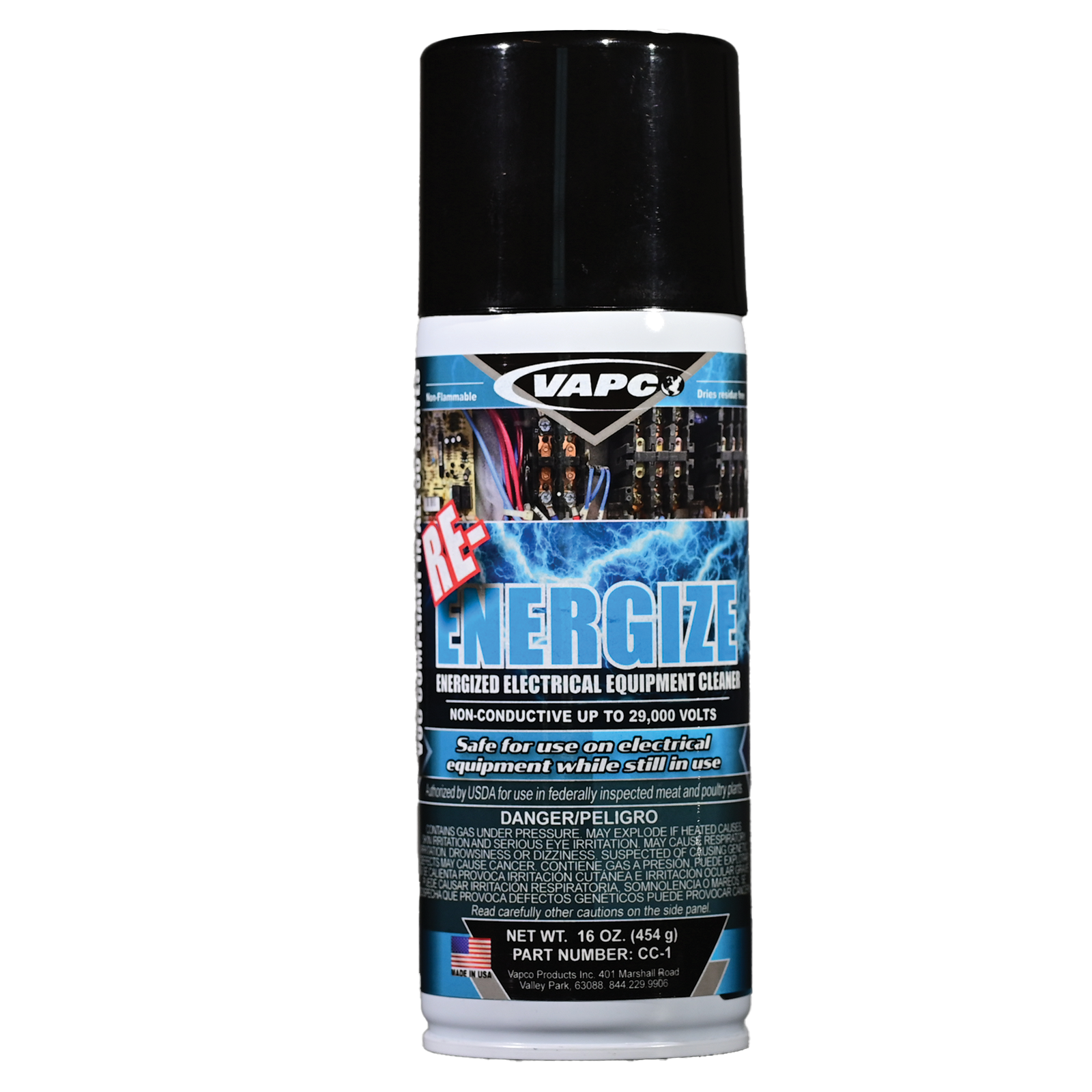
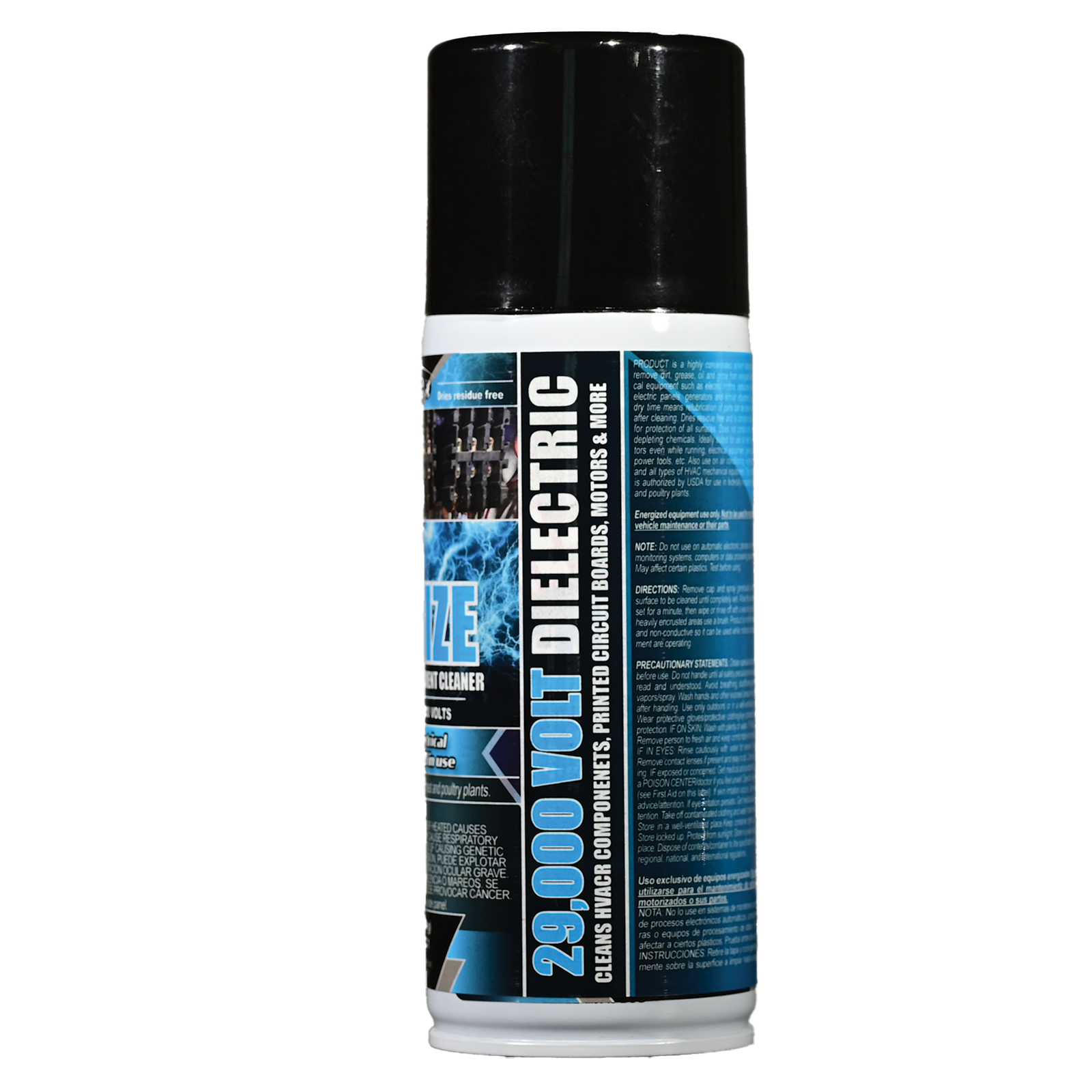
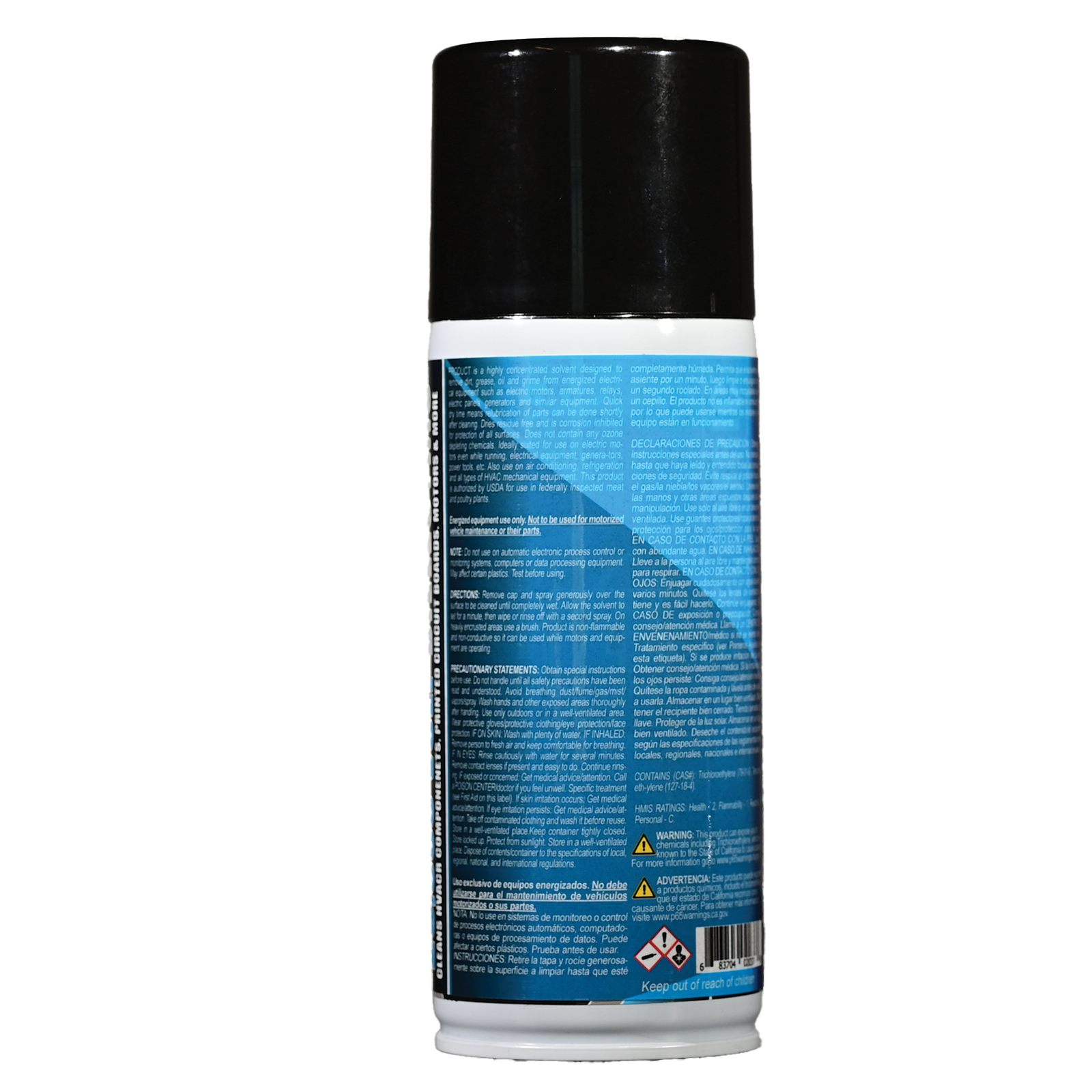
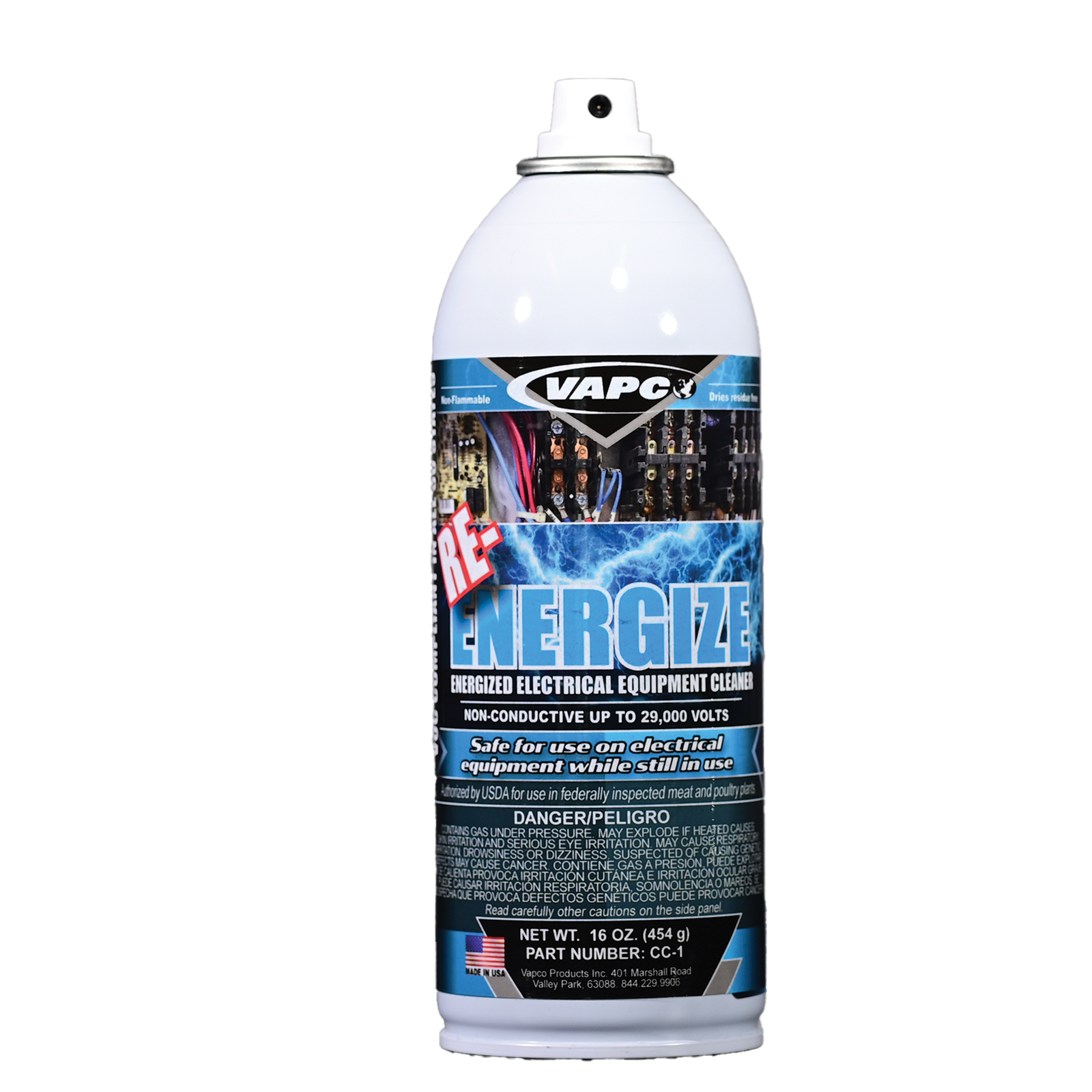
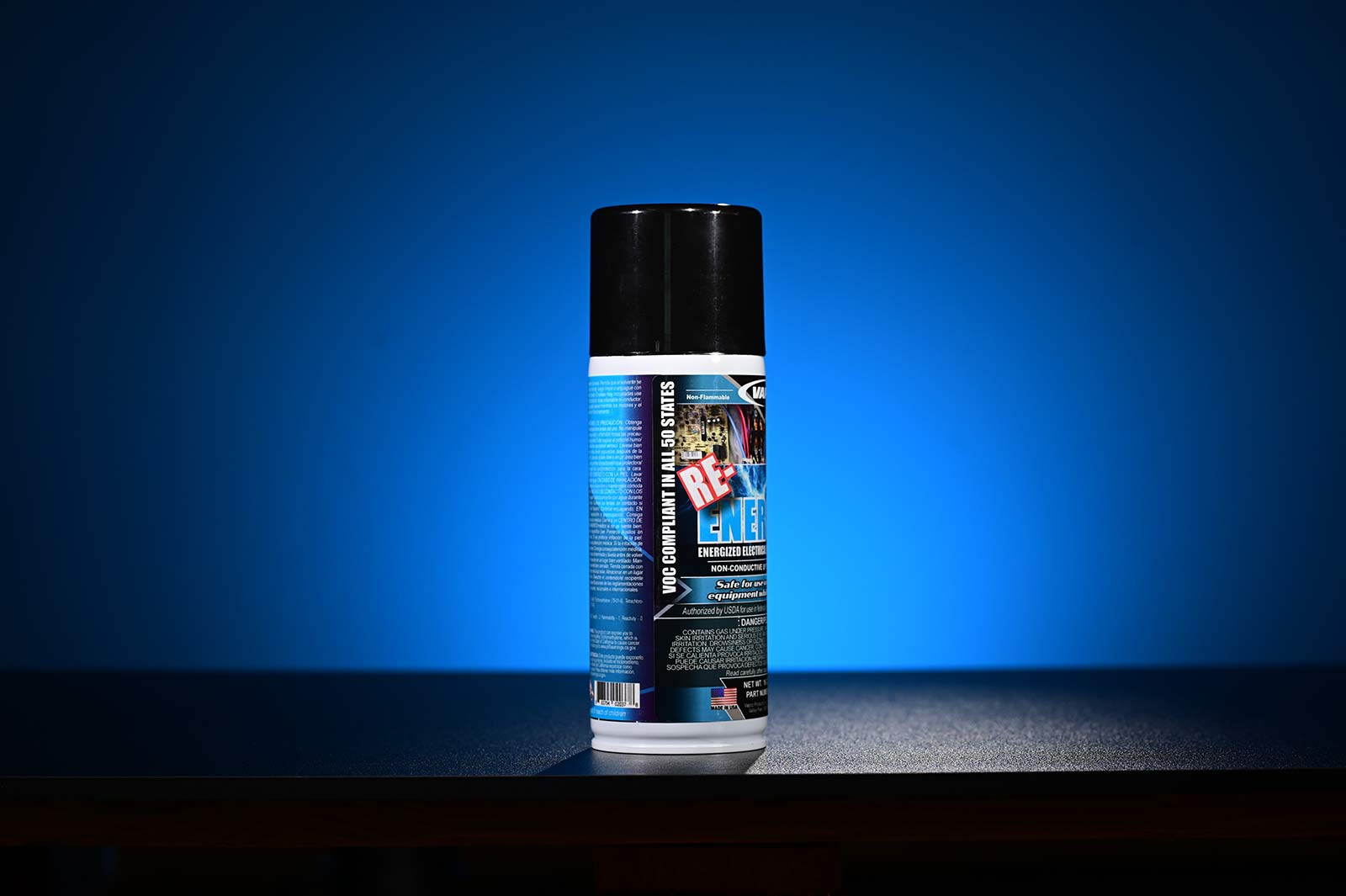
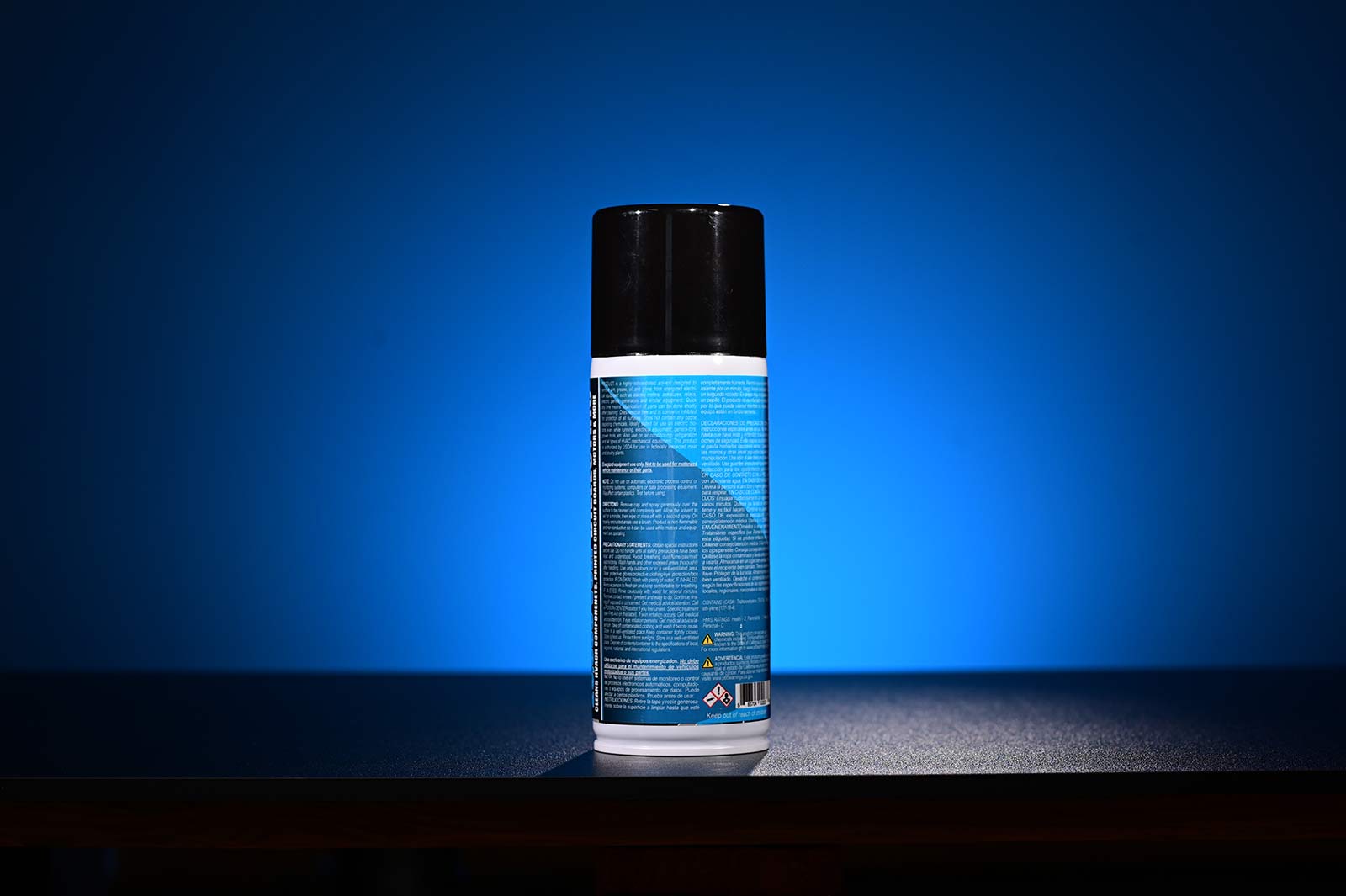
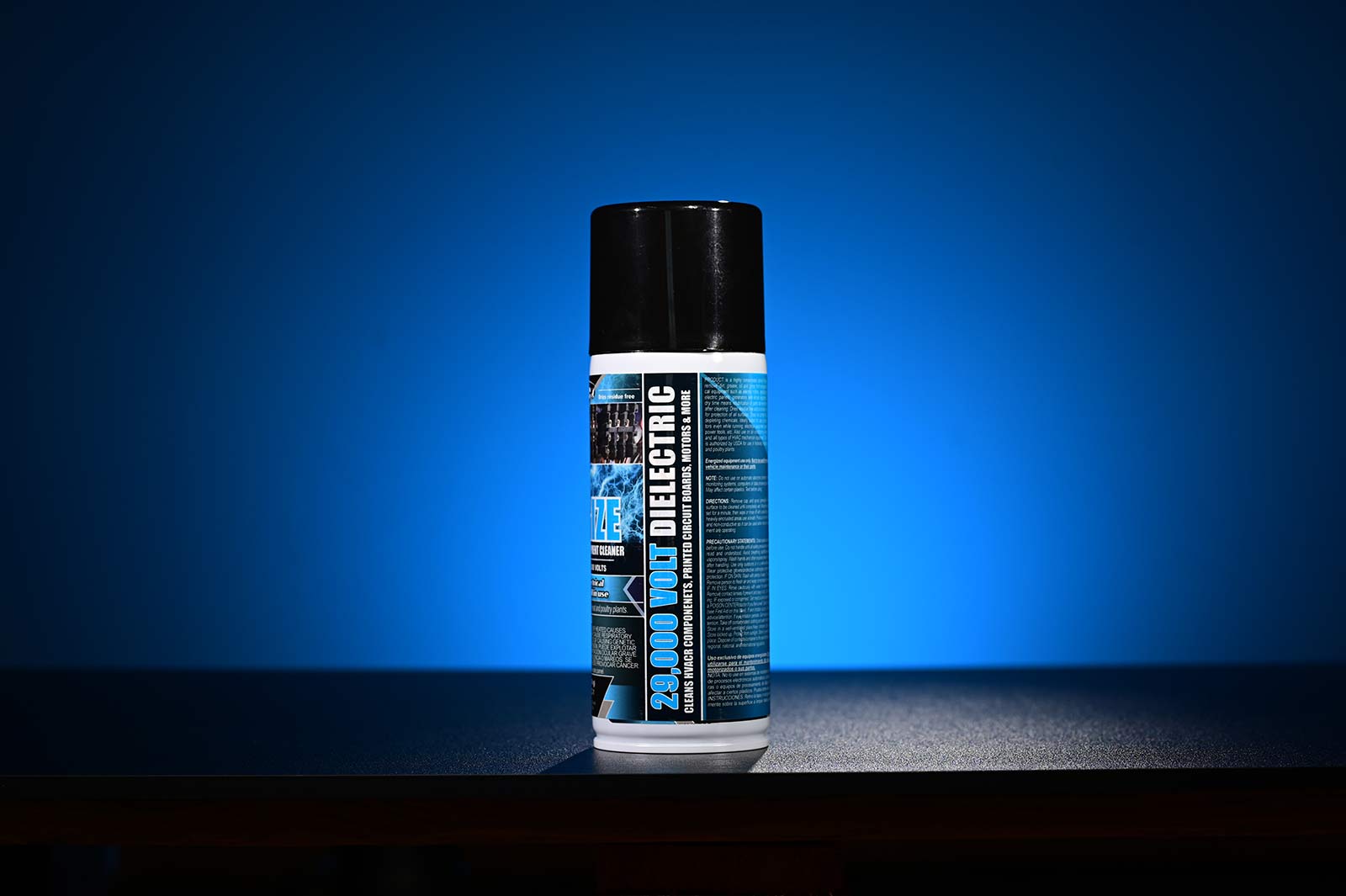
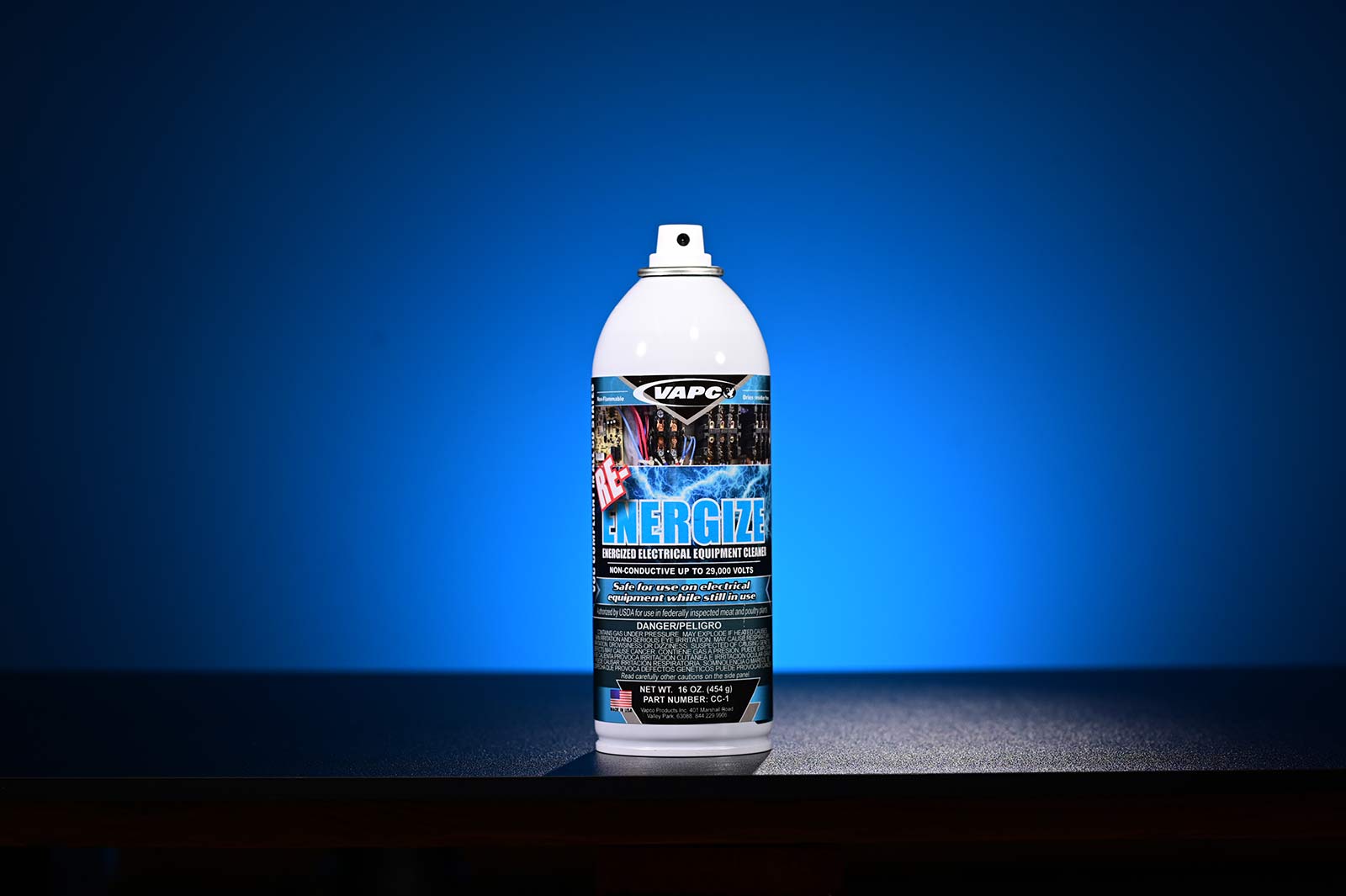
RE-ENERGIZE It Aerosol
Powerful and Safe Cleaning Solution for Electronic Components
ELECTRICAL CONTACT CLEANER is a specialized cleaner designed to effectively remove oil, grease, dirt, and other contaminants from mechanical electrical instruments. Its powerful formula ensures optimal performance and reliability of various electronic components.
Key Features and Benefits:
- Removes Contaminants: Effectively eliminates oil, grease, dirt, and other buildup.
- Safe for Electrical Components: Non-conductive up to 29,000 volts, ensuring safety and preventing damage.
- Non-Flammable: Reduces the risk of fire and ensures safe handling.
- Quick Drying: Dries quickly without leaving any residue.
- Ozone-Safe: Contains no ozone-depleting chemicals, protecting the environment.
- USDA Authorized: Approved for use in federally inspected meat and poultry plants.
Reenergize is an essential tool for maintaining the performance and reliability of electronic equipment. Its powerful cleaning action, safety features, and versatility make it a valuable asset for professionals and technicians in various industries.
Part Number; Size
Directions:
Effective Cleaning for Electrical Components
Important Notes:
- Energized Equipment Only: Use on energized equipment only.
- Avoid Certain Applications: Do not use on motorized vehicles, automatic electrical process controls, monitoring systems, computers, or data processing equipment.
- Test on Plastics: Test a small area before using on plastics to ensure compatibility.
Application:
- Remove Cap: Remove the cap from the spray can.
- Spray Thoroughly: Spray the cleaner over the surface, ensuring complete coverage.
- Allow to Set: Let the solvent sit for one minute.
- Wipe or Rinse: Wipe or rinse off the excess cleaner using a second spray. Use a brush for heavy areas.
Safety Information:
- Non-Flammable and Non-Conductive: The product can be used safely while motors and equipment are operating.
By following these directions, you can effectively clean and maintain your electrical components using Reinergize.
DANGERS & PRECAUTIONS:
Read and understand the product’s label and Safety Data Sheet before using this product. Avoid breathing fumes, mist, vapors, and spray. Wash hands and gloves thoroughly after handling this product.
Contact Us
News and Updates
Subscribe on Youtube
Follow Us on Facebook
SDS
⚠️ RE-ENERGIZER (CONTACT CLEANER) SDS – DOWNLOAD
Identification & Supplier Details
| Product Name (GHS Identifier) |
Re-Energize |
| Product Number |
CC-1 |
| Brand |
Vapco |
| Recommended Use |
Cleaners for mechanical electrical equipment |
| Restrictions on Use |
After December 8, 2026, cannot be distributed in commerce to retailers for any use. Various specific industrial/commercial uses allowed after March 8, 2027 (see full SDS for details). |
| Supplier Name |
Vapco Products, Inc. |
| Supplier Address |
401 Marshall Road, Valley Park, Missouri 63088, United States |
| Supplier Telephone |
(636) 923-2121 |
| Supplier Fax |
(636) 923-3002 |
| Supplier Email |
[email protected] |
| Emergency Phone Number |
(800) 255-3924 |
Hazard Identification & Composition
| GHS Classification |
Acute toxicity, inhalation, Cat. 4; Carcinogenicity, Cat. 2; Gases under pressure, compressed gas; Skin corrosion/irritation, Cat. 2; Specific target organ toxicity (single exposure), Cat. 3 |
| Signal Word |
Warning |
| GHS Pictograms |
|
| Hazard Statement(s) |
- H280: Contains gas under pressure; may explode if heated
- H315: Causes skin irritation
- H332: Harmful if inhaled
- H335: May cause respiratory irritation
- H336: May cause drowsiness or dizziness
- H351: Suspected of causing cancer
|
| Precautionary Statement(s) (Selection) |
- P201: Obtain special instructions before use.
- P261: Avoid breathing dust/fume/gas/mist/vapors/spray.
- P280: Wear protective gloves/protective clothing/eye protection/face protection.
- P304+P340: IF INHALED: Remove person to fresh air and keep comfortable for breathing.
- P410+P403: Protect from sunlight. Store in a well-ventilated place.
- P501: Dispose of contents/container to the specifications of local, regional, national, and international regulations.
|
Hazardous Components
| Chemical Name |
CAS No. |
Concentration (% weight) |
| Perchloroethylene |
127-18-4 |
60 – 100 % |
| Carbon Dioxide |
124-38-9 |
1 – 10 % |
Physical & Chemical Properties
| Physical State / Appearance |
Liquid / Aerosol |
| Color / Odor |
Colorless / Chlorinated solvent |
| Melting Point/Freezing Point |
-8°F (-22°C) |
| Boiling Point |
250°F (121°C) |
| Flammability |
Not considered a flammable aerosol by OSHA. |
| Vapor Pressure |
14.7 mmHg at 20°C |
| Density/Relative Density |
1.623 |
| Relative Vapor Density (Air=1) |
5.83 |
| Solubility (in Water) |
Insoluble in water |
| Partition Coefficient n-octanol/water (log value) |
2.88 |
Stability & Reactivity
| Reactivity |
May react with chemically active metals and acids. |
| Chemical Stability |
Contains gas under pressure; may explode if heated. Pressurized container: may burst if heated. |
| Conditions to Avoid |
Direct sunlight, temperatures exceeding 50°C/122°F, heat, sparks, open flames, and incompatible materials. |
| Incompatible Materials |
Strong acids, strong alkalis, strong oxidizing agents, chemically active metals (e.g., aluminum, barium, lithium, sodium, magnesium, potassium, titanium, beryllium), concentrated nitric acid, some plastics, rubbers and coatings. |
| Hazardous Decomposition Products |
Carbon oxide(s), chlorine, hydrogen chloride and phosgene. |
Toxicological Information
| Acute Toxicity Data (Tetrachloroethylene) |
LC50 Inhalation (Rat): 34200 mg/m3 – 8 hrs
LD50 Skin (Rabbit): >3228 mg/kg
LD50 Oral (Rat): 2629 mg/kg |
| Skin Corrosion/Irritation |
Causes irritation. May cause localized defatting, blistering with prolonged contact. |
| Serious Eye Damage/Irritation |
Causes severe irritation, burning, redness, and tearing. |
| Inhalation Hazards (Symptoms) |
Harmful if inhaled. High concentrations may cause CNS depression (dizziness, nausea, headache), respiratory irritation, asphyxiation, and cardiac sensitization. |
| Carcinogenicity |
Contains a component suspected of causing cancer (Perchloroethylene). |
| STOT – Single Exposure |
May cause drowsiness or dizziness, weakness and fatigue. |
| Chronic Health Hazards |
Possible cancer causing agent and overexposure may also include damage to kidneys, liver, lungs, blood, or central nervous system. |
First-Aid Measures
| General Advice |
Never give anything by mouth to an unconscious person. Seek medical advice if feeling unwell (show label). |
| If Inhaled |
Remove the exposed person to fresh air. Keep at rest. Get medical advice/attention. |
| In Case of Skin Contact |
Immediately drench affected area with water for at least 15 minutes. Remove contaminated clothing immediately. Obtain medical attention if irritation persists. |
| In Case of Eye Contact |
Immediately rinse with water for at least 15 minutes. Remove contact lenses. Continue rinsing. Obtain medical attention if irritation persists. |
| If Swallowed |
Rinse mouth. DO NOT induce vomiting. Obtain medical attention. |
| Note to Physician |
Do not administer adrenaline or epinephrine to a victim of chlorinated solvent poisoning due to risk of cardiac sensitization. |
Fire-Fighting & Accidental Release Measures
| Suitable Extinguishing Media |
Dry chemical, foam, or carbon dioxide (CO2). |
| Specific Hazards (Fire) |
Container may explode in heat of fire (compressed gas). Ruptured cylinders may rocket. Vapors are heavier than air. |
| Firefighting Actions |
Do NOT fight fire when fire reaches containers. Evacuate area. Fight fire remotely due to the risk of explosion. Use water spray/fog for cooling exposed containers. Wear NIOSH-approved SCBA. |
| Personal Precautions (Spill) |
Do not breathe vapors/gas. Keep away from heat, sparks, and ignition sources. Evacuate unnecessary personnel. |
| Environmental Precautions (Spill) |
Prevent entry to sewers and public waters. Avoid release to the environment. |
| Methods for Containment/Cleanup |
Eliminate all ignition sources first. Ventilate the area. Isolate the area until gas has dispersed. Take up liquid spill into absorbent material. Transfer to a suitable container for disposal. |
Handling, Storage & PPE
| Precautions for Safe Handling |
Do not handle until all safety precautions are read and understood. Do not pressurize, cut, or weld containers. Avoid contact with skin/eyes. Do not spray on open flame or other ignition source. |
| Conditions for Safe Storage |
Store in a dry, cool, well-ventilated place. Protect from sunlight. Do not expose to temperatures exceeding 50°C/122°F. Store locked up/in a secure area. |
| Incompatible Materials (Storage) |
Strong acids, strong alkalis, strong oxidizing agents, chemically active metals (e.g., aluminum, sodium, potassium), concentrated nitric acid, some plastics, rubbers and coatings. |
| Engineering Controls |
Ensure adequate ventilation, especially in confined areas. Use explosion-proof equipment. Proper grounding procedures. Emergency eye wash and safety showers available. |
| Required PPE |
Chemical safety goggles, protective gloves and clothing (chemical resistant/fire retardant), NIOSH-approved SCBA if exposure limits may be exceeded. |
Exposure Control Parameters (Tetrachloroethylene – 127-18-4)
| Limit Type |
Value (ppm / mg/m³) |
Source / Note |
| TWA (Inhalation) |
50 ppm / 340 mg/m³ |
AU (AU/SWA) |
| STEL (Inhalation) |
150 ppm / 1020 mg/m³ |
AU (AU/SWA) |
| IOELV-LTEL (Inhalation) |
20 ppm / 138 mg/m³ |
EU (EU/OSHA) (Skin) |
Transport & Regulatory Information
| DOT (US) Shipping Name |
Aerosols, non-flammable, (each not exceeding 1 L capacity) |
| UN Number / Class |
UN1950 / Class 2.2 |
| IMDG / IATA |
UN1950, Class 2.2, Aerosols, non-flammable (each not exceeding 1 L capacity) |
| California Proposition 65 |
WARNING: This product can expose you to chemicals including Tetrachloroethylene (Perchloroethylene), which is known to the State of California to cause cancer. For more information go to www.P65Warnings.ca.gov. |
| US EPA TSCA Inventory |
Perchloroethylene (127-18-4) and Carbon Dioxide (124-38-9) are listed. |
Disposal & Ecological Information
| Product Disposal |
Dispose of contents/container in accordance with local, regional, national, and international regulations. Do not pierce or burn, even after use. |
| Sewage Disposal / Environmental Release |
Avoid release into the environment. This material is hazardous to the aquatic environment. Keep out of sewers and waterways. |
| Toxicity (Tetrachloroethylene LC50 – 96 hr) |
Fathead Minnow: 18.4 mg/L
Rainbow Trout: 5 mg/L
Bluegill: 13 mg/L |
| Persistence and Degradability |
Component or components of this product are not biodegradable. |
| Mobility in Soil |
This product is mobile in soil. |
Disclaimer & Preparation Information
| Date Prepared |
1-31-2025 |
| Prepared by |
Jessica Wilson |
| Disclaimer Summary |
Information is provided without warranty, expressed or implied. Final determination of suitability is the sole responsibility of the user. The manufacturer is not responsible for loss, injury, or expense arising out of improper use. |