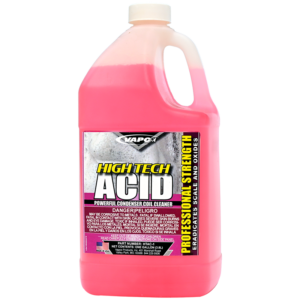
SCALE REMOVER No. 2
Powerful Scale Removal for Industrial Systems
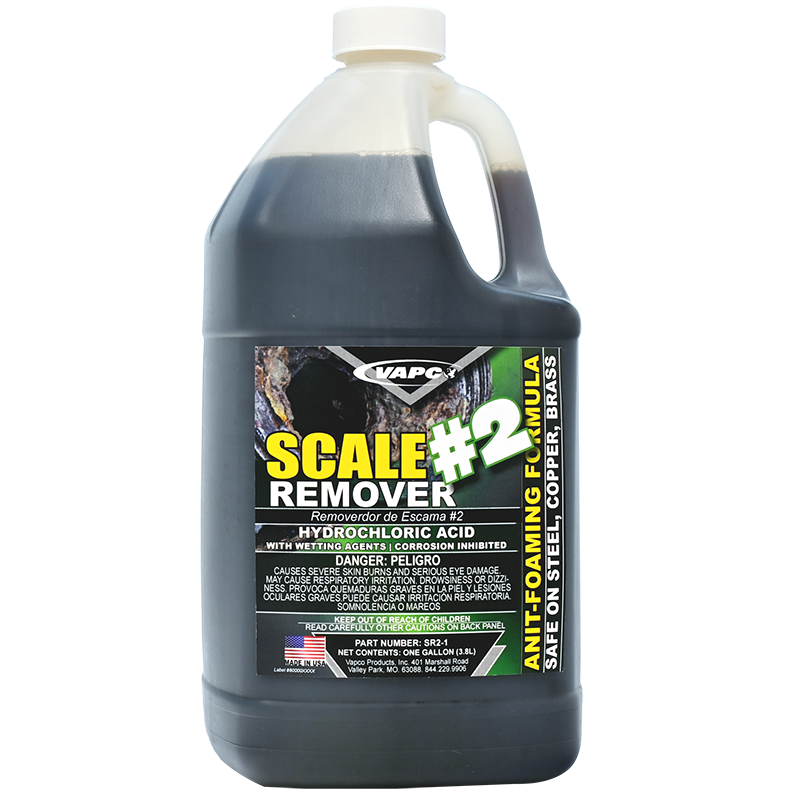
SCALE REMOVER No. 2 is a concentrated hydrochloric acid-based cleaner designed to effectively remove scale from various industrial systems. Its powerful formula includes wetting agents, anti-foaming agents, and corrosion inhibitors for optimal performance and protection.
Key Features and Benefits:
- Effective Scale Removal: Removes stubborn scale deposits from a variety of surfaces.
- Hydrochloric Acid-Based: Provides powerful cleaning action.
- Anti-Foaming Agents: Ensures efficient cleaning without excessive foaming.
- Corrosion Inhibitors: Protects metal surfaces from damage.
- Versatile Applications: Suitable for cooling towers, boilers, water coolers, pumps, condensers, heat exchangers,and piping.
- Compatible with Metals: Safe for use on steel, copper, and brass.
Important Note:
- Harmful Fumes: Handle with caution as fumes can be harmful to humans and equipment.
- Outdoor Use Only: Not recommended for indoor applications.
SCALE REMOVER No. 2 is a powerful and effective tool for maintaining the efficiency and cleanliness of industrial systems. Its concentrated formula and targeted action make it a valuable asset for professionals in various industries.
Part Number; Size
- SR2-1 1 gallon 4/cs
- SR2-5 5 gallons
Directions:
- Drain and flush system.
- Remove all loose debris. Clade bleed-off valve where applicable.
- Fill the system with fresh water.
- Add 1 gallon of Scale Remover No.2 for every 15 to 20 gallons of water in the system.
- Allow for water in the piping.
- Circulate solution until the scale is removed or the acid is spent.
- One pH indicator strip shows when the acid solution is neutralized. One or more additional dosages may be necessary for heavy scale.
To repeat dosage, add more Scale Remover No. 2 in the same 20 to 1 ratio used initially, then bleed enough water from the system. Repeat steps 1 through 3. Drain the system completely before proceeding with another dosage. Do not use more than 2 doses with the same water. After cleaning, thoroughly flush the system before refilling with fresh water. Adjust the bleed-off valve as necessary.
DANGERS & PRECAUTIONS:
Read and understand the product’s label and Safety Data Sheet before using this product. It causes severe burns of eyes, skin, nose, throat, and lungs. May be harmful if inhaled or swallowed. Do not mix with chlorine type bleaches or other household chemicals. Keep out of reach of children. Provide sufficient mechanical ventilation. Wear chemical-resistant gloves such as neoprene or rubber. Chemical splash goggles and a face shield are advised. Do not mix with any products.
SDS
⚠️ SCALE REMOVER #2 SDS – DOWNLOAD (SDS)
Identification & Supplier Details
| Product Name (GHS Identifier) |
Scale Remover No. 2 |
| Product Number / Brand |
SR2-1, SR2-5 / Vapco |
| Recommended Use |
Acid-based scale remover |
| Supplier Name / Address |
Vapco Products, Inc. / 401 Marshall Road, Valley Park, Missouri 63088, United States |
| Telephone / Email |
(636) 923-2121 / [email protected] |
| Emergency Phone Number |
(800) 255-3924 |
Hazard Identification & Composition
| GHS Classification (OSHA) |
- Eye damage/irritation, Cat. 1
- Skin corrosion/irritation, Cat. 1B
- Specific target organ toxicity (single exposure), Cat. 3
|
| Signal Word |
Danger |
| Hazard Statement(s) |
- H314: Causes severe skin burns and eye damage
- H335: May cause respiratory irritation
|
| Precautionary Statement (Urgent) |
P310: Immediately call a POISON CENTER/doctor. |
Hazardous Components
| Chemical Name |
CAS No. |
Concentration (% weight) |
| Hydrochloric acid, 37% |
7647-01-0 |
10 – 40 % |
Physical & Chemical Properties
| Physical State / Appearance |
Liquid / Clear liquid |
| Color / Odor |
Blue / Characteristic |
| Melting/Freezing Point |
32°F (0°C) |
| Boiling Point / Range |
212-230°F (100-110°C) |
| pH |
<2 (Strongly Acidic) |
| Solubility |
Soluble in water |
| Vapor Density (Air=1) |
Heavier than air |
| Evaporation Rate |
Slower than ether |
Stability & Reactivity
| Reactivity |
Hydrochloric acid is corrosive. Hydrogen gas may be formed when this product comes in contact with metals. |
| Chemical Stability / Hazardous Reactions |
Stable under recommended storage conditions. None known for hazardous polymerization. |
| Conditions to Avoid |
Direct sunlight, extremely high or low temperatures, heat, hot surfaces, sparks, open flames, and incompatible materials. |
| Incompatible Materials |
Strong alkalis, and organic materials. Corrosion can occur in contact with some metals and alloys. |
| Hazardous Decomposition Products |
Acid vapors, hydrogen gas, and chlorine compounds. |
Toxicological Information
| Acute Toxicity (Inhalation) |
LC50 Inhalation – Rat – 2810 ppm – 1 hr (Hydrochloric acid, 37%) |
| Skin/Eye Damage |
Causes severe burns, prolonged contact will destroy tissue. May result in loss of sight. |
| Sensitization / STOT-Single Exposure |
May cause irritation (severe), chemical burns, upper respiratory damage, and pulmonary edema. May cause drowsiness or dizziness. |
| STOT-Repeated Exposure |
Dermatitis may occur. Prolonged or repeated exposure can cause central nervous system depression (nausea, headache, narcosis, and drowsiness). |
| Mutagenicity / Carcinogenicity / Reproductive Toxicity |
Not classified. |
| Ingestion Risk |
Exposure may be harmful or fatal. Causes severe gastrointestinal irritation and burns to the digestive tract. |
First-Aid Measures
| General Advice |
Never give anything by mouth to an unconscious person. If you feel unwell, seek medical advice (show the label). |
| If Inhaled |
Remove person to fresh air and keep comfortable for breathing. Get medical advice/attention. |
| In Case of Skin Contact |
Immediately drench affected area with water for at least 15 minutes. Remove contaminated clothing. Obtain medical attention if irritation persists. |
| In Case of Eye Contact |
Immediately rinse cautiously with water for several minutes. Remove contact lenses if present. Continue rinsing. Immediately call a POISON CENTER/doctor (P310). |
| If Swallowed |
Rinse mouth. Do NOT induce vomiting. Obtain medical attention immediately. |
Fire-Fighting & Accidental Release Measures
| Suitable Extinguishing Media |
Water spray, fog, carbon dioxide (CO2), alcohol-resistant foam, dry chemical, or sand. Use media appropriate for surrounding fire. |
| Specific Hazards (Fire) |
Container may explode in heat of fire. Heat may build pressure. Hazardous Combustion Products: Acid vapors, hydrogen gas, and chlorine compounds. |
| Firefighting Actions |
Do NOT fight fire when fire reaches containers. Evacuate area. Use water spray or fog for cooling exposed containers. Wear NIOSH-approved Self-Contained Breathing Apparatus (SCBA). |
| Personal Precautions (Spill) |
Do not get in eyes, on skin, or on clothing. Do not breathe vapors/mist. Equip cleanup crew with proper PPE. Eliminate ignition sources first. |
| Containment & Cleanup |
Ventilate the area. Contain any spills with dikes or absorbents. Take up liquid spill into absorbent material. Transfer spilled material to a suitable container for disposal. |
| Environmental Precautions |
Prevent entry to sewers and public waters. Avoid release to the environment. |
Handling, Storage & PPE
| Precautions for Safe Handling |
Do not breathe gas, mist, spray, vapors. Wash hands thoroughly after handling (P264). Use only outdoors or in a well-ventilated area (P271). |
| Conditions for Safe Storage |
Store in a dry, cool, well-ventilated place. Keep container tightly closed (P403+P233). Store locked up (P405). Do not expose to temperatures exceeding 50°C/122°F. |
| Incompatible Materials for Storage |
Strong alkalis and organic materials. Corrosion can occur in contact with some metals. |
| Eye/Face Protection (PPE) |
Chemical safety goggles. (Wear eye protection/face protection, P280). |
| Skin/Body Protection (PPE) |
Wear protective gloves (chemical resistant materials) and suitable protective clothing. (Wear protective gloves/clothing, P280). |
| Respiratory Protection (PPE) |
Use a NIOSH-approved Self-Contained Breathing Apparatus (SCBA) whenever exposure may exceed limits. |
Transport & Regulatory Information
Transport Information (DOT, IMDG, IATA)
| UN Number |
UN1789 |
| Hazard Class |
8 (Corrosive) |
| Packing Group |
II |
| Proper Shipping Name |
Hydrochloric acid |
Regulatory Information
| Right To Know Components |
HYDROCHLORIC ACID / HYDROGEN CHLORIDE (CAS: 7647-01-0) is listed on Massachusetts, New Jersey, and Pennsylvania Right To Know lists. |
| US EPA TSCA Inventory |
Hydrochloric acid 37% (7647-01-0) is listed. |
Disposal & Ecological Information
| Product Disposal / Waste Treatment |
Dispose of contents/container in accordance with local, regional, national, and international regulations. This material, as supplied, is hazardous waste (U.S. EPA 40CFR 261, Hazardous waste number D002 – Corrosivity). |
| Sewage Disposal |
Avoid release into the environment. This material is hazardous to the aquatic environment. Keep out of sewers and waterways. |
| Ecological Toxicity (Aquatic) |
LC50 – Mosquito fish (Gambusia affinis affinis) – 282 mg/l – 96 hrs. |
| Mobility in Soil |
This product is mobile in soil. |
Disclaimer & Preparation Information
| Prepared By |
Jessica Wilson |
| Date Prepared |
2/18/2025 |
| Disclaimer Summary |
Information is believed accurate but provided without warranty. Final determination of suitability is the sole responsibility of the user. Manufacturer will not be responsible for loss, injury, or expense arising from improper use. |