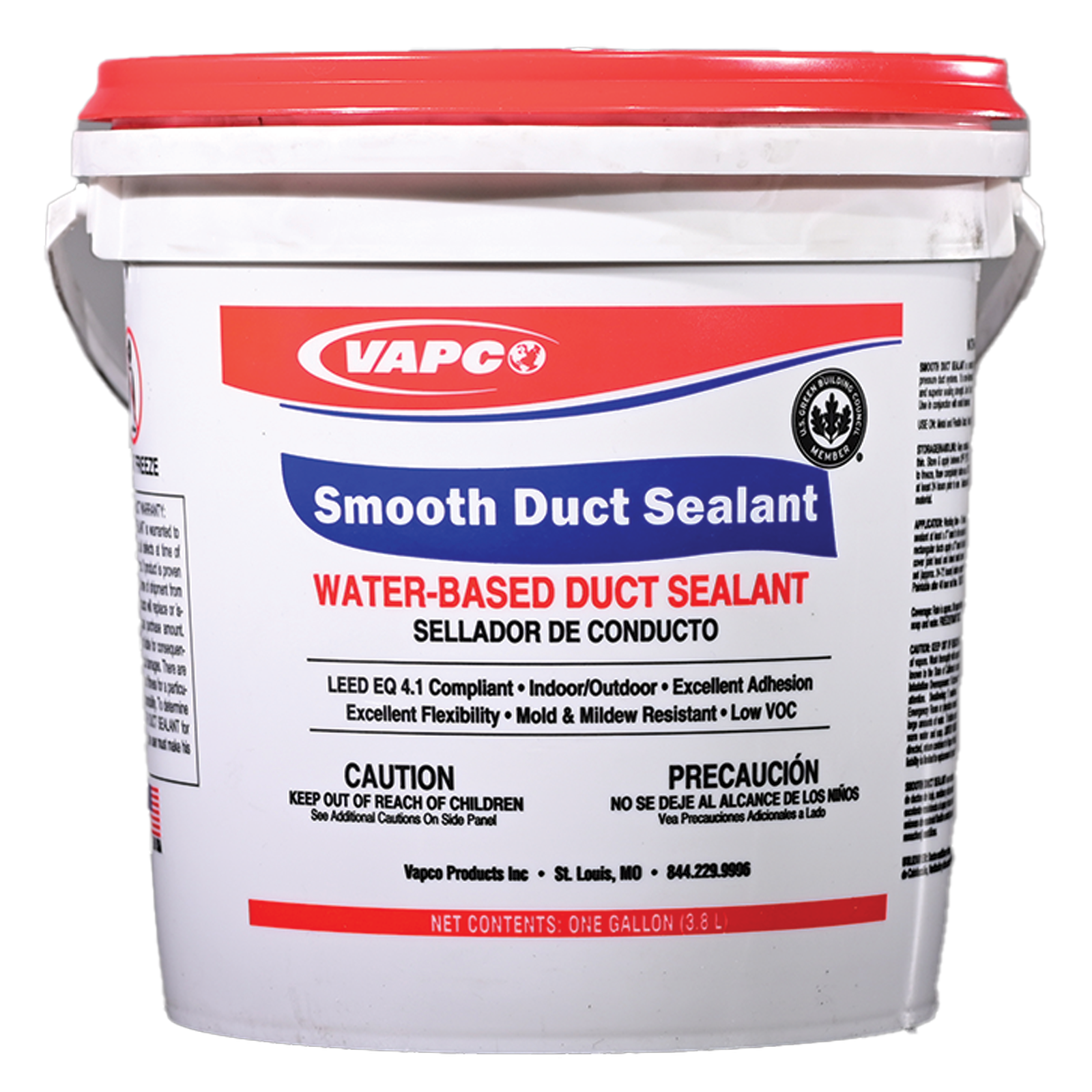
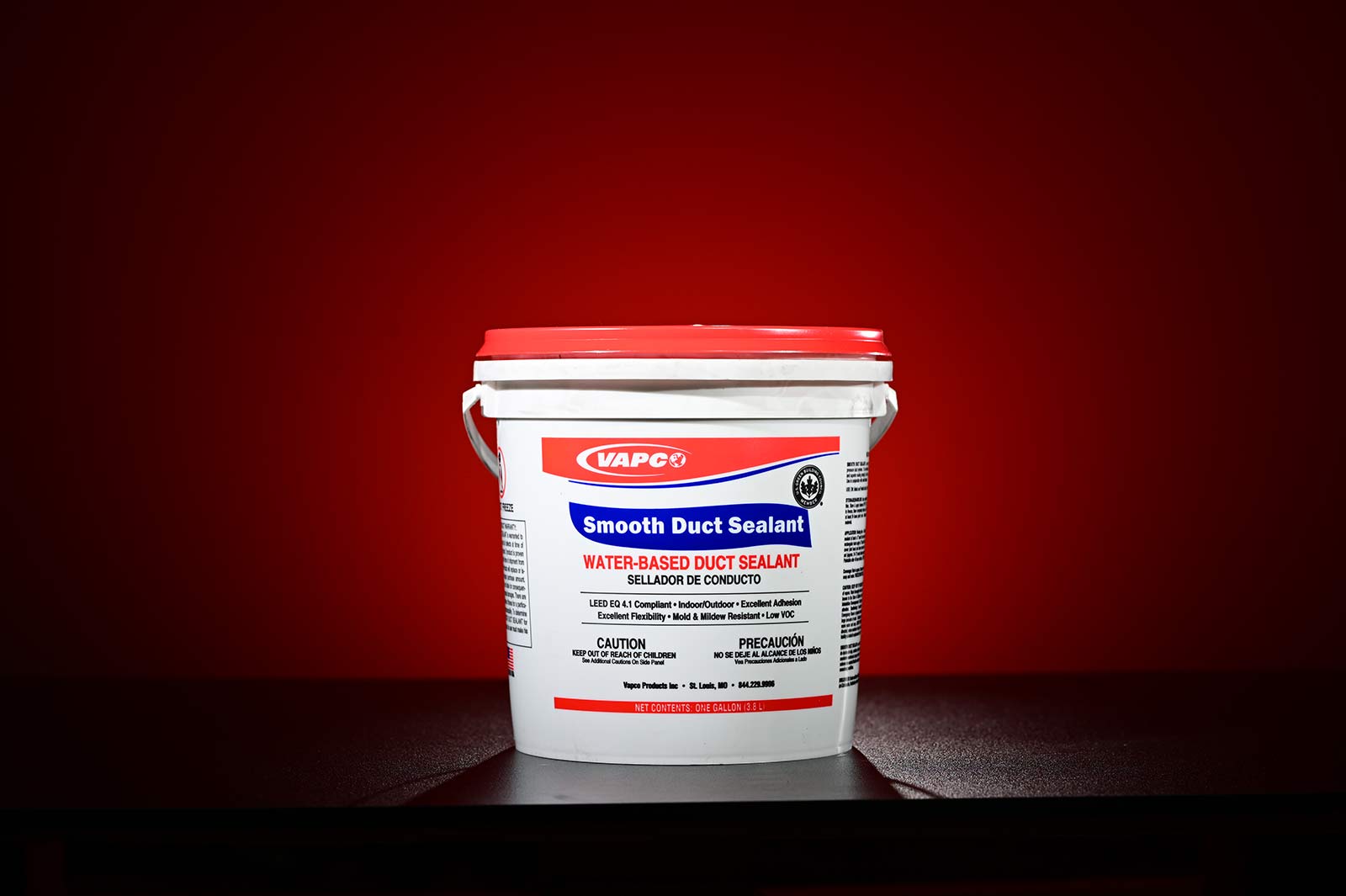
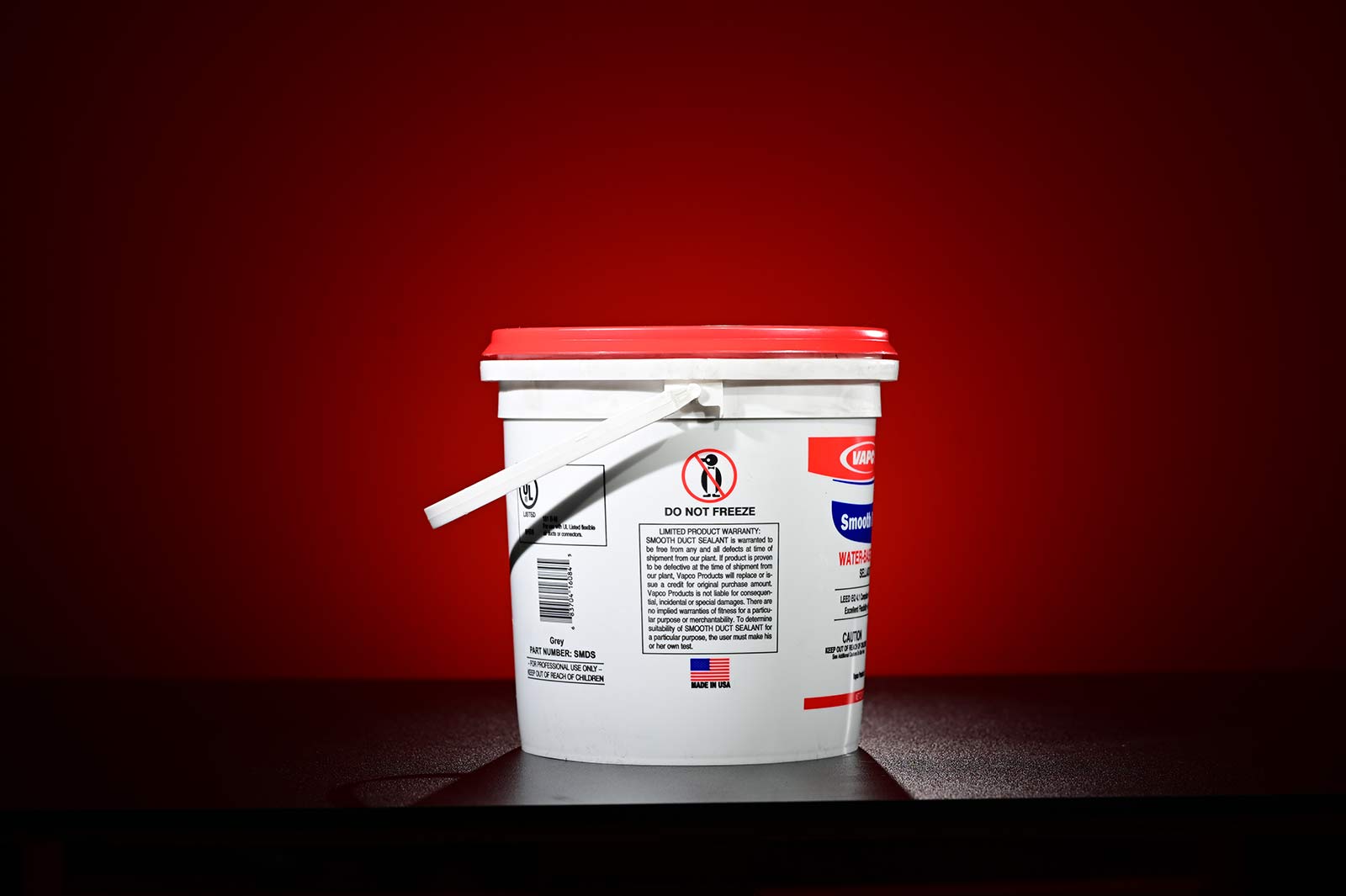
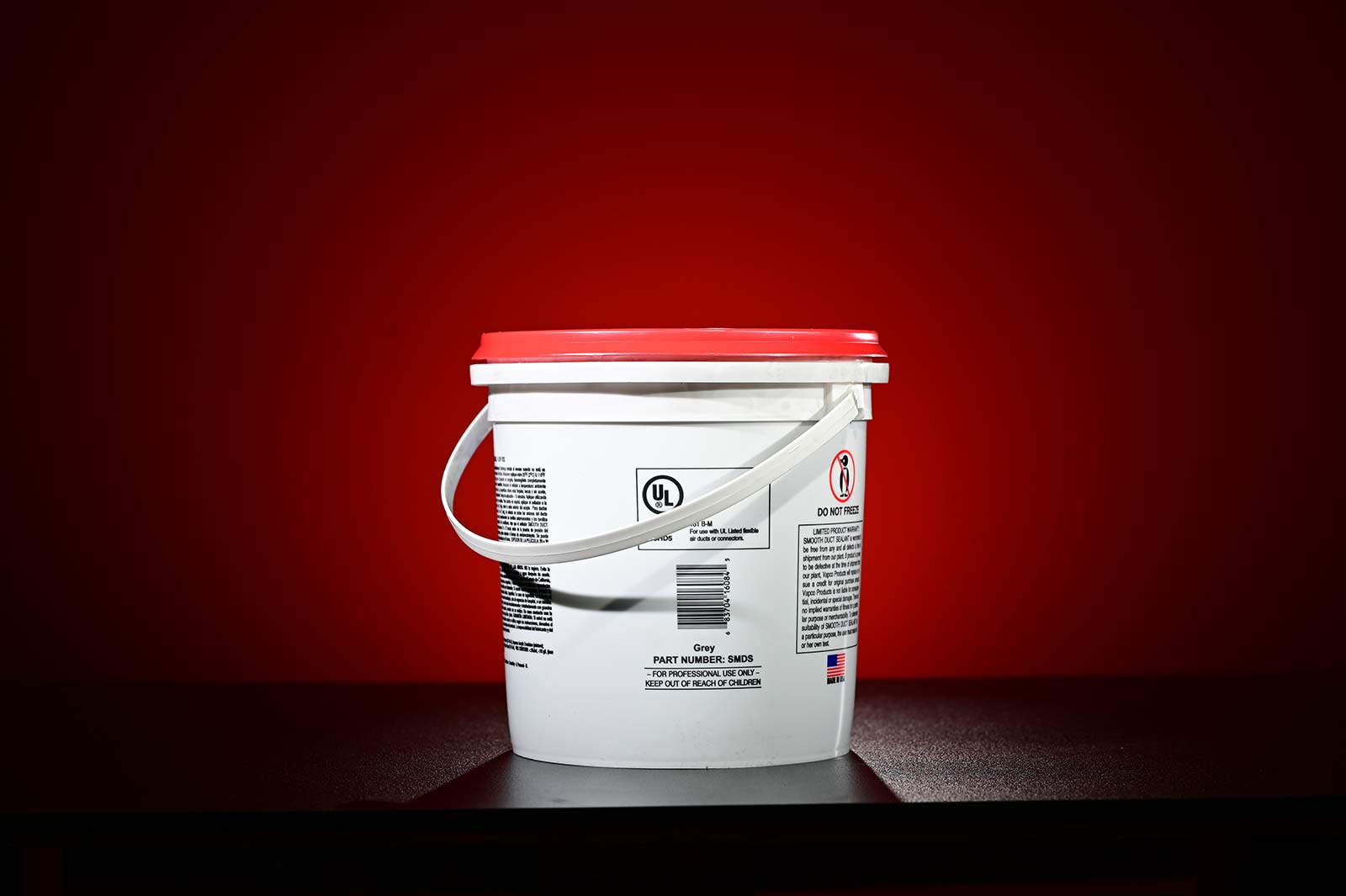
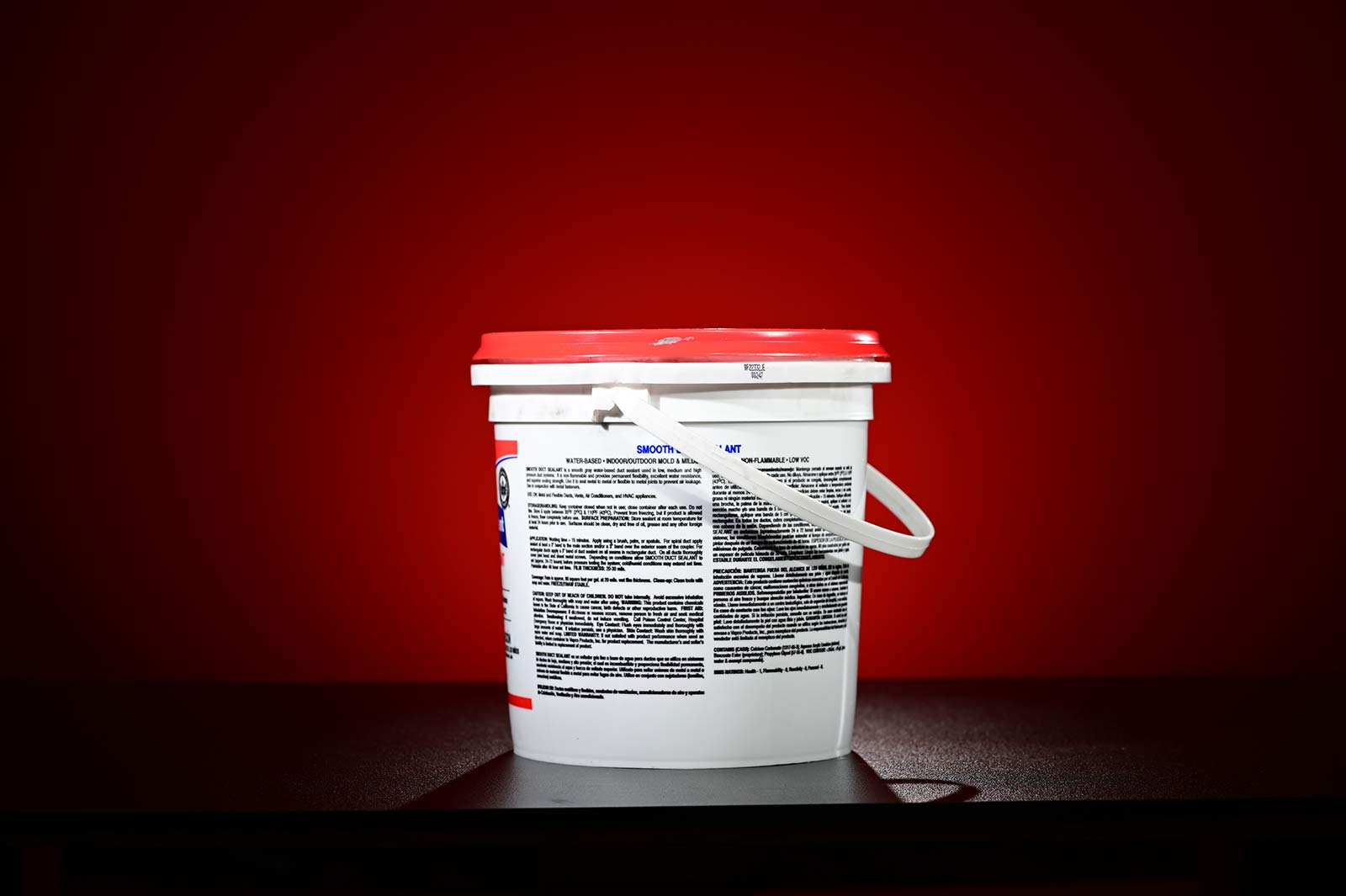
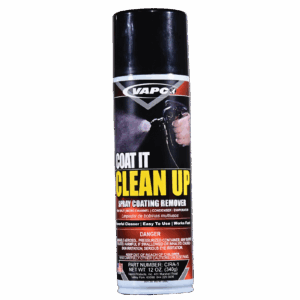
SMOOTH DUCT SEALANT
Premium Water-Based Sealant for HVAC Systems
Key Features and Benefits:
- LEED EQ 4.1 Compliant: Contributes to healthier indoor air quality.
- Indoor/Outdoor Use: Versatile for various applications.
- Superior Adhesion: Forms a strong, durable seal to prevent air leaks.
- Excellent Flexibility: Accommodates movement and vibration in HVAC systems.
- Mold and Mildew Resistant: Helps maintain a clean and healthy environment.
- Low VOC: Minimizes harmful emissions for a healthier indoor environment.
SMOOTH DUCT SEALANT is the perfect choice for ensuring optimal performance and energy efficiency in your HVAC system. Its premium quality and versatility make it a valuable asset for professionals and homeowners alike.
Part Number; Size Description
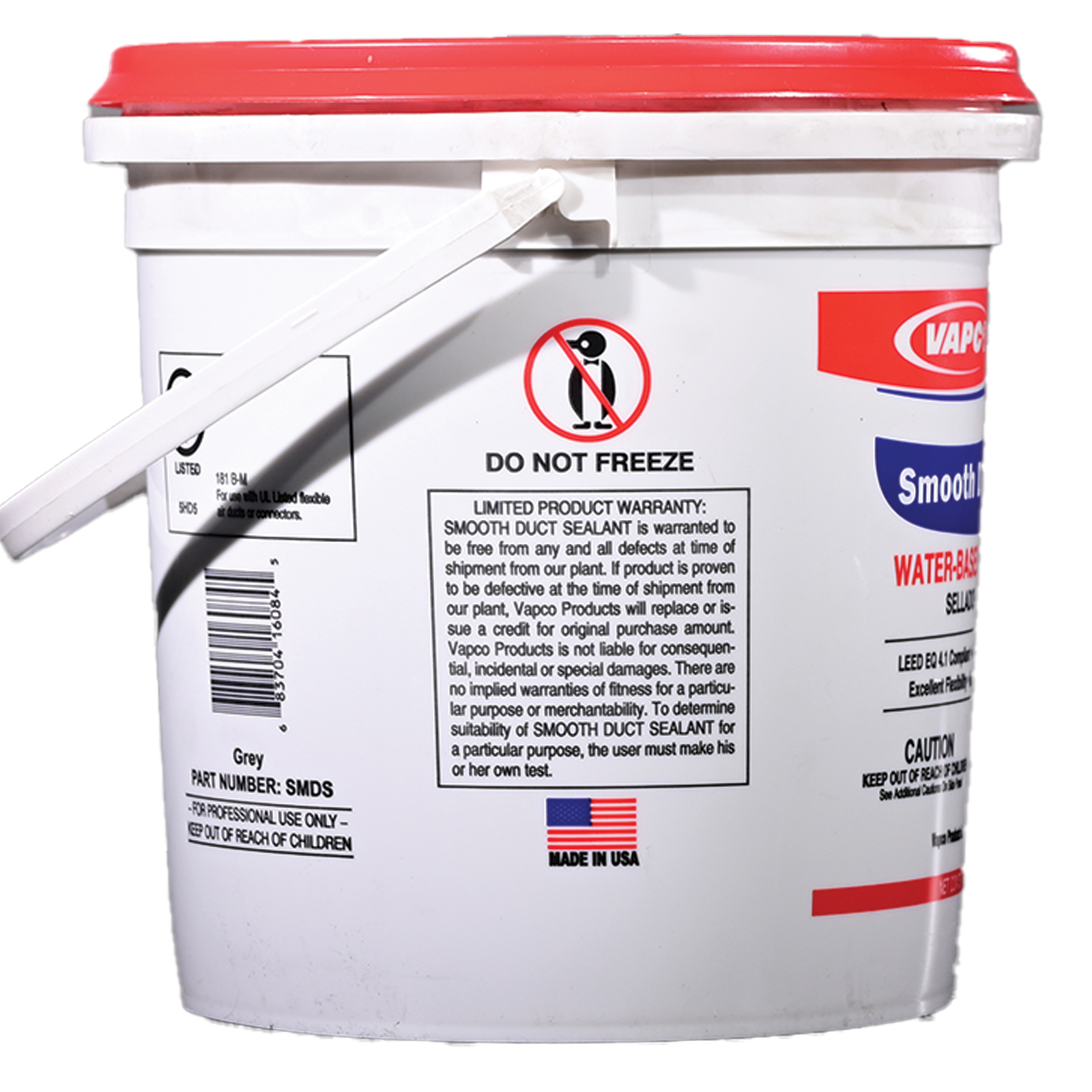
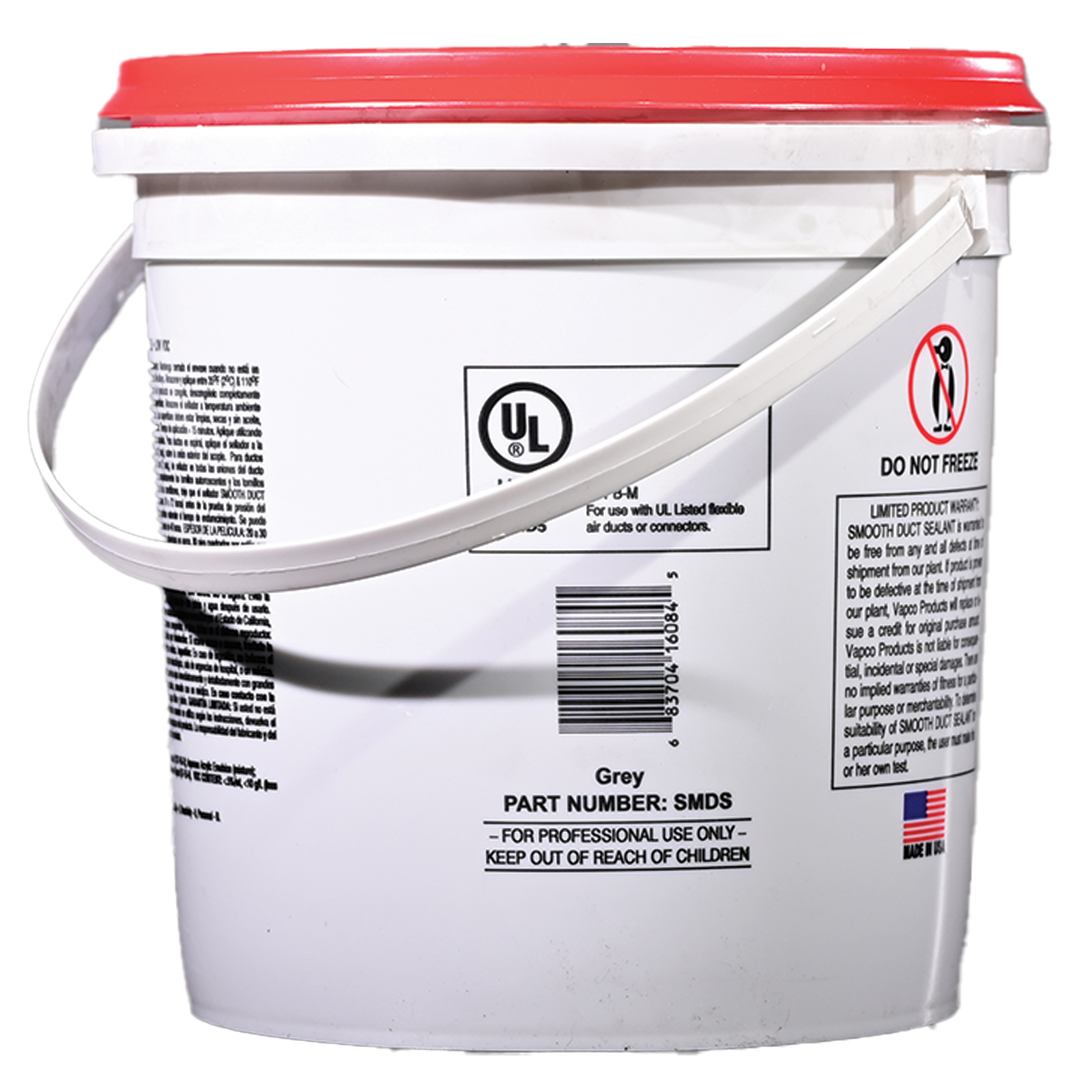
- SMDS 1 gal 4/cs Red Lid = Smooth, Grey Color Sealant
- SMDS-E 180 gal/pallet
*Shipped loose/unboxed in lots of 180 gallons only
Directions:
Effective Duct Sealing for Optimal Performance
- Prepare Surface: Ensure the surface is clean, dry, and free of oil.
- Apply Sealant: Use a brush, palm, or spatula to apply SMOOTH DUCT SEALANT.
- Spiral Duct Application: For spiral ducts, apply a 3-inch band of sealant to the male section and/or a 3-inch band over the exterior seam of the coupler.
- Rectangular Duct Application: For rectangular ducts, apply a 3-inch band of sealant to all seams.
- Cover Joints: Thoroughly cover the joint head and sheet metal screws.
- Allow to Set: Depending on conditions, allow the sealant to set for approximately 24-72 hours before pressure testing. Cold or humid conditions may extend the setting time.
- Paintable: The sealant can be painted after 48 hours.
Film Thickness: 20-30 minutes
By following these steps, you can effectively seal your HVAC ducts using SMOOTH DUCT SEALANT and ensure optimal system performance.
DANGERS & PRECAUTIONS
Read and understand the product’s label and Safety Data Sheet. Do NOT handle or use this product until all safety precautions have been read and understood. Causes mild irritation with prolonged exposure. Causes gastrointestinal irritation if ingested. Keep out of the reach of children. Provide general, adequate ventilation. Dispose of in accordance with federal, state, and local regulations. This product contains a chemical known to the State of California to cause cancer and birth defects or other reproductive harm. If used as a spray or airborne, a respirator may be needed. Wear safety glasses when using product. Wash hands thoroughly after handling.
Contact Us
News and Updates
Subscribe on Youtube
Follow Us on Facebook
SDS
⚠️ SMOOTH DUCT SEALANT SDS – DOWNLOAD
Identification & Supplier Details
| Product Name (GHS Identifier) |
Smooth Duct Sealant |
| Product Number / Brand |
SMDS, SMDS-E / Vapco |
| Recommended Use |
Duct sealant |
| Supplier Name / Address |
Vapco Products, Inc. / 401 Marshall Road, Valley Park, Missouri 63088, United States |
| Telephone / Email |
(636) 923-2121 / [email protected] |
| Emergency Phone Number |
(800) 255-3924 |
Hazard Identification & Composition
| GHS Classification (OSHA) |
- Carcinogenicity, Cat. 1B (May cause cancer)
- Eye damage/irritation, Cat. 2A (Causes serious eye irritation)
- Skin corrosion/irritation, Cat. 2 (Causes skin irritation)
- Sensitization, skin, Cat. 1 (May cause an allergic skin reaction)
|
| Signal Word |
Warning |
| Hazard Statement(s) |
- H350: May cause cancer
- H319: Causes serious eye irritation
- H315: Causes skin irritation
- H317: May cause an allergic skin reaction
|
| Precautionary Statement (Safety) |
P202: Do not handle until all safety precautions have been read and understood. |
Hazardous Components
| Chemical Name |
CAS No. |
Concentration (% weight) |
| Limestone |
1317-65-3 |
40 – 50 % |
| Ethyl acrylate |
140-88-5 |
5 – 10 % |
| Titanium dioxide |
13463-67-7 |
0.1 – 0.5 % |
| Quartz (respirable dust) |
14808-60-7 |
0.1 – 0.5 % |
| Distillates (petroleum), solvent-dewaxed heavy paraffinic |
64742-65-0 |
0.1 – 0.5 % |
Physical & Chemical Properties
| Physical State / Appearance |
Liquid / Caulk material |
| Color / Odor |
Grey or white / N/D |
| Boiling Point / Flash Point |
N/D / N/D |
| pH |
N/A |
| Solubility in Water |
Soluble in water |
| Kinematic Viscosity |
N/D |
Stability & Reactivity
| Reactivity / Chemical Stability |
Not reactive under normal conditions. Stable under recommended storage conditions. |
| Possibility of Hazardous Reactions |
Silica will dissolve in hydrofluoric acid producing a corrosive gas. Hazardous polymerization does not occur. |
| Conditions to Avoid |
Incompatible materials, excessive heat or cold. |
| Incompatible Materials |
Strong oxidizing agents. |
| Hazardous Decomposition Products |
None known based on information provided. |
Toxicological Information
| Acute Toxicity (Oral/Skin) |
Titanium(IV) oxide: LD50 Oral – Rat – >10000 mg/kg; LD50 Skin – Rabbit – >10000 mg/kg. |
| Skin/Eye Damage/Sensitization |
Causes mild skin and serious eye irritation. May cause an allergic skin reaction. Repeated contact may cause dermatitis. |
| Respiratory Effects |
Overexposure to vapors may mildly irritate respiratory tract, resulting in coughing and sneezing. |
| Carcinogenicity |
May cause cancer (Cat. 1B). Components like Ethyl acrylate, Quartz (respirable dust), and Titanium dioxide (respirable dust) are possible carcinogens. |
| Aspiration Hazard (ATE) |
ATE (gas inhalation): 45000 ppmV. ATE (oral): 5000 mg/kg bw. |
First-Aid Measures
| General Advice |
If exposed or concerned, Get medical advice/attention (P308+P313). Never give anything by mouth to an unconscious person. |
| If Inhaled |
Remove person to fresh air. Get medical advice/attention. |
| In Case of Skin Contact |
Immediately drench affected area with water for at least 15 minutes. Remove contaminated clothing. If skin irritation or rash occurs: Get medical advice/attention (P333+P313). |
| In Case of Eye Contact |
Rinse cautiously with water for several minutes. Remove contact lenses if present. If eye irritation persists: Get medical advice/attention (P337+P313). |
| If Swallowed |
Rinse mouth. Do NOT induce vomiting. Obtain medical attention. |
Fire-Fighting & Accidental Release Measures
| Suitable Extinguishing Media |
Water spray, fog, CO2, alcohol-resistant foam, dry chemical, or sand. Use media appropriate for surrounding fire. |
| Specific Hazards (Fire) |
None known. Hazardous combustion products: None known based on information supplied. |
| Protection During Firefighting |
Do not enter fire area without proper protective equipment. Wear NIOSH-approved Self-Contained Breathing Apparatus (SCBA). |
| Personal Precautions (Spill) |
Do not breathe vapors/mist. Use appropriate PPE. Isolate spill area and ventilate. |
| Containment & Cleanup |
Contain any spills with dikes or absorbents. Take up liquid spill into absorbent material. Transfer spilled material to a suitable container for disposal. |
| Environmental Precautions |
Prevent spill or rinse from contaminating storm drains, sewers, soil or groundwater. Minimize use of water. |
Handling, Storage & PPE
| Precautions for Safe Handling |
Obtain special instructions before use (P201). Avoid contact with skin, eyes, and clothing. Avoid breathing vapors (P261). Wash hands thoroughly after handling (P264). |
| Conditions for Safe Storage |
Store in a dry, cool, well-ventilated place. Keep only in the original container. Store locked up (P405). Do not expose to temperatures exceeding 50°C/122°F. |
| Incompatible Materials for Storage |
Strong oxidizing agents. |
| Engineering Controls |
Emergency eye wash fountains and safety showers should be available. Ensure adequate ventilation. |
| PPE Requirements |
Wear protective gloves/protective clothing/eye protection/face protection (P280). Use NIOSH-approved SCBA if OELs are exceeded. |
Transport & Regulatory Information
| DOT / IMDG / IATA Status |
Not dangerous goods. |
| California Proposition 65 |
WARNING: This product can expose you to chemicals including Ethyl acrylate, which is known to the State of California to cause cancer. (www.P65Warnings.ca.gov) |
| Key U.S. RTK/TSCA Components |
Calcium Carbonate/Limestone, Ethyl acrylate, Titanium dioxide, Quartz. All chemicals are listed or exempt on TSCA. |
Disposal & Ecological Information
| Product Disposal / Waste Treatment |
Dispose of contents/container in accordance with all regulations. Waste treatment: RCRA Waste U113 – Ethyl acetate (CAS No. 140-88-5). |
| Ecological Toxicity (Aquatic) |
Harmful to aquatic life with long lasting effects. (Titanium(IV) oxide LC50/EC50 >1000 mg/L). |
| Persistence / Bioaccumulation / Mobility |
Not determined. Environmental Exposure Controls: Should be maintained to prevent release to the environment. |
Disclaimer & Preparation Information
| Prepared By / Date |
Jessica Wilson / 3-13-2025 |
| Disclaimer Summary |
Information is believed accurate but provided without warranty. Final determination of suitability is the sole responsibility of the user. Manufacturer is not responsible for loss, injury, or expense arising from improper use. |
| Key Codes |
N/A = Not applicable; N/D = Not determined |