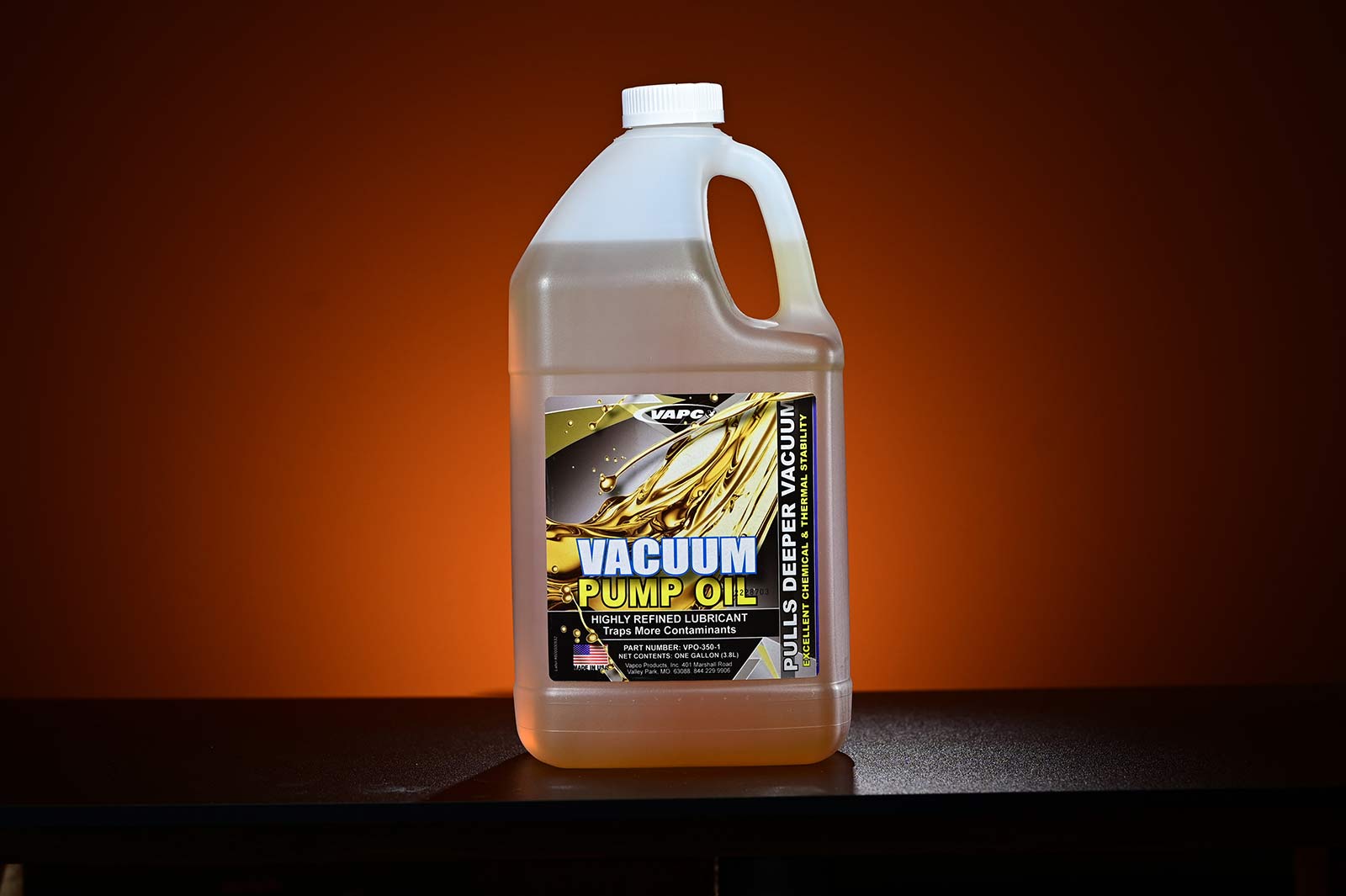
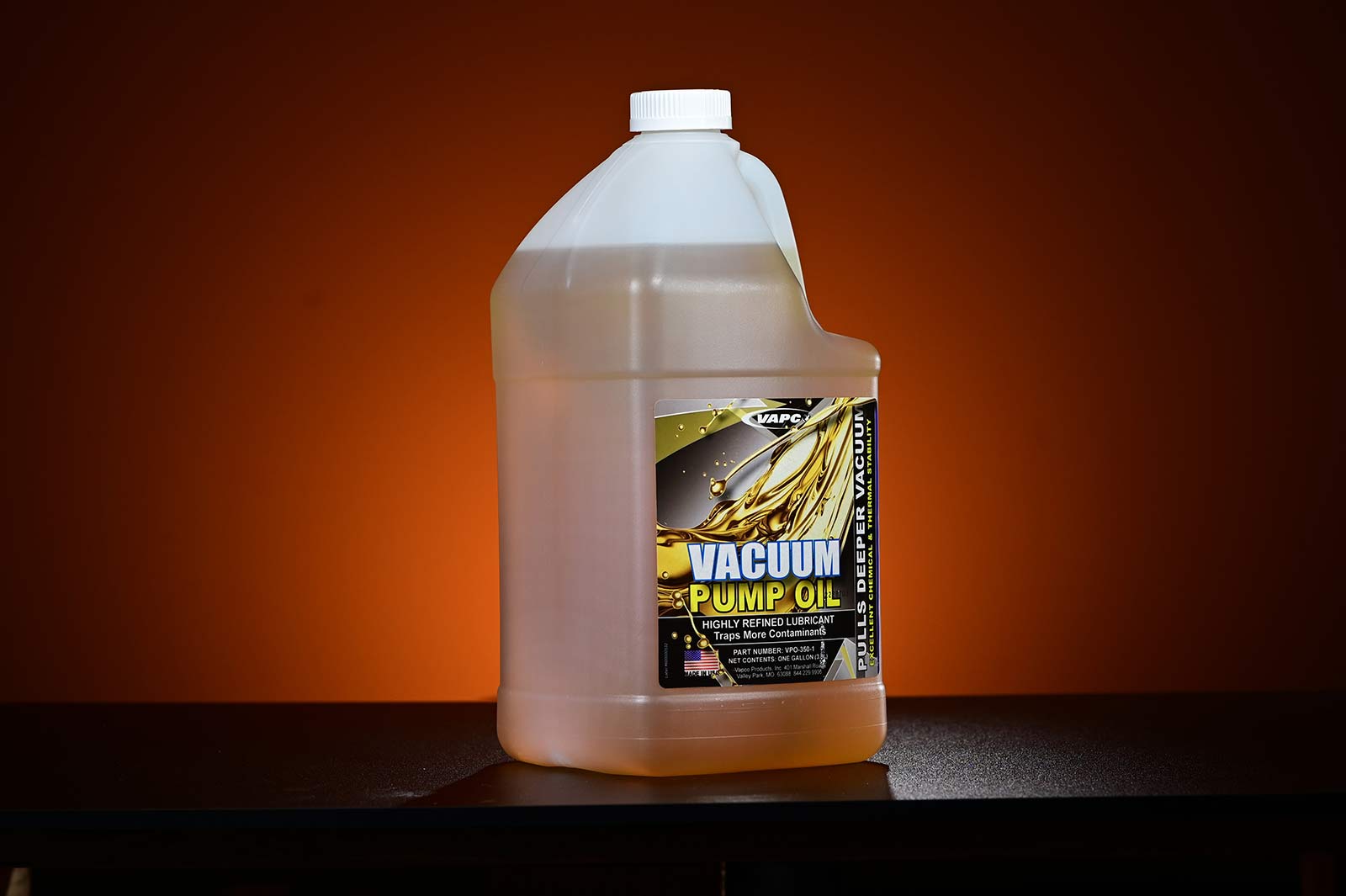
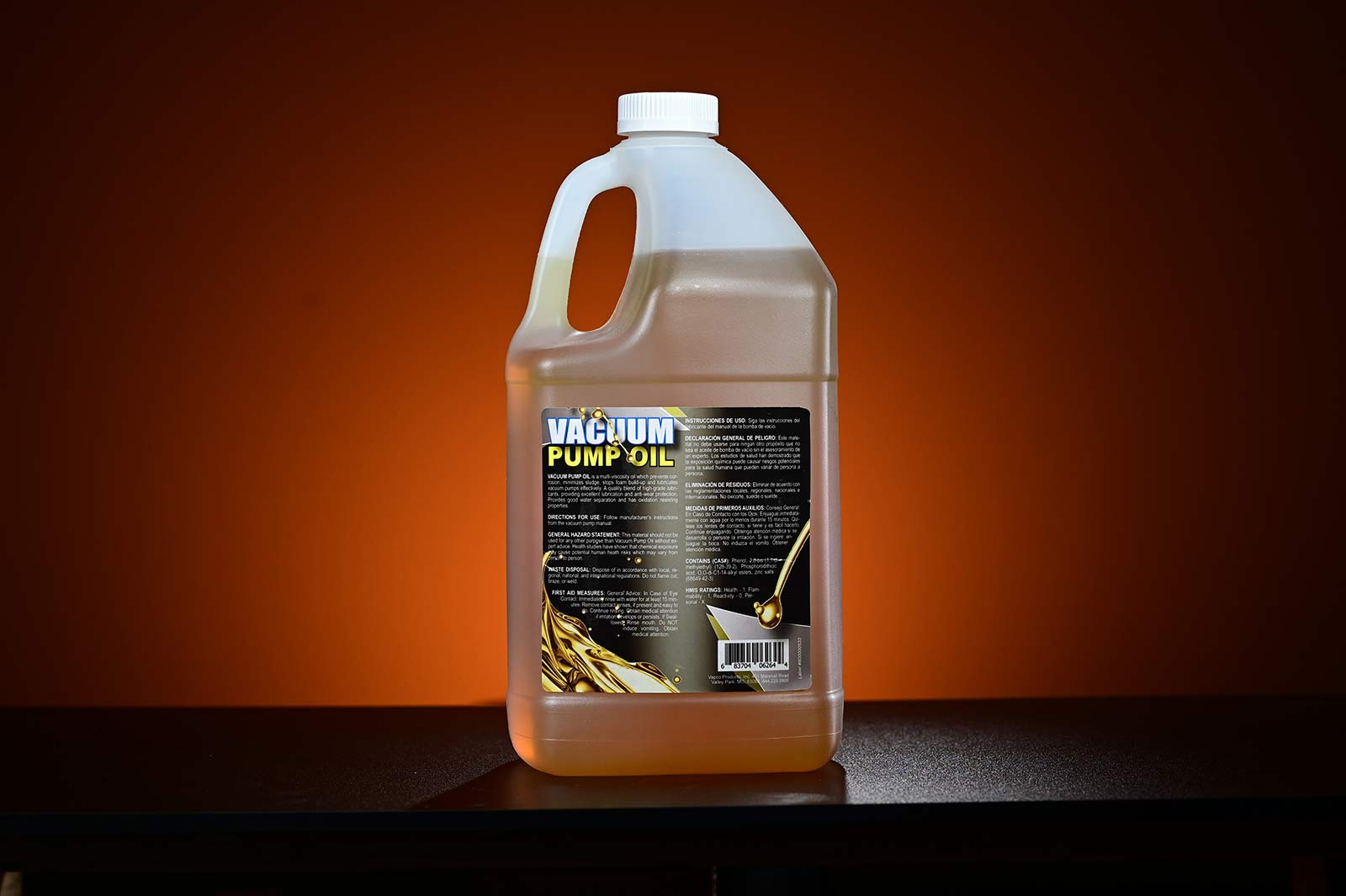
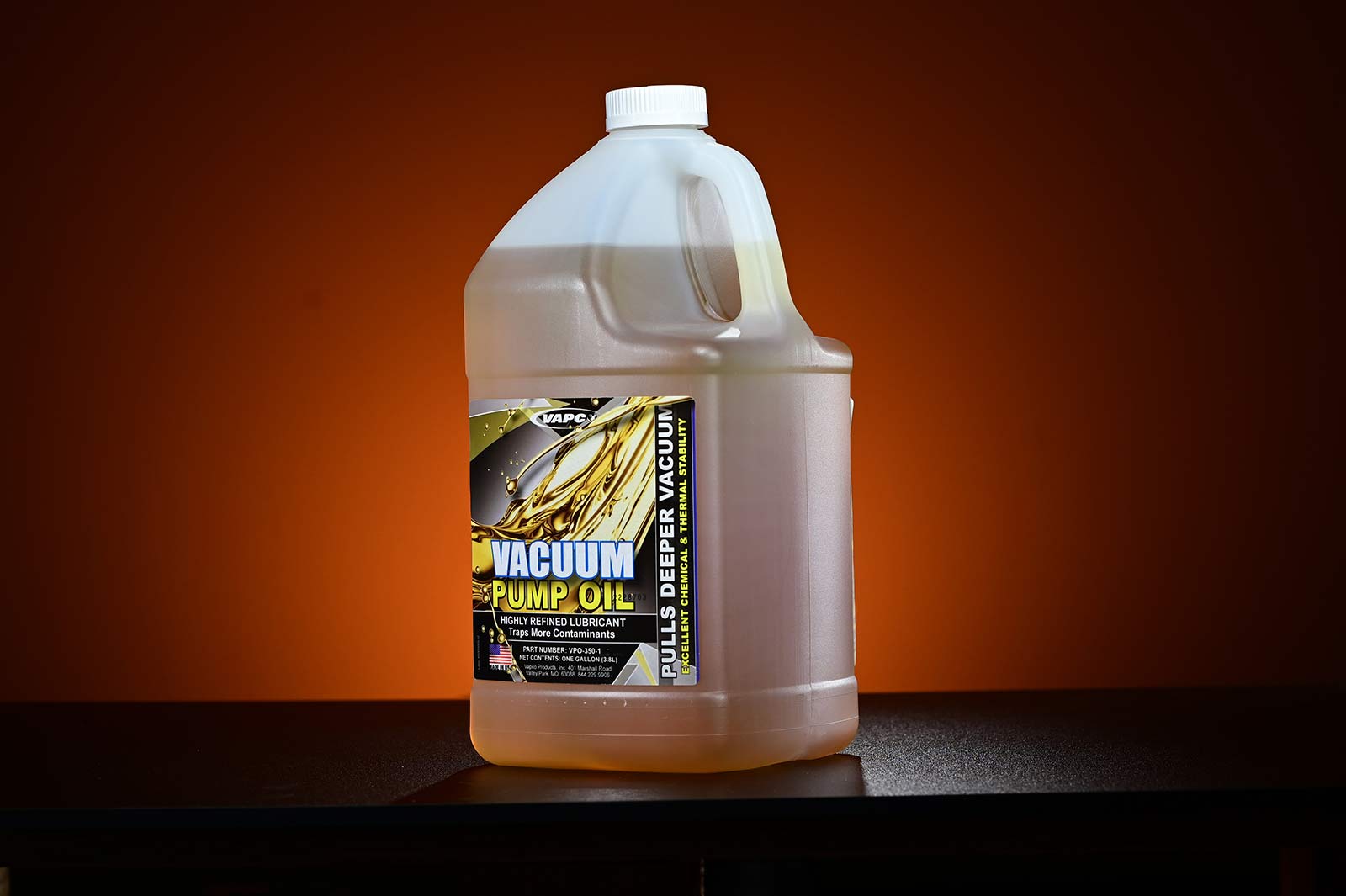
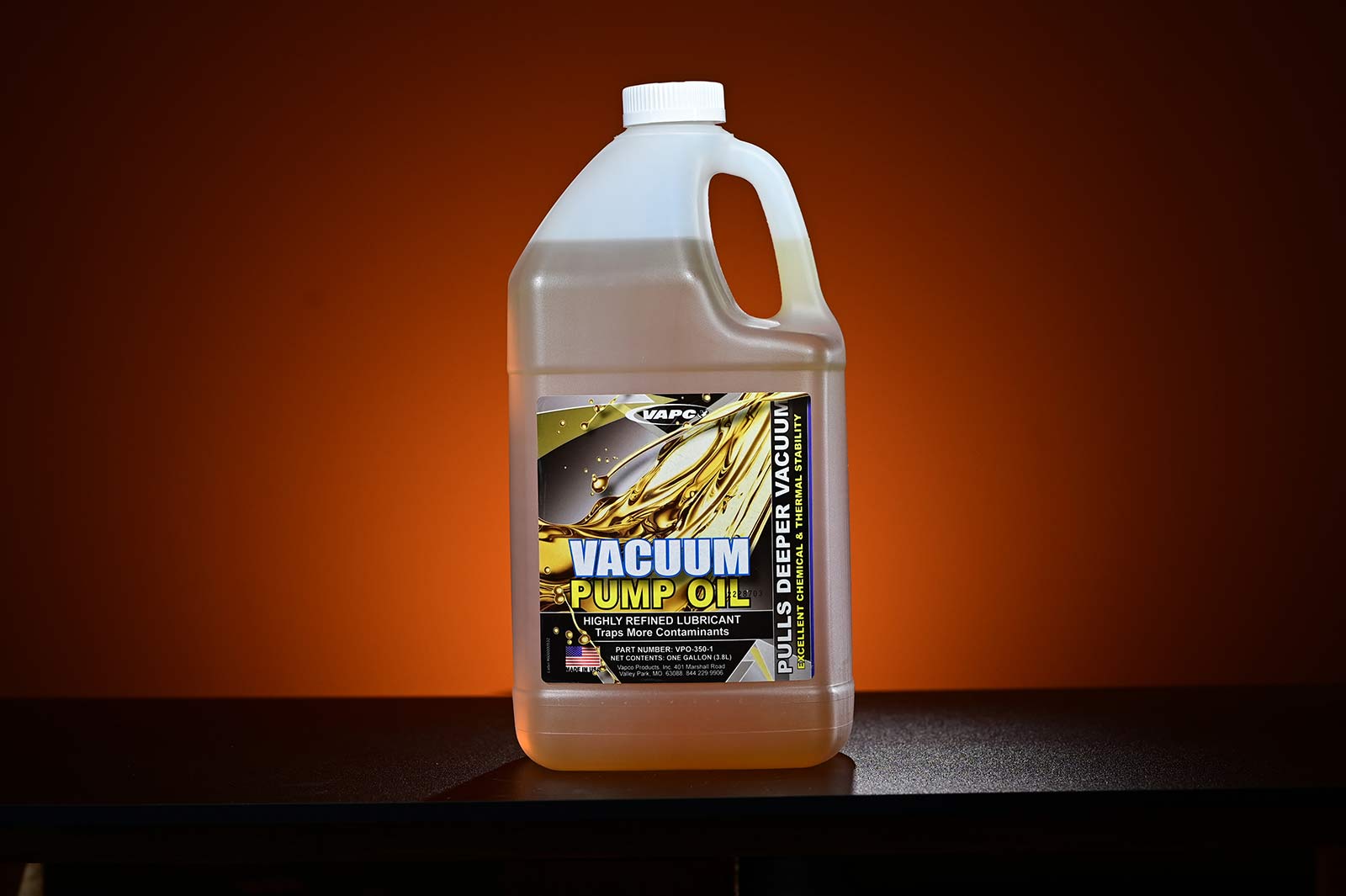
VACUUM PUMP OIL GALLON
High-Performance Lubricant and Protector
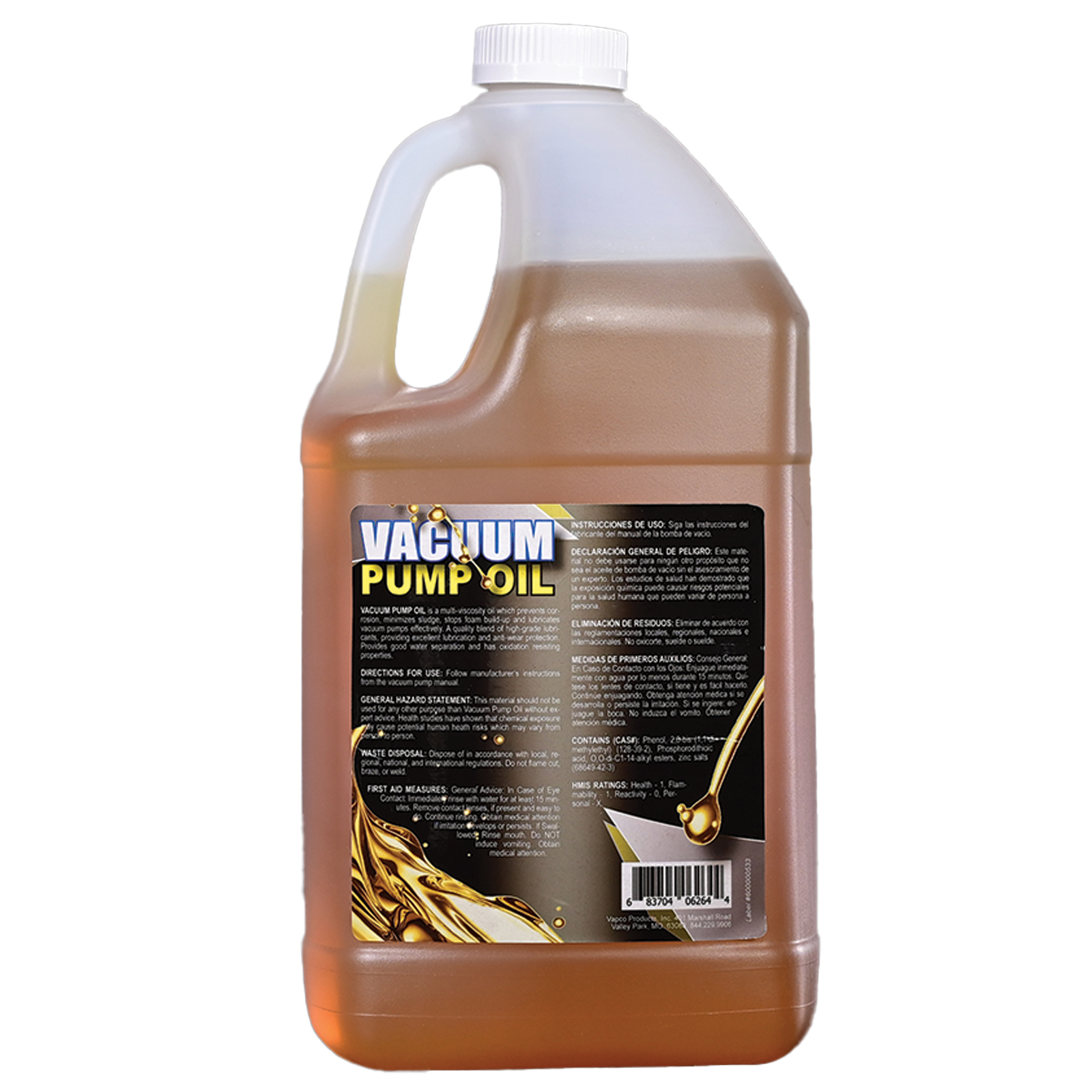
VACUUM PUMP OIL is a premium multi-viscosity oil specifically formulated for use in vacuum pumps. Its advanced properties provide exceptional lubrication, protection, and cleaning performance.
Key Features and Benefits:
- Lubrication: Ensures smooth and efficient operation of vacuum pumps.
- Corrosion Prevention: Protects against rust and corrosion.
- Sludge Minimization: Reduces the formation of sludge and deposits.
- Foam Control: Minimizes foam buildup for optimal performance.
- High-Grade Lubricants: Provides excellent wear protection and durability.
- Moisture and Contaminant Removal: Traps and absorbs moisture and other contaminants.
- Meets ASTM Standards: Surpasses ASTM D943, D655, D130, and D1401 tests.
- Non-Synthetic Formula: Offers a traditional and reliable lubrication solution.
- Viscosity of 68: Provides appropriate viscosity for vacuum pump applications.
VACUUM PUMP OIL is the ideal choice for maintaining the performance and longevity of your vacuum pump. Its advanced formulation and exceptional properties ensure optimal lubrication, protection, and cleaning.
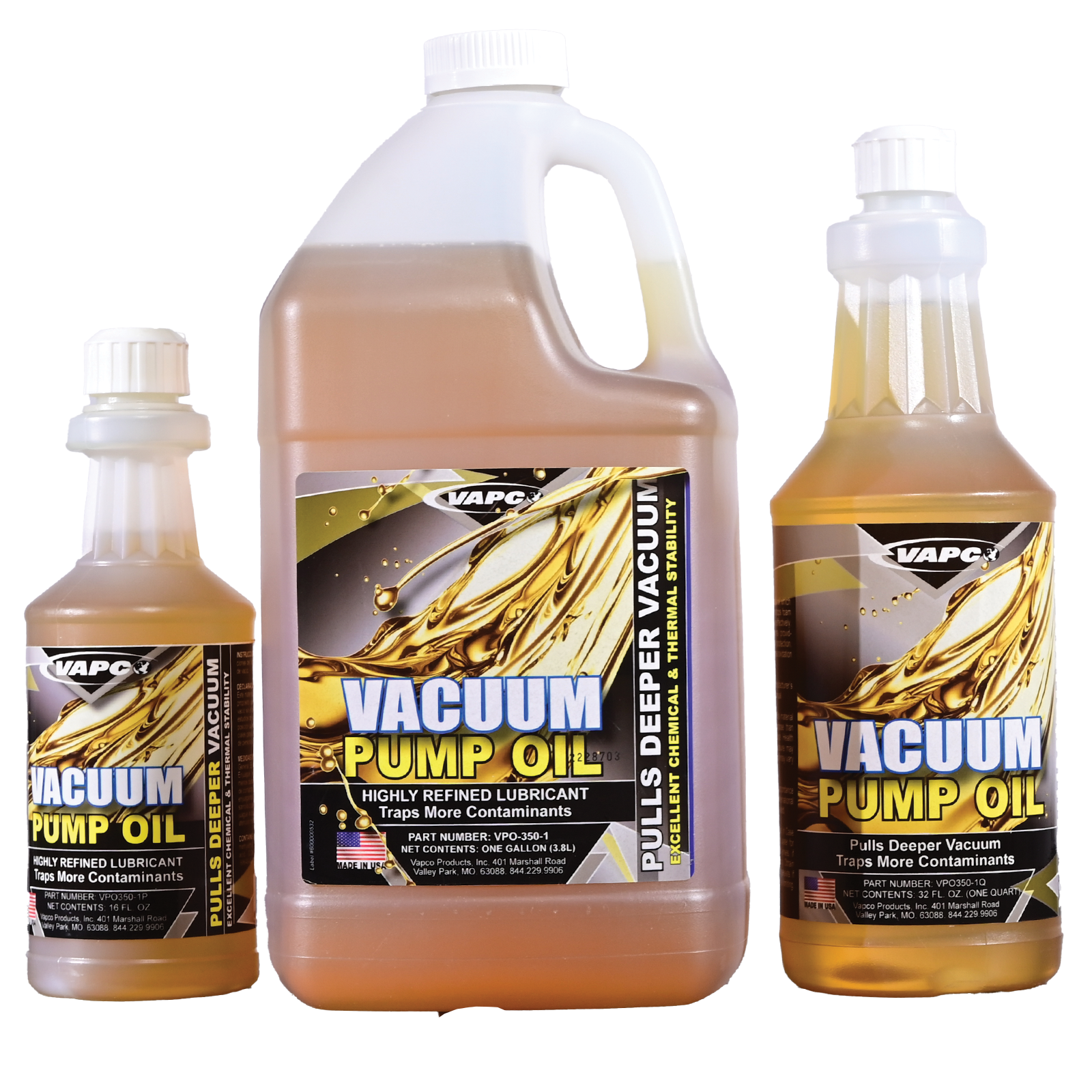
Part Number; Size
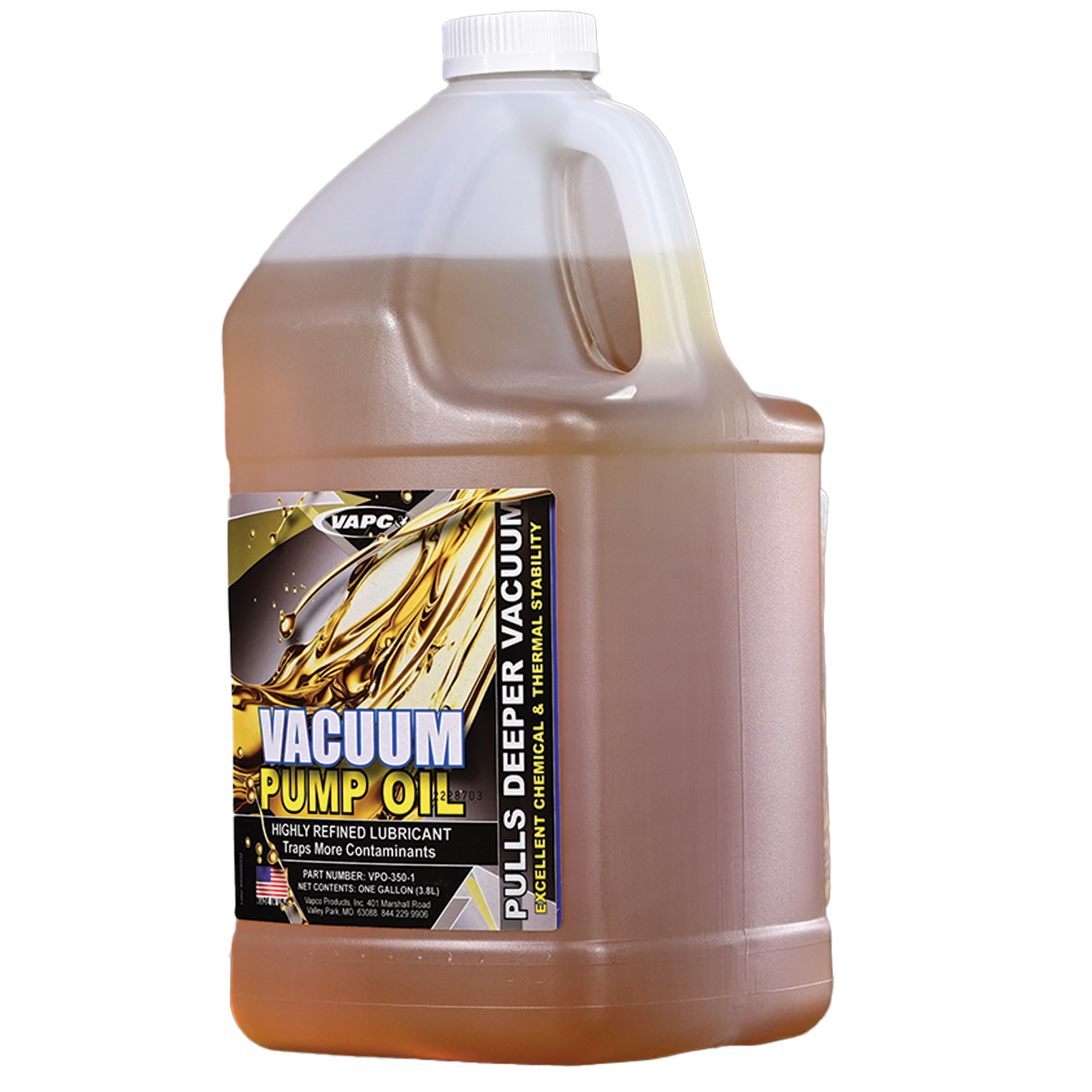
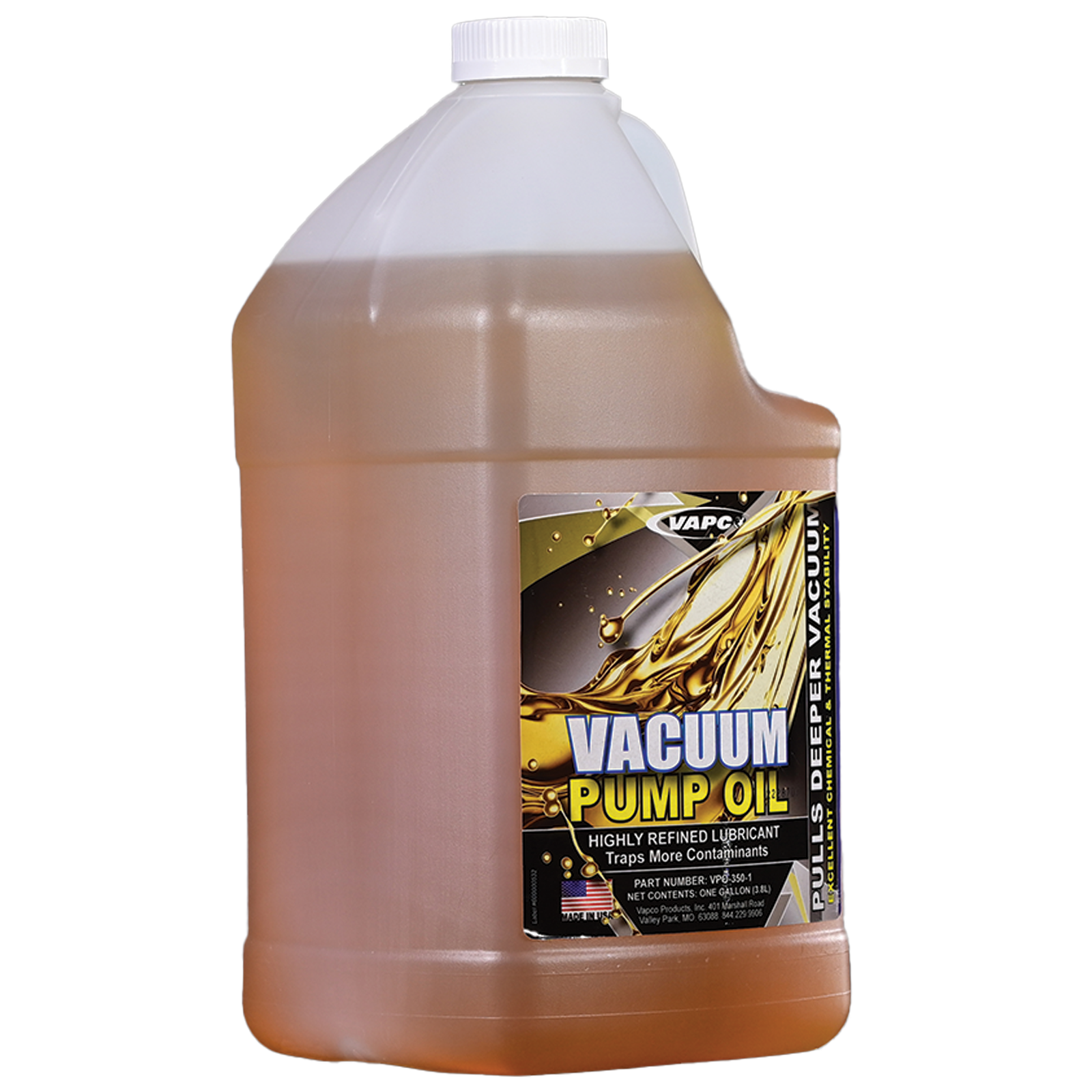
- VPO350-1 1 gal 4/cs
- VPO350-1P 1 Pint
- VPO350-1Q 1 Quart
- VPO350-55
Contact Us
News and Updates
Subscribe on Youtube
Follow Us on Facebook
SDS
⚠️ VACUUM PUMP OIL SDS – DOWNLOAD
Identification & Supplier Details
| Product Name (GHS Identifier) |
Vacuum Pump Oil |
| Product Number / Brand |
VPO350-1P, VPO350-1Q, VPO350-1, VPO350-55 / Vapco |
| Recommended Use |
Vacuum pump oil |
| Supplier Name / Address |
Vapco Products, Inc. / 401 Marshall Road, Valley Park, Missouri 63088, United States |
| Telephone / Email |
(636) 923-2121 / [email protected] |
| Emergency Phone Number |
(800) 255-3924 |
Hazard Identification & Composition
| GHS Classification (OSHA) |
Not a hazardous substance or mixture. |
| General Hazard Statement |
Material should not be used for any other purpose than the intended use without expert advice. |
| Other Hazards Not Resulting in Classification |
Not a hazardous substance or mixture. |
Hazardous Components (<1% Concentration)
| Chemical Name |
CAS No. |
Concentration (% weight) |
| Phenol, 2,6-bis(1,1-dimethylethyl)- |
128-39-2 |
0.1 – 0.25 % |
| Phosphorodithioic acid, O,O-di-C1-14-alkyl esters, zinc salts |
68649-42-3 |
0.1 – 1 % |
Physical & Chemical Properties
| Physical State / Appearance |
Liquid / Viscous liquid |
| Color / Odor |
Pale yellow to brown / Characteristic |
| Boiling Point |
>316°C (424°F) |
| Flash Point |
>218°C (424°F) |
| Flammability Limit (Lel/Uel) |
0.9-7.0% by volume |
| Kinematic Viscosity |
68 cSt at 40°C; 8.5 cSt at 100°C |
| Solubility / Relative Density |
Negligible / 0.883 |
| Vapor Pressure |
< 0.013 kPa (0.1 mmHg) at 20°C |
| Pour Point |
-12°C (10°F) |
Stability & Reactivity
| Reactivity / Chemical Stability |
Stable under normal conditions of use. Hazardous polymerization will not occur. |
| Conditions to Avoid |
Excessive heat. High energy sources of ignition. |
| Incompatible Materials |
Strong oxidizers. |
| Hazardous Decomposition Products |
Aldehydes, oxides of carbon, smoke, fume, sulphur oxides. Material does not decompose at ambient temperatures. |
Toxicological Information
| Acute Toxicity |
Minimally toxic based on assessment of the compounds. |
| Skin/Eye Damage/Sensitization |
Negligible skin irritation. May cause mild, short-lasting discomfort to eyes. Not expected to be a skin or respiratory sensitizer. |
| Carcinogenicity / Mutagenicity / STOT |
Not expected to cause cancer, germ cell mutation, or organ damage (single or repeated exposure). Base oil is severely refined (<3% DMSO Extract). |
| Aspiration Hazard |
Not expected to be an aspiration hazard. |
First-Aid Measures
| General Advice |
If you feel unwell, seek medical advice (show the label where possible). |
| If Inhaled |
Remove person to fresh air. Get medical advice/attention. |
| In Case of Skin Contact |
Immediately drench affected area with water for at least 15 minutes. Remove contaminated clothing. Obtain medical attention if irritation persists. |
| In Case of Eye Contact |
Immediately rinse with water for at least 15 minutes. Remove contact lenses. Obtain medical attention if irritation persists. |
| If Swallowed |
Rinse mouth. Do NOT induce vomiting. Obtain medical attention. |
Fire-Fighting & Accidental Release Measures
| Suitable Extinguishing Media |
Dry chemical, foam, water foam, or carbon dioxide (CO2). |
| Specific Hazards (Fire) |
Pressurized mists may form a flammable mixture. |
| Protection During Firefighting |
Do not enter fire area without SCBA and full protective clothing. |
| Personal Precautions (Spill) |
Eliminate ignition sources. Do not breathe vapors. Use appropriate PPE. |
| Containment & Cleanup |
Dyke far ahead of liquid spill. Take up liquid spill into absorbent material. Transfer spilled material to a suitable container for disposal. |
| Environmental Precautions |
Prevent entry into waterways, sewers, or confined areas. |
Handling, Storage & PPE
| Precautions for Safe Handling |
Do not handle until all safety precautions have been read. Proper grounding procedures to avoid static electricity should be followed. Do not pressurize, cut, or weld containers. |
| Conditions for Safe Storage |
Store in a dry, cool, well-ventilated place away from ignition sources and strong oxidizers. Protect from sunlight. Do not expose to temperatures exceeding 50°C/122°F. |
| Engineering Controls |
Emergency eye wash fountains and safety showers should be available. Ensure adequate ventilation. Use explosion-proof equipment. |
| Eye/Face Protection (PPE) |
Chemical safety goggles. |
| Skin/Body Protection (PPE) |
Wear protective gloves and clothing (chemical resistant). |
| Respiratory Protection (PPE) |
Use a NIOSH-approved Self-Contained Breathing Apparatus whenever exposure may exceed established OELs. |
Transport & Regulatory Information
| DOT / IMDG / IATA Status |
Not dangerous goods. |
| US EPA TSCA Inventory |
Chemical components Phenol, 2,6-bis(1,1-dimethylethyl)- and Phosphorodithioic acid, O,O-di-C1-14-alkyl esters, zinc salts are listed. |
Disposal & Ecological Information
| Product Disposal |
Dispose of contents/container in accordance with local, regional, national, and international regulations. Suitable for burning in an enclosed controlled burner. Dispose of used oil at designated sites. |
| Packaging Disposal |
Empty containers may contain residue and can be dangerous. Do NOT pressurize, cut, weld, or expose containers to heat/ignition sources. |
| Toxicity (Aquatic) |
Material not expected to be harmful to aquatic organisms. |
| Persistence and Bioaccumulation |
Base oil component expected to be inherently biodegradable. Potential to bioaccumulate, but metabolism/properties may reduce bio-concentration. |
| Mobility in Soil |
Base oil component has low solubility, floats, and is expected to partition to sediment and waste-water solids. |
Disclaimer & Preparation Information
| Prepared By / Date |
Jessica Wilson / 2-26-2025 |
| Disclaimer Summary |
Information is believed accurate but provided without warranty. Final determination of suitability is the sole responsibility of the user. Manufacturer is not responsible for loss, injury, or expense arising from improper use. |
| Key Codes |
N/A = Not applicable; N/D = Not determined |