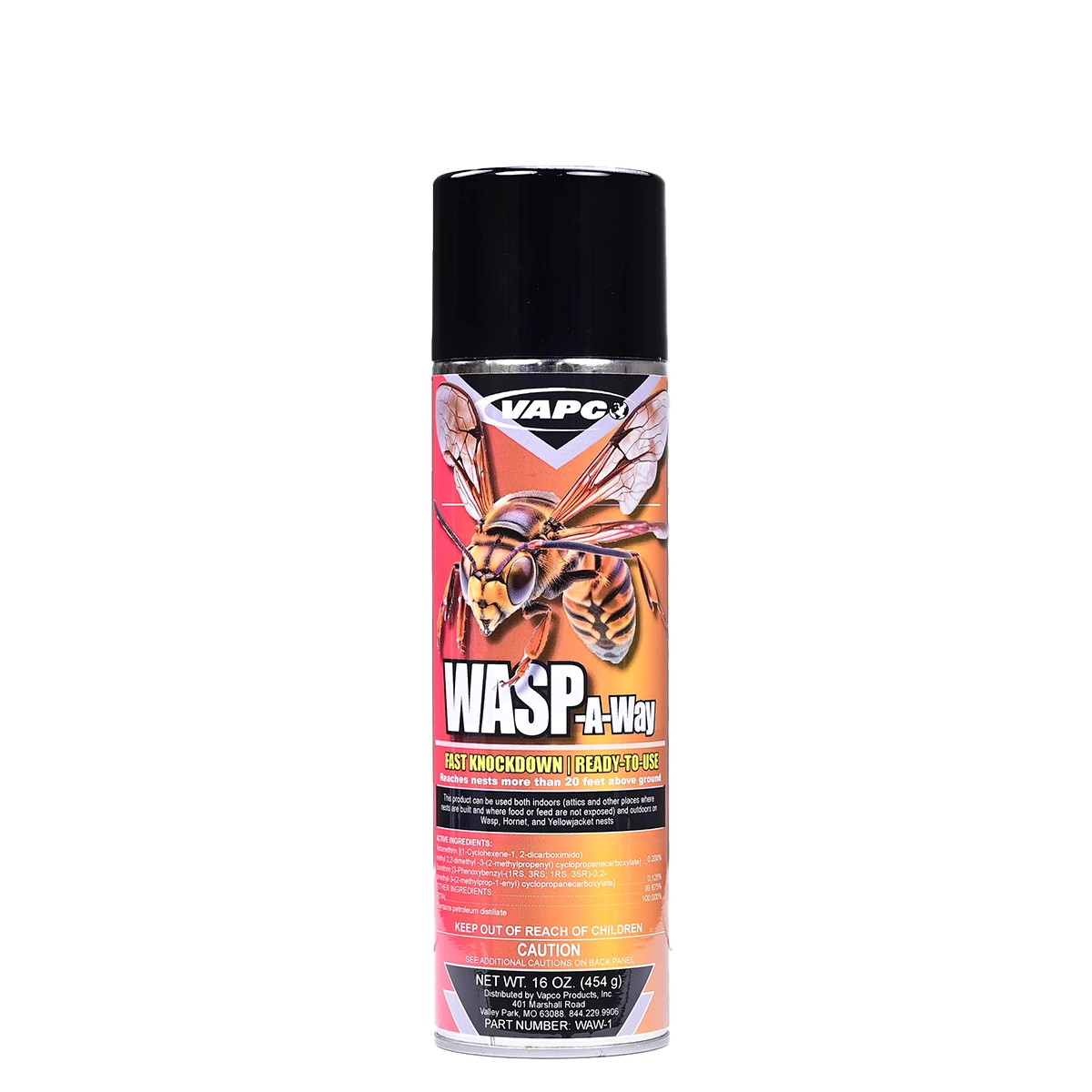
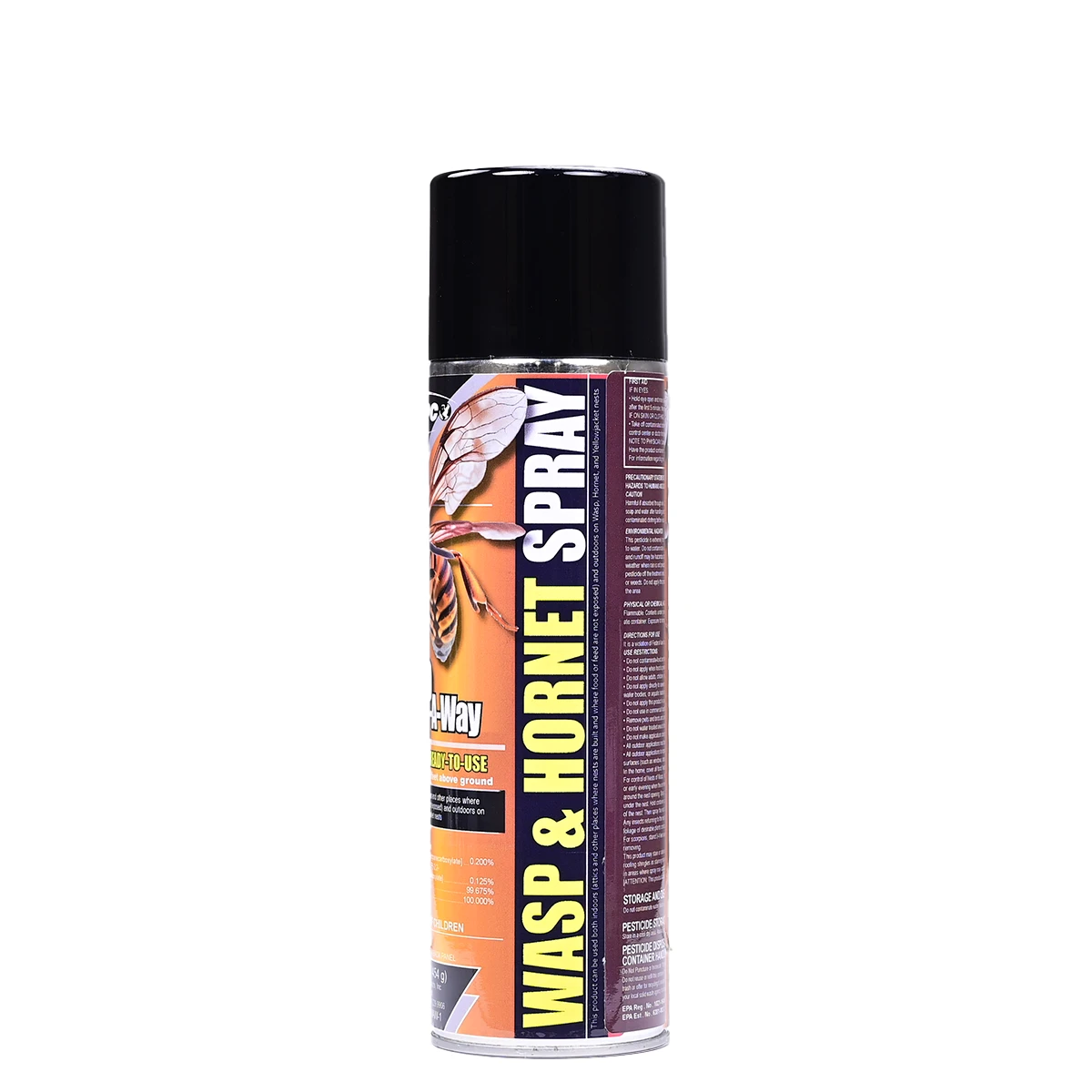
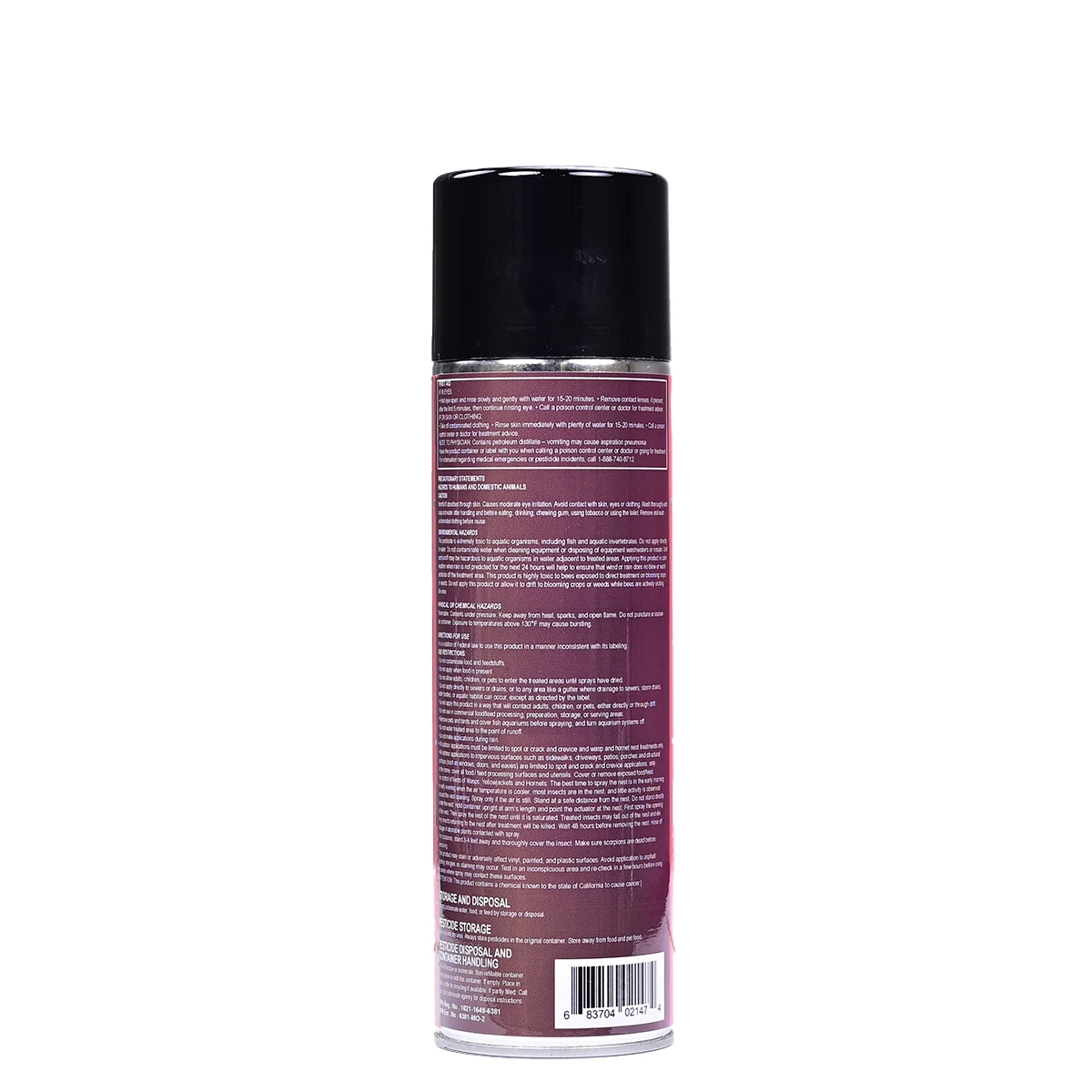
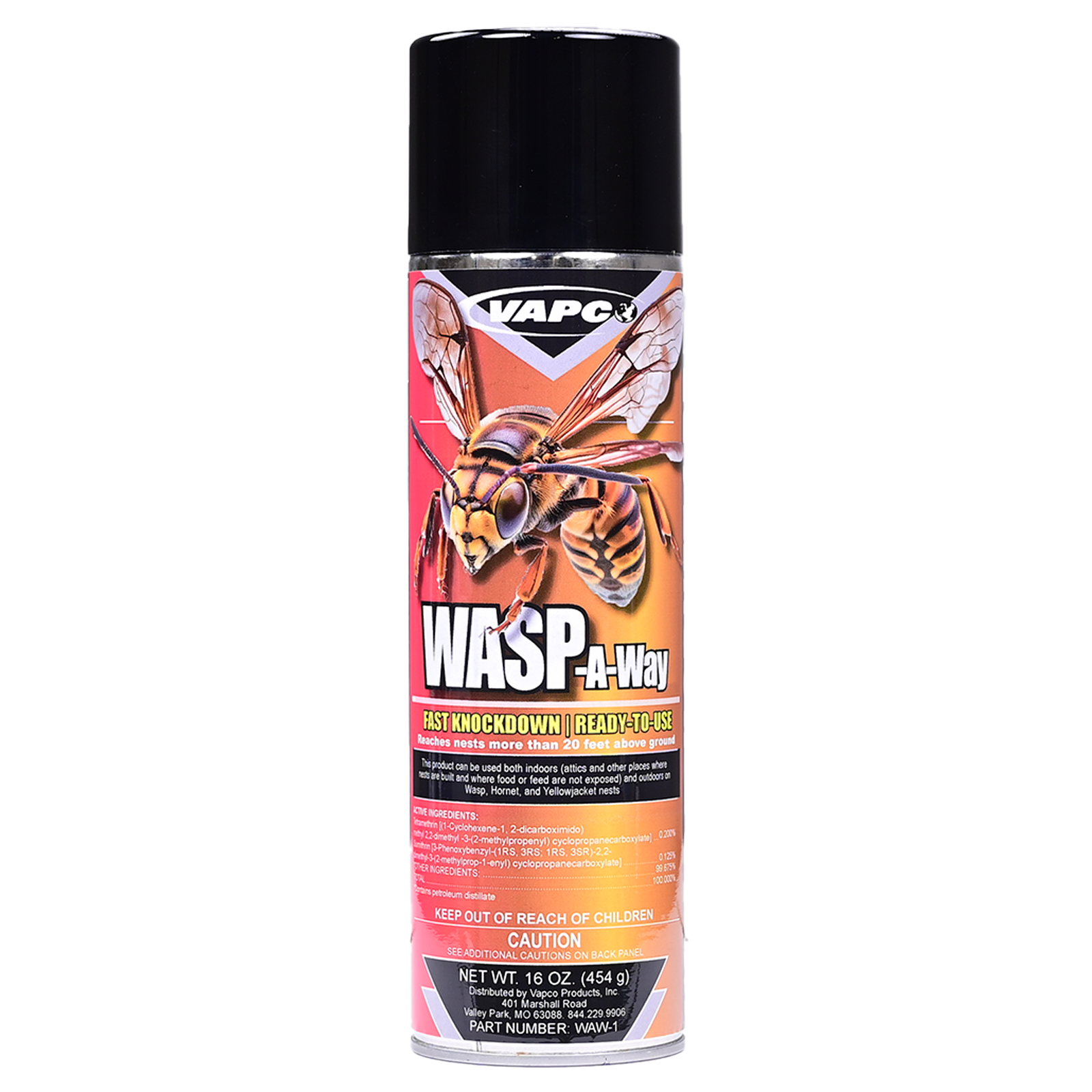
📋 WASP-A-WAY EPA LABEL – DOWNLOAD
| TARGET PEST |
TYPICAL NEST LOCATION |
ACTION |
PERFORMANCE / WHY IT WORKS |
| Wasps & Hornets |
Eaves, overhangs, attics |
Contact Kill + Residual |
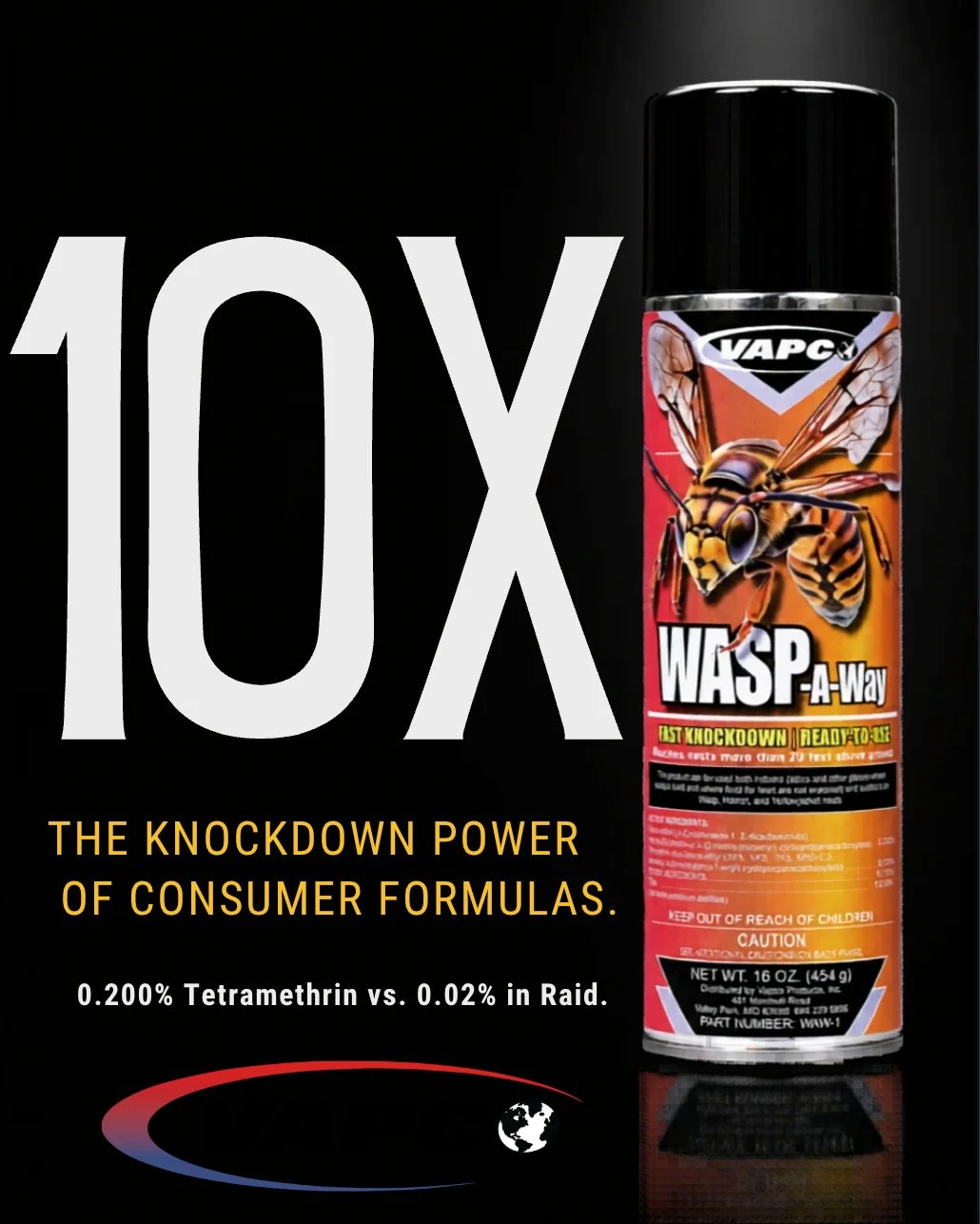
Fast Knockdown: Tetramethrin (0.200%) penetrates the insect cuticle on contact for immediate kill. Residual chemistry in the treated nest kills insects returning after initial treatment. |
| Yellowjackets |
Underground, wall voids, ground-level nests |
Nest Entry Kill |
Jet spray saturates nest entrance and interior. Treat in early morning or evening when the colony is fully inside and entrance activity is minimal for maximum contact coverage. |
| Aerial Nests (20+ ft) |
Trees, utility poles, rooflines |
Long-Range Jet |
Batch-tested at multiple fill points to maintain 18+ feet of effective spray range throughout the entire can — not just at initial pressure. One product, full-can performance. |
| Scorpions |
Ground level, under debris |
Direct Contact Kill |
Stand 3–4 feet away and thoroughly cover the insect. Confirm the scorpion is dead before removal. Petroleum distillate carrier provides rapid penetration and knockdown. |
Surface & Environment Compatibility
| SURFACE / ENVIRONMENT |
STATUS & PROTOCOL |
| Vinyl, Painted & Plastic Surfaces |
⚠️ TEST FIRST
May stain or adversely affect surface. Test in an inconspicuous area and re-check in a few hours before applying where spray may contact these surfaces. |
| Asphalt Roofing Shingles |
⚠️ AVOID IF POSSIBLE
Staining may occur. Avoid direct application to shingles. Hose off any overspray promptly. |
| Desirable Plants & Foliage |
⚠️ RINSE AFTER TREATMENT
Hose off foliage of desirable plants that contact spray. Do not apply directly to blooming crops or weeds while bees are actively visiting. |
| Water / Aquatic Areas |
🚫 DO NOT APPLY
Extremely toxic to aquatic organisms including fish and aquatic invertebrates. Do not apply directly to water or allow runoff to reach drains, sewers, or water bodies. |
| Fish Aquariums & Pets |
🚫 REMOVE BEFORE SPRAYING
Remove pets and birds and cover fish aquariums before spraying. Turn aquarium systems off. Do not allow re-entry until spray has dried. |
EPA Registration & Dielectric Rating:
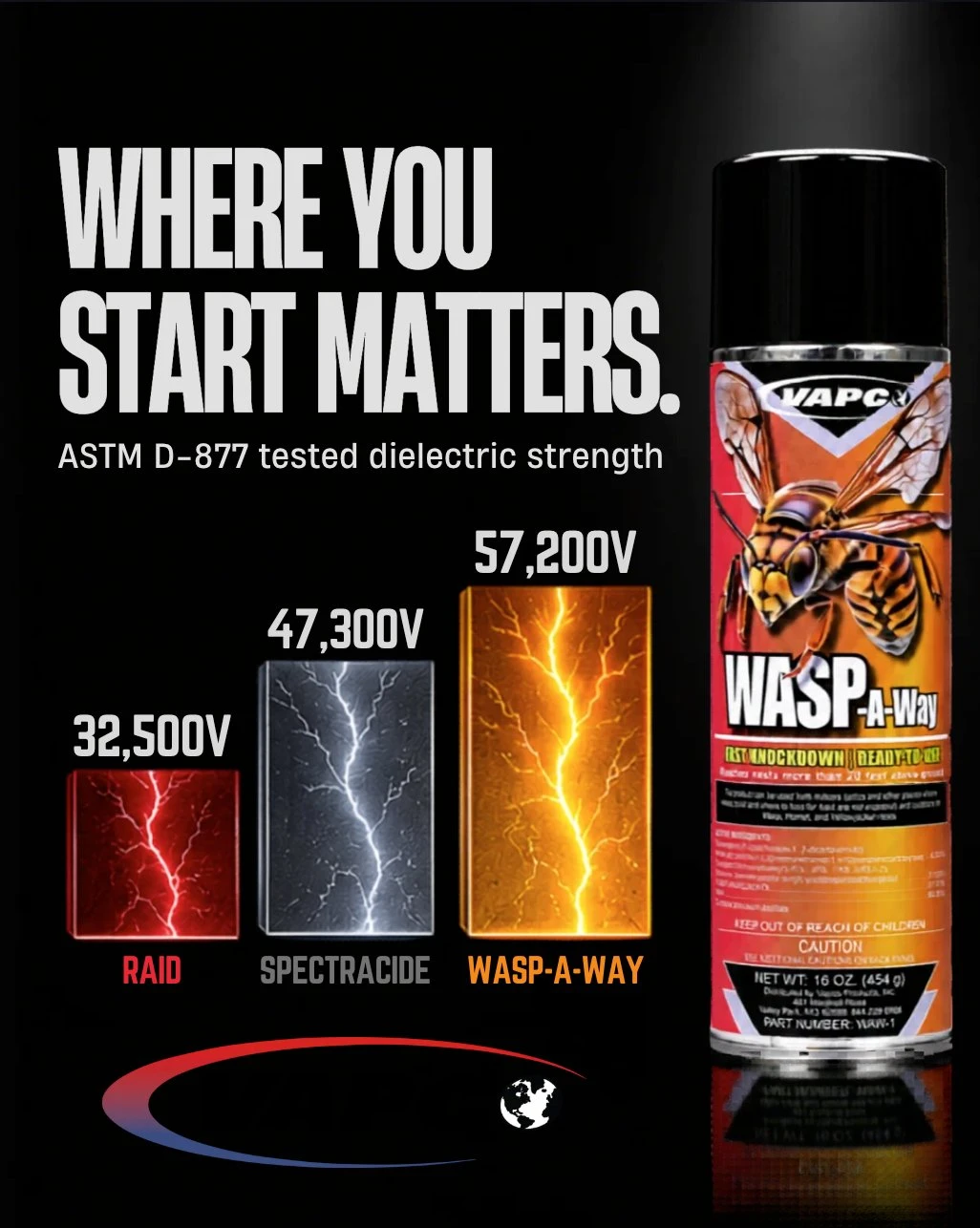
Wasp-A-Way is EPA registered for indoor and outdoor use (EPA Reg. No. 1021-1649-6381), covering attics, crawl spaces, mechanical rooms, and wall voids — environments most consumer sprays are not registered for. The petroleum distillate carrier carries a 57,200V (57.2 KV) dielectric breakdown voltage tested by ASTM Method D-877, making it appropriate for use near energized electrical equipment. This is the highest verified dielectric rating in the commercial wasp spray category.
Directions for Wasp-A-Way (WAW-1)
1. Preparation
Step 1: Choose the Right Time.
- Treat in the early morning or early evening when air temperature is cooler, most insects are inside the nest, and little activity is observed around the nest opening.
- Spray only when the air is completely still. Wind will deflect the jet spray and reduce coverage on the nest.
- Note: Do not make applications during rain.
Step 2: Assess the Nest Location.
- Identify the nest opening before approaching. Plan your position so you are standing to the side — never directly under the nest.
- For nests in wall voids or underground, locate the primary entrance point. For aerial nests (eaves, trees, rooflines), confirm the nest is within spray range before starting.
- Pre-soak surrounding desirable plants with water if the nest is in vegetation to minimize chemical contact with foliage.
2. Application
Step 3: Position & Aim.
- Stand at a safe distance from the nest. The jet spray reaches nests more than 20 feet above ground.
- Hold the container upright at arm’s length and point the actuator directly at the nest. Do not invert the can.
Step 4: Spray the Nest Opening First.
- Always treat the nest opening first. This immediately knocks down insects entering and exiting, preventing the colony from mobilizing during treatment.
- Maintain a steady, directed stream — do not sweep rapidly. Allow the jet to penetrate the opening before moving to the nest body.
Step 5: Saturate the Entire Nest.
- Continue spraying until the entire nest is saturated. Treated insects will fall from the nest and die.
- Any insects returning to the nest after treatment will be killed by the residual action remaining in the treated nest.
3. Post-Treatment Protocol
Step 6: Wait 48 Hours.
| SITUATION |
ACTION |
| Nest Removal |
WAIT 48 HOURS. Leave the treated nest undisturbed for a full 48 hours. This allows returning insects to contact the residual and be killed before the nest is removed. |
| Re-Entry (Treated Area) |
WAIT UNTIL DRY. Do not allow adults, children, or pets to enter treated areas until sprays have dried completely. |
Step 7: Clean Up.
- Hose off foliage of any desirable plants that contacted spray.
- After 48 hours, remove the nest using appropriate PPE (gloves, eye protection).
- Do not water the treated area to the point of runoff. Do not allow runoff to reach drains, sewers, or water bodies.
Vapco Products, Inc.
Safety Data Sheet
Wasp-A-Way
SECTION 1: Identification
1.1 GHS Product identifier
Product name: Wasp-A-Way
Product number: WAW-1
Brand: Vapco
1.2 Other means of identification
EPA Reg. No. 1021-1649-6381
EPA Est. No. 6381-MO-2
1.3 Recommended use of the chemical and restrictions on use
Aerosol insecticide
1.4 Supplier’s details
Name: Vapco Products, Inc.
Address: 401 Marshall Road, Valley Park, Missouri 63088, United States
Telephone: (636) 923-2121
Fax: (636) 923-3002
email: info@VapcoProducts.com
1.5 Emergency phone number
(800) 255-3924
SECTION 2: Hazard identification
2.1 Classification of the substance or mixture
GHS classification in accordance with: OSHA (29 CFR 1910.1200, 2024)
– Aspiration hazard, Cat. 1
– Flammable aerosols, Cat. 1
– Gases under pressure, compressed gas
– Skin corrosion/irritation, Cat. 2
2.2 GHS label elements, including precautionary statements
Signal word: Danger
Hazard statement(s)
H222 Extremely flammable aerosol
H280 Contains gas under pressure; may explode if heated
H304 May be fatal if swallowed and enters airways
H315 Causes skin irritation
Precautionary statement(s)
P210 Keep away from heat/sparks/open flames/hot surfaces. No smoking.
P211 Do not spray on an open flame or other ignition source.
P251 Pressurized container: do not pierce or burn, even after use.
P264 Wash hands thoroughly after handling.
P280 Wear protective gloves.
P301+P310 IF SWALLOWED: Immediately call a POISON CENTER/doctor.
P302+P352 IF ON SKIN: Wash with plenty of water.
P321 Specific treatment (see First Aid on this label).
P331 Do NOT induce vomiting.
P332+P313 If skin irritation occurs: Get medical advice/attention.
P362+P364 Take off contaminated clothing and wash it before reuse.
P405 Store locked up.
P410+P403 Protect from sunlight. Store in a well-ventilated place.
P410+P412 Protect from sunlight. Do not expose to temperatures exceeding 50 °C/122 °F.
P501 Dispose of contents/container to the specifications of local, regional, national, and international regulations.
SECTION 3: Composition/information on ingredients
3.2 Mixtures
| Hazardous components |
CAS no. |
Concentration |
| 1. Tetramethrin (EC no. 231-711-6; Index no. 607-727-00-8) |
7696-12-0 |
0.2 – 0.2 % (weight) |
| 2. d-Phenothrin (SUMITHRIN) |
26002-80-2 |
0.125 – 0.125 % (weight) |
| 3. Distillates, petroleum, hydrotreated light (EC no. 265-149-8; Index no. 649-422-00-2) |
64742-47-8 |
75 – 95 % (weight)* |
| 4. Carbon Dioxide |
124-38-9 |
1 – 5 % (weight) |
Trade secret statement (OSHA 1910.1200(i))
*The exact percentage (concentration) of composition has been withheld as a trade secret.Ingredients not identified are proprietary or non-hazardous.
SECTION 4: First-aid measures
4.1 Description of necessary first-aid measures
General advice: Never give anything by mouth to an unconscious person.If you feel unwell, seek medical advice (show the label where possible).
If inhaled: First, take proper precautions to ensure your own safety before attempting rescue (e.g. wear appropriate respiratory protective equipment, use the buddy system), then remove the exposed person to fresh air.Keep at rest in a position comfortable for breathing.Get medical advice/attention.
In case of skin contact: Immediately drench affected area with water for at least 15 minutes.Remove contaminated clothing immediately.Obtain medical attention if irritation develops or persists.
In case of eye contact: Immediately rinse with water for at least 15 minutes.Remove contact lenses, if present and easy to do.Continue rinsing.Obtain medical attention if irritation develops or persists.
If swallowed: Rinse mouth.Do NOT induce vomiting.Obtain medical attention.
Personal protective equipment for first-aid responders: Use personal protective equipment as required.
4.2 Most important symptoms/effects, acute and delayed
Aspiration pneumonia hazard: May be fatal if swallowed and enters airways.
4.3 Indication of immediate medical attention and special treatment needed, if necessary
Note to physician: Contains petroleum distillates – vomiting may cause aspiration pneumonia.For skin effects, a highly efficient therapeutic agent for Pyrethrin/Pyrethroid exposure is topical application of tocopherol acetate (Vitamin E).
SECTION 5: Fire-fighting measures
5.1 Suitable extinguishing media
Use extinguishing measures that are appropriate to local circumstances and the surrounding environment.
Unsuitable extinguishing media: CAUTION: Use of water spray when fighting fire may be inefficient.
5.2 Specific hazards arising from the chemical
Hazardous Combustion Products: Carbon oxide(s).
5.3 Special protective actions for fire-fighters
As in any fire, wear self-contained breathing apparatus pressure-demand, MSHA/NIOSH (approved or equivalent) and full protective gear.
Further information: Do not allow run-off from fire fighting to enter drains or water courses.
SECTION 6: Accidental release measures
6.1 Personal precautions, protective equipment and emergency procedures
Use personal protective equipment as required.Evacuate personnel to safe areas.Keep people away from and upwind of spill/leak.
6.2 Environmental precautions
Prevent entry into waterways, sewers, basements or confined areas.Do not flush into surface water or sanitary sewer system.Prevent further leakage or spillage if safe to do so.Prevent product from entering drains.
6.3 Methods and materials for containment and cleaning up
Methods for Containment: Prevent further leakage or spillage if safe to do so.
Methods for Cleaning-Up: Pick up and transfer to properly labeled containers.Cover liquid spill with sand, earth or other non-combustible absorbent material.Cover powder spill with plastic sheet or tarp to minimize spreading.Dam up.Soak up with inert absorbent material.
Reference to other sections
See Section 8 for exposure controls and personal protection and Section 13 for disposal considerations.
SECTION 7: Handling and storage
7.1 Precautions for safe handling
Advice on Safe Handling: Use personal protective equipment as required.Avoid contact with skin, eyes or clothing.Wash contaminated clothing before reuse.Do not breathe dust/fume/gas/mist/vapors/spray.Do not eat, drink or smoke when using this product.Use with local exhaust ventilation.Avoid breathing vapors or mists.Contents under pressure.Do not puncture or incinerate cans.Do not stick pin or any other sharp object into opening on top of can.
7.2 Conditions for safe storage, including any incompatibilities
Storage Conditions: Keep container tightly closed in a dry and well-ventilated place.Keep out of the reach of children.Keep containers tightly closed in a cool, well-ventilated place.Keep in properly labeled containers.
SECTION 8: Exposure controls/personal protection
8.1 Control parameters
1. Carbon dioxide (CAS: 124-38-9)
TWA (Inhalation): 5000 ppm; 9000 mg/m3; AU (AU/SWA)
STEL (Inhalation): 30000 ppm; 54000 mg/m3; AU (AU/SWA)
TWA [Carbon dioxide in coal mines] (Inhalation): 12500 ppm; 22500 mg/m3; AU (AU/SWA)
IOELV-LTEL (Inhalation): 9000 mg/m3; EU (EU/OSHA)
IOELV-LTEL (Inhalation): 5000 ppm; EU (EU/OSHA)
PEL (Inhalation): 5000 ppm; US (US/OSHA)
PEL (Inhalation): 9000 mg/m3; US (US/OSHA)
PEL (Inhalation): 5000 ppm, (ST) 30,000 ppm; US (Cal/OSHA)
REL (Inhalation): 5000 ppm, (ST) 30,000 ppm; US (NIOSH)
2. Distillates, petroleum, hydrotreated light (CAS: 64742-47-8 EC: 265-149-8)
TLV (Inhalation): 200 mg/m3; US (ACGIH)
8.2 Appropriate engineering controls
Safety showers, eyewash stations, and ventilation systems.
8.3 Individual protection measures, such as personal protective equipment (PPE)
Eye/face protection: Protective eyewear is recommended, but is not required.
Skin protection: Wear protective gloves and protective clothing.
Body protection: General Hygiene Considerations: When using do not eat, drink or smoke.Wash contaminated clothing before reuse.Regular cleaning of equipment, work area and clothing is recommended.
Respiratory protection: If exposure limits are exceeded or irritation is experienced, NIOSH/MSHA approved respiratory protection should be worn.Positive-pressure supplied air respirators may be required for high airborne contaminant concentrations.
SECTION 9: Physical and chemical properties
| Physical state |
Liquid |
| Appearance |
Aerosol – Compressed gas |
| Color |
Clear, colorless |
| Odor |
Solvent |
| Odor threshold |
No information available |
| Melting point/freezing point |
No information available |
| Boiling point or initial boiling point and boiling range |
No information available |
| Flammability |
No information available |
| Lower and upper explosion limit/flammability limit |
No information available |
| Flash point |
>93.3°C / >200.0°F (Tag Closed Cup; Aerosol Non-volatiles) |
| Auto-ignition temperature |
No information available |
| Decomposition temperature |
No information available |
| pH |
N/A |
| Kinematic viscosity |
No information available |
| Solubility |
No information available |
| Partition coefficient n-octanol/water (log value) |
No information available |
| Vapor pressure |
No information available |
| Evaporation rate |
No information available |
| Density and/or relative density |
0.7843 g/cm3 at 20°C (Aerosol Non-volatiles) |
| Relative vapor density |
No information available |
Dynamic Viscosity: 8.92 cPs at 20.6°C
Refractive Index: 1.4289 at 25.0°C (Aerosol Non-volatiles)
Volatile Organic Content: 1.35%
SECTION 10: Stability and reactivity
10.1 Reactivity: No data available.
10.2 Chemical stability: Stable under recommended storage conditions.
10.3 Possibility of hazardous reactions: None under normal processing.Hazardous polymerization does not occur.
10.4 Conditions to avoid: Extremes of temperature and direct sunlight.
10.5 Incompatible materials: Incompatible with strong acids, bases, and oxidizing agents.
10.6 Hazardous decomposition products: Carbon oxide(s).
SECTION 11: Toxicological information
Acute toxicity:
Distillates, petroleum, hydrotreated light: LD50 Oral – Rat – >5000 mg/kg; LD50 Skin – Rabbit – >5000 mg/kg; LC0 Inhalation – Rat – 4951 mg/m3 – 4 hrs
Skin corrosion/irritation: May cause mild irritation and localized defatting.Slight irritation at 72 hours (rabbit).
Serious eye damage/irritation: Irritation clearing in 72 hours (rabbit).
Respiratory or skin sensitization: Skin Irritation Index: 1.11
Germ cell mutagenicity: No information available.
Carcinogenicity: This product does not contain carcinogens or potential carcinogens as listed by OSHA, IARC or NTP.
Reproductive toxicity: No information available.
Specific target organ toxicity (STOT) – single exposure: No information available.
Specific target organ toxicity (STOT) – repeated exposure: Avoid repeated exposure.
Aspiration hazard: Aspiration pneumonia hazard: May be fatal if swallowed and enters airways.
SECTION 12: Ecological information
Toxicity:
Distillates, petroleum, hydrotreated light: LC0 Oncorhynchus mykiss: >1000 mg/l – 96 hrs; EC50 Tetrahymena pyriformis: >1000 mg/l – 48 hrs.Toxic to aquatic life with long lasting effects.
Bioaccumulative potential: d-Phenothrin (SUMITHRIN): Partition coefficient n-Octanol/Water: 6.8
SECTION 13: Disposal considerations
Disposal methods
Product disposal: Disposal should be in accordance with applicable regional, national and local laws and regulations.
Packaging disposal: For more information, see product label.
Other disposal recommendations: Environmental hazards (EPA): Do not discharge effluent containing this product into lakes, streams, ponds, estuaries, oceans or other waters unless in accordance with the requirements of a National Pollutant Discharge Elimination System (NPDES) permit and the permitting authority has been notified in writing prior to discharge.Do not discharge effluent containing this product to sewer systems without previously notifying the sewer treatment plant authority.
SECTION 14: Transport information
DOT (US): UN Number: UN1950; Class: 2.1; Packing Group: N/A; Proper Shipping Name: Aerosols, flammable, (each not exceeding 1 L capacity)
IMDG: UN Number: UN1950; Class: 2.1; Packing Group: N/A; EMS Number: N/A; Proper Shipping Name: Aerosols, flammable, (each not exceeding 1 L capacity)
IATA: UN Number: UN1950; Class: 2.1; Packing Group: N/A; Proper Shipping Name: Aerosols, flammable, (each not exceeding 1 L capacity)
SECTION 15: Regulatory information
15.1 Safety, health and environmental regulations specific for the product in question
Massachusetts Right To Know Components (105 CMR 670):
Chemical name: CARBON DIOXIDE; CAS number: 124-38-9
Massachusetts Toxic Use Reduction Act (TURA) list:
Chemical name: Tetramethrin; CAS number: 7696-12-0
Chemical name: d-Phenothrin; CAS number: 26002-80-2
New Jersey Right To Know Components:
Common name: TETRAMETHRIN; CAS number: 7696-12-0
Common name: PHENOTHRIN; CAS number: 26002-80-2
Common name: CARBON DIOXIDE; CAS number: 124-38-9
Pennsylvania Right To Know Components:
Chemical name: CARBON DIOXIDE; CAS number: 124-38-9
US EPA TSCA public inventory:
Chemical name: Distillates, petroleum, hydrotreated light; CAS number: 64742-47-8
Chemical name: Carbon Dioxide; CAS number: 124-38-9
SECTION 16: Other information
N/A = Not applicable; N/D = Not determined
16.1 Further information/disclaimer: To the best of our knowledge, information contained herein is accurate.However there is no assumption of liability for the accuracy or completeness of the information contained herein.Final determination of suitability of any material is the sole responsibility of the user.All materials may present unknown hazards and should be used with caution.Although certain hazards are described herein, we cannot guarantee that these are the only hazard which exists.The information contained in this SDS was obtained from current and reliable sources;however, the data is provided without warranty, expressed or implied, regarding its correctness or accuracy.Since the conditions of handling, storage and disposal of this product are beyond the control of the manufacturer, the manufacturer will not be responsible for loss, injury, or expense arising out of the products improper use.No warranty, expressed or inferred, regarding the product described in this SDS shall be created or inferred by any statement in this SDS.Various government agencies may have specific regulations regarding the transportation, handling, storage, use, or disposal of this product which may not be covered by this SDS.The user is responsible for full compliance.
16.2 Preparation information: Prepared by: Jessica Wilson; Date prepared: 2-25-2025