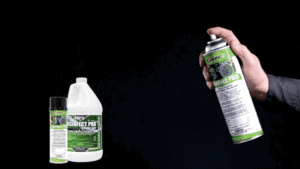
Wasp-A-Way: The Wasp Spray Built for Your Truck — Not Just For Their Porch
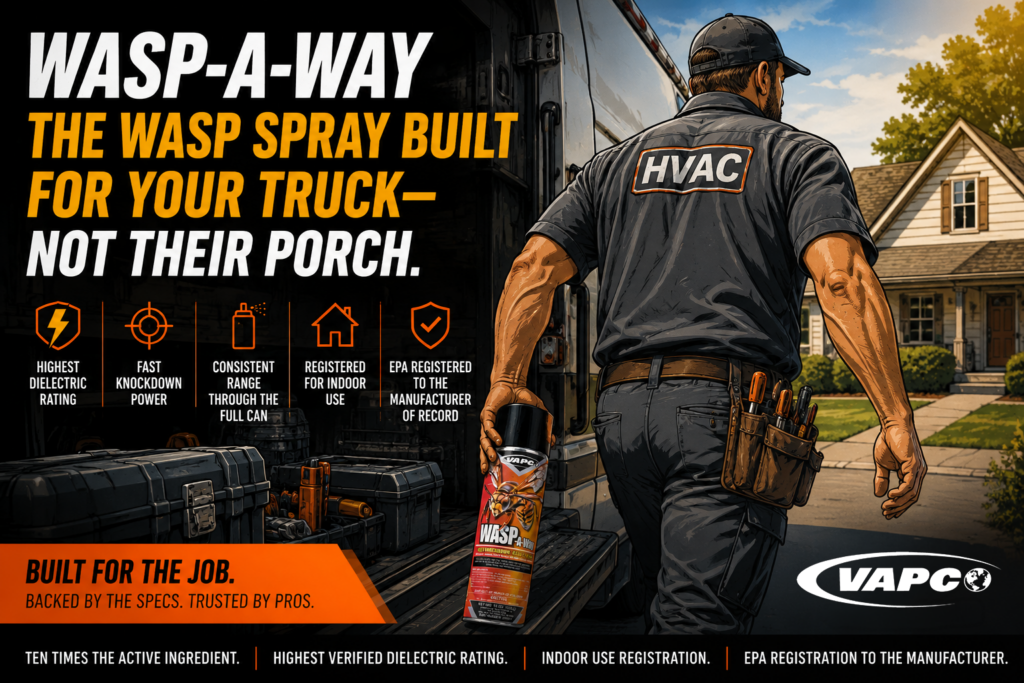
Every wasp spray says 20 feet. Technically true — for the first few sprays on a full can. By the time it’s half empty, you’re looking at 10-12 feet and standing closer to the nest than you think. Wasp-A-Way is batch tested at multiple fill points so the range claim means the same thing at the end of the can as it does at the start.
Why Your Wasp Spray Stops Reaching the Nest Halfway Through the Can
What Is Dielectric Wasp Spray and Why It Matters for Electrical and HVAC Work
Professional Grade vs. Consumer Wasp Spray: What the Label Doesn't Tell You
Most wasp sprays claim 20-foot range. That number is only true when the can is full. Here’s the aerosol physics behind spray pressure degradation — and why consistent range throughout the full can matters for job site safety.
Dielectric wasp spray uses a petroleum distillate carrier that resists electrical conduction near energized equipment. This guide explains ASTM D-877 testing, how field conditions reduce rated dielectric strength, and how to compare products by spec.
The wasp spray at Home Depot was built for a homeowner’s porch. Here’s what separates professional wasp spray from consumer formulas — active ingredient concentration, dielectric strength, indoor use ratings, and why it matters for contractors.
If you haven’t pulled a service call on one yet, you will soon — a reach-in cooler, household fridge, ice machine, or beverage center that came from the factory charged with propane or isobutane. Not R-404A. Not R-134a. Hydrocarbon refrigerant, straight from the OEM.
This isn’t coming. It’s already here. The AIM Act is phasing down HFCs because of their Global Warming Potential, and manufacturers aren’t waiting around — new equipment is shipping pre-charged with R-290 or R-600a right now. If you’re servicing modern refrigeration equipment, these refrigerants are part of the job whether you’ve trained on them or not.
Knowing the difference between the two, what grade of refrigerant to use, and what tools actually belong on these jobs isn’t specialty knowledge anymore. It’s baseline.