

CORK TAPE TO THE RESCUE
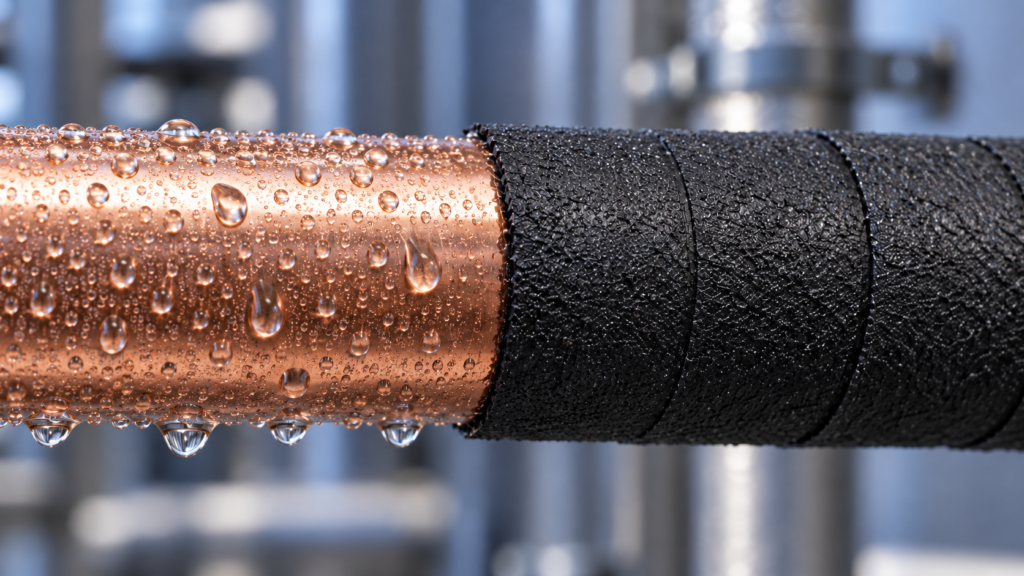
How to Use Cork Tape Without Callbacks
Nobody calls about a dry fitting. By the time you get there, the pipe’s wet, and the tape wants a clean, dry surface.
Wipe it down, get it as dry as you can, and move fast. Start the wrap on the driest part of the pipe and work toward the wet spot. The tape seals to itself at the overlap, so once the wraps are closed up, air can’t get back to that section of copper and it stops sweating.
What It Is, How It Stops Condensation, & Where to Use I
TL/DR: Cork tape is a moldable butyl sealant tape used to stop condensation on the parts of a refrigerant line or cold pipe that foam can’t cover cleanly: tees, elbows, valves, service ports, foam ends and TXV sensing bulbs. It works by sealing humid air away from the cold pipe, not by insulating it.
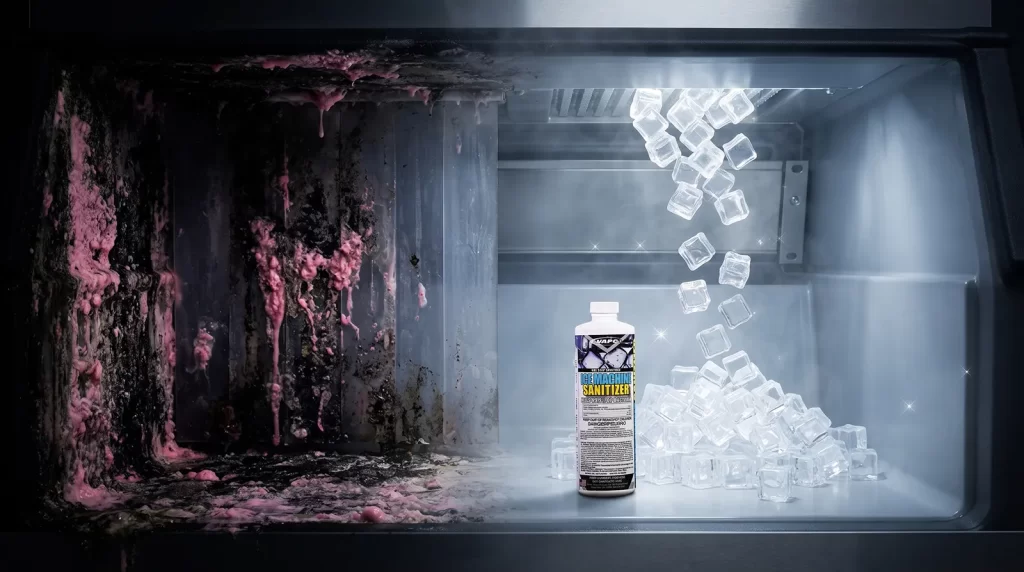
How Often Should You Sanitize an Ice Machine? (And Why Cleaning Isn't Enough)
Six months, minimum. That’s what most of the major manufacturers put in writing, and it’s the number to work from unless the install tells you otherwise. But the interval is only half the answer. The other half is that cleaning and sanitizing are two different jobs, using two different chemicals, and doing one does not accomplish the other. A machine that got descaled and nothing else did not get sanitized. Those are not the same word and they are not the same result.
Wasp-A-Way: The Wasp Spray Built for Your Truck — Not Just For Their Porch

Every wasp spray says 20 feet. Technically true — for the first few sprays on a full can. By the time it’s half empty, you’re looking at 10-12 feet and standing closer to the nest than you think. Wasp-A-Way is batch tested at multiple fill points so the range claim means the same thing at the end of the can as it does at the start.
Why Your Wasp Spray Stops Reaching the Nest Halfway Through the Can
What Is Dielectric Wasp Spray and Why It Matters for Electrical and HVAC Work
Professional Grade vs. Consumer Wasp Spray: What the Label Doesn't Tell You
Most wasp sprays claim 20-foot range. That number is only true when the can is full. Here’s the aerosol physics behind spray pressure degradation — and why consistent range throughout the full can matters for job site safety.
Dielectric wasp spray uses a petroleum distillate carrier that resists electrical conduction near energized equipment. This guide explains ASTM D-877 testing, how field conditions reduce rated dielectric strength, and how to compare products by spec.
The wasp spray at Home Depot was built for a homeowner’s porch. Here’s what separates professional wasp spray from consumer formulas — active ingredient concentration, dielectric strength, indoor use ratings, and why it matters for contractors.
WHEN 'NO-RINSE' IS ACTUALLY TRUE
If you haven’t pulled a service call on one yet, you will soon — a reach-in cooler, household fridge, ice machine, or beverage center that came from the factory charged with propane or isobutane. Not R-404A. Not R-134a. Hydrocarbon refrigerant, straight from the OEM.
This isn’t coming. It’s already here. The AIM Act is phasing down HFCs because of their Global Warming Potential, and manufacturers aren’t waiting around — new equipment is shipping pre-charged with R-290 or R-600a right now. If you’re servicing modern refrigeration equipment, these refrigerants are part of the job whether you’ve trained on them or not.
Knowing the difference between the two, what grade of refrigerant to use, and what tools actually belong on these jobs isn’t specialty knowledge anymore. It’s baseline.
How To Flush Line Sets with Purge Line Set Flush
How to Flush HVAC Line Sets: The 140+ PSI Gold Standard Protocol Short answer: Nitrogen alone won’t clean a line set after a compressor burnout.
Glycol for Pros: Top 5 Questions
For pros in the field, understanding glycol is essential. Ultimately, the right choice in glycol for pros is a crucial component for protecting systems from extreme temperatures.
Vapco Free Freight Program: Defy Rising Costs
Rising freight costs are impacting the HVAC/R industry. Vapco Products is helping professionals like you with the new Vapco Free Freight Program, providing a long-term solution with free freight on a wide range of essential products.
Foam Tape: A Pro’s Guide to Condensation
Stop frustrating condensation and “sweating” pipes for good. Learn how Vapco’s high-quality foam tape provides a professional and permanent solution to a costly problem.
Top 9 HVAC Inject Myths Busted: A Professional’s Guide to AC Performance
Many homeowners and even some professionals are skeptical of performance-enhancing injects, believing they are all hype or could even harm an AC system. In this guide, we bust the top 10 myths surrounding HVAC injects, separating fact from fiction. Discover the truth behind these professional-grade solutions and learn how they can safely improve a system’s efficiency, reduce energy bills, and protect a unit for years to come.